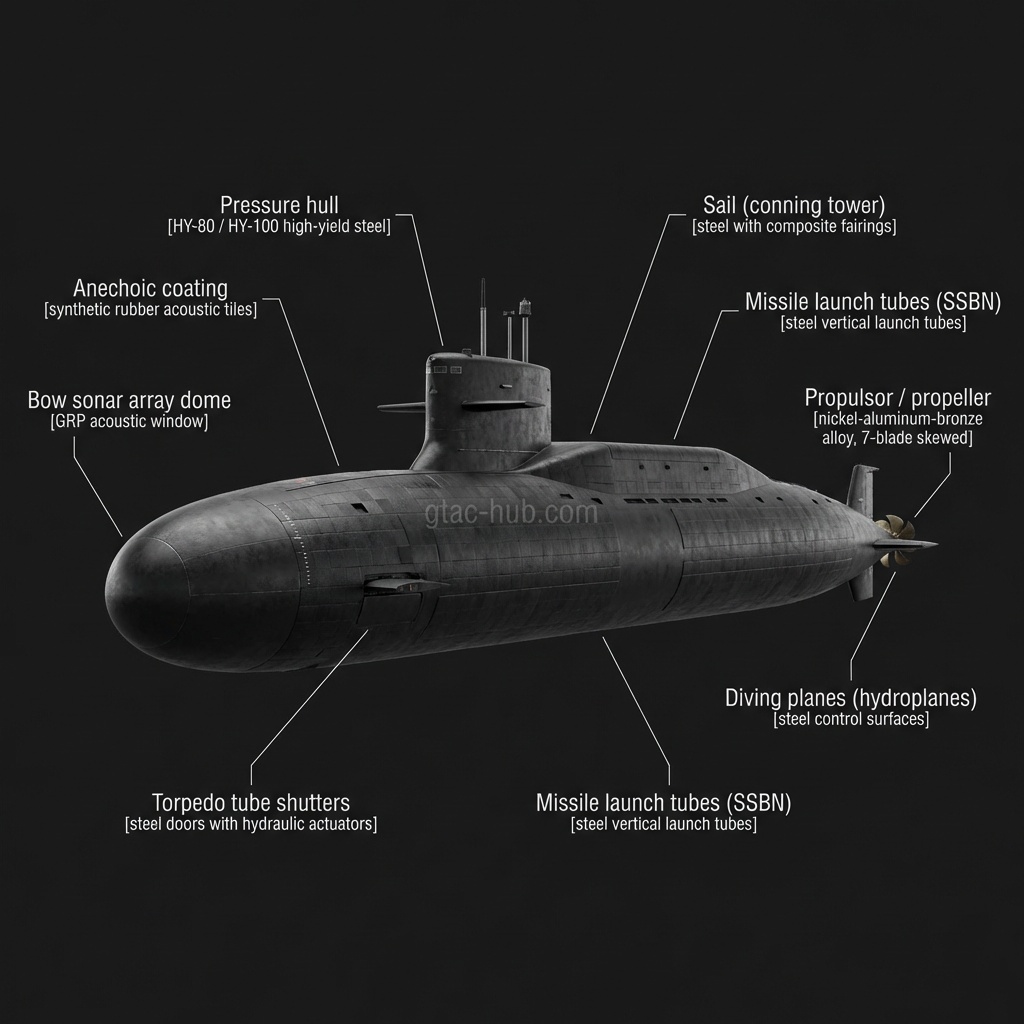
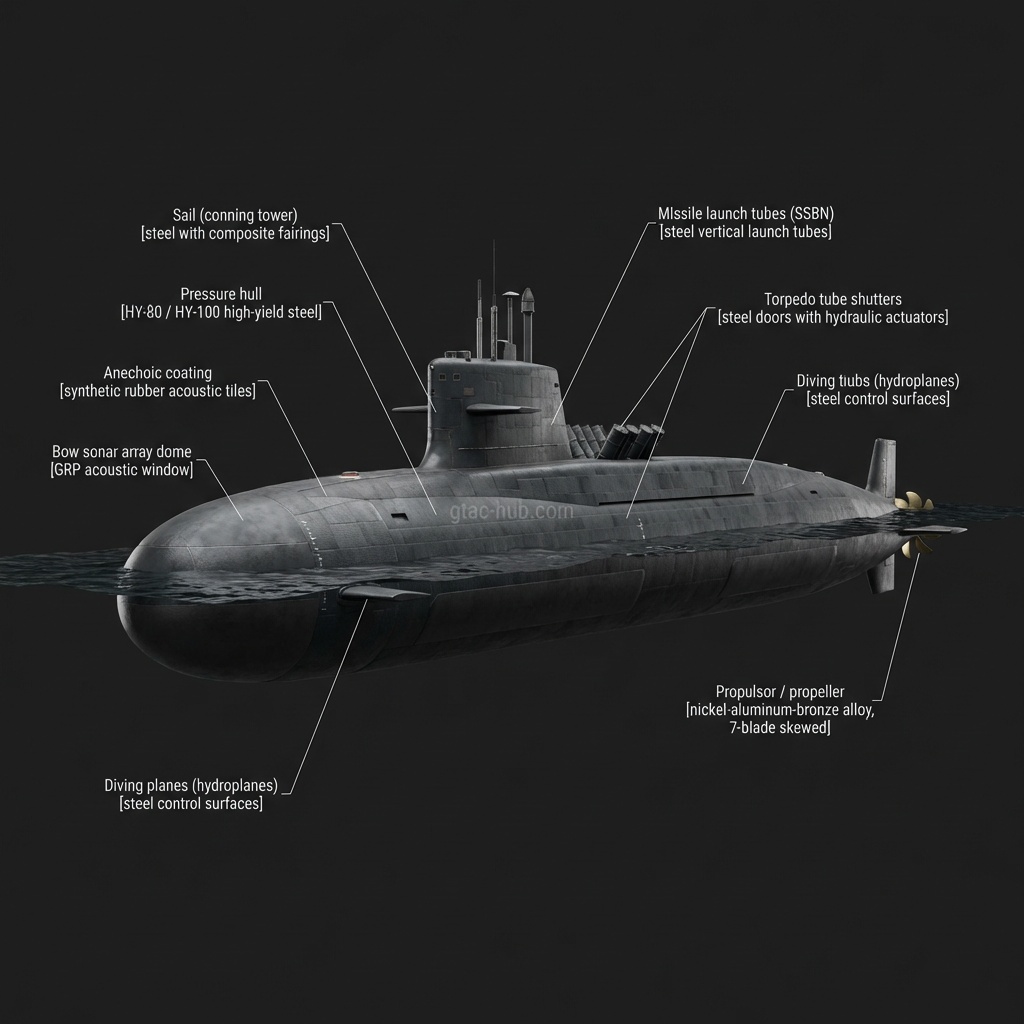
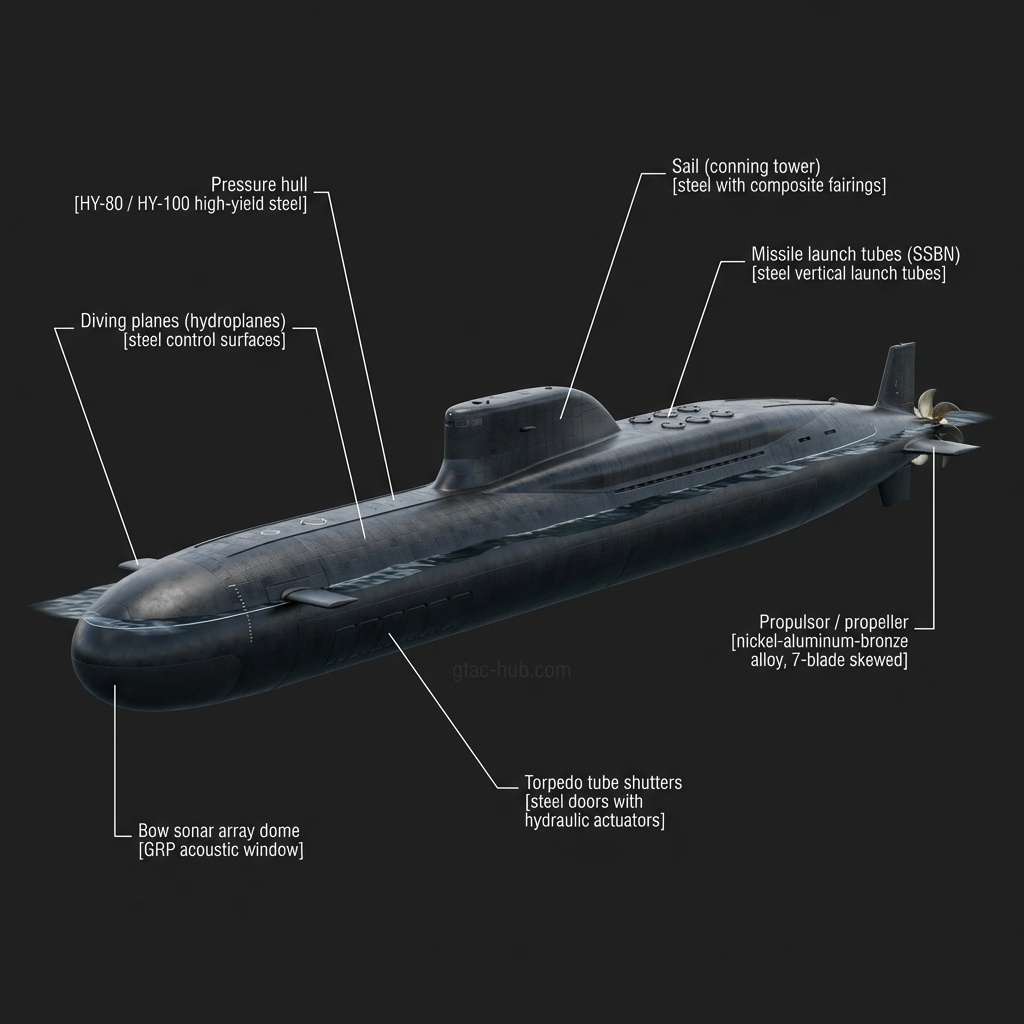
India's indigenously developed nuclear-powered ballistic missile submarine class providing sea-based nuclear deterrence — a critical component of India's nuclear triad. The Arihant class represents the culmination of India's Advanced Technology Vessel (ATV) programme, which began in the 1970s with Russian assistance. Each boat displaces approximately 6,000 tonnes submerged with a single pressurised water reactor (PWR) derived from Russian designs but built and fuelled in India. Armed with K-15 Sagarika (750 km) and K-4 (3,500 km) submarine-launched ballistic missiles in vertical launch tubes, with future boats potentially carrying the longer-range K-5 and K-6 missiles. The class ensures India's strategic nuclear forces remain survivable against a first strike. At least 4-5 boats are planned with the first two (INS Arihant and INS Arighat) commissioned, and additional boats (S-3, S-4) under construction. Future variants may feature improved reactors, quieter propulsion, and longer-range missiles.

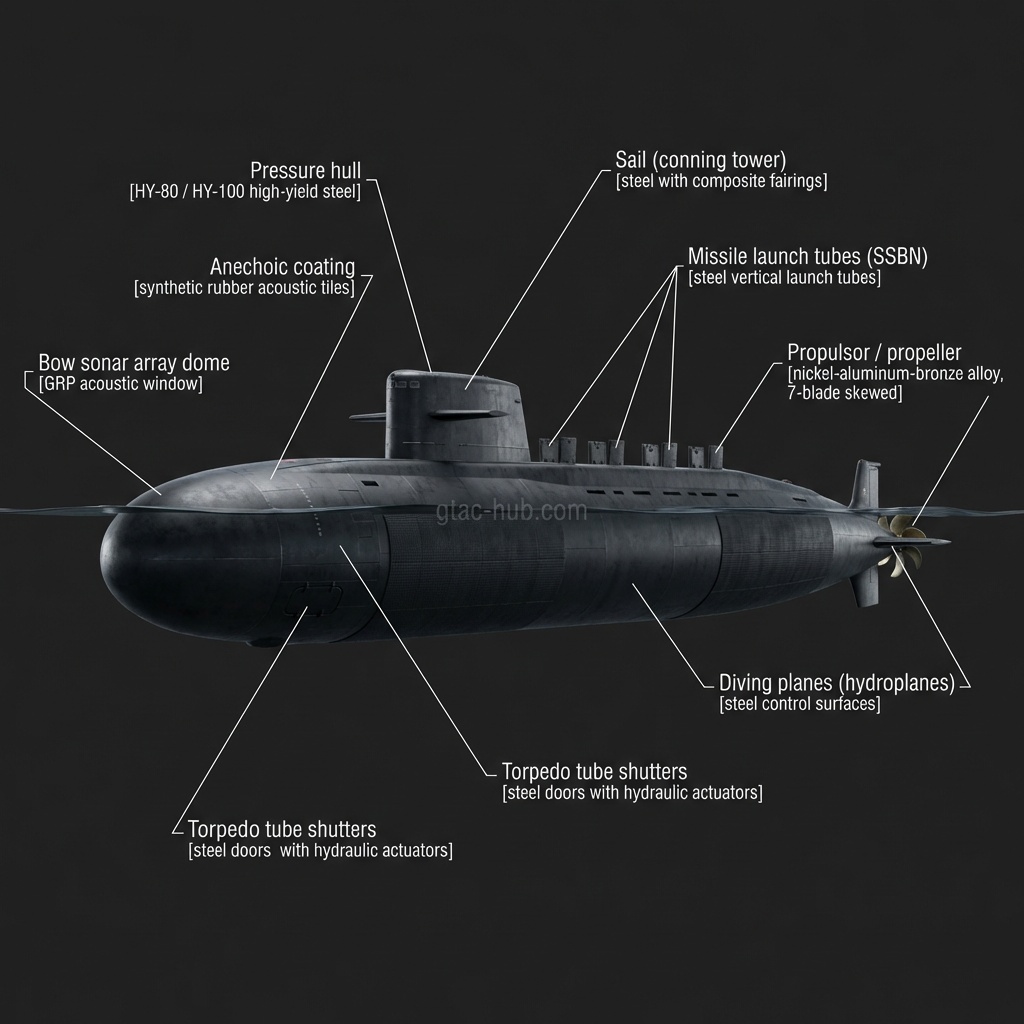
- Completes India nuclear triad — credible sea-based second-strike capability
- Indigenous nuclear propulsion is a major strategic technology milestone
- K-4 SLBM (3,500 km) will significantly extend deterrence reach
- Submarine-based deterrent is inherently survivable vs. land-based systems
- Small missile complement (4 tubes) vs. Ohio (24) or Borei (16)
- Noisier than US/Russian SSBNs — detection risk by adversary ASW assets
- K-4 SLBM still undergoing testing — not yet fully operational
- Small class (2–3 boats) limits continuous at-sea deterrent patrol
Sign in to join the discussion and rate this weapon system
SIGN INNo comments yet. Be the first to share your analysis.