
Leopard 1A5BR
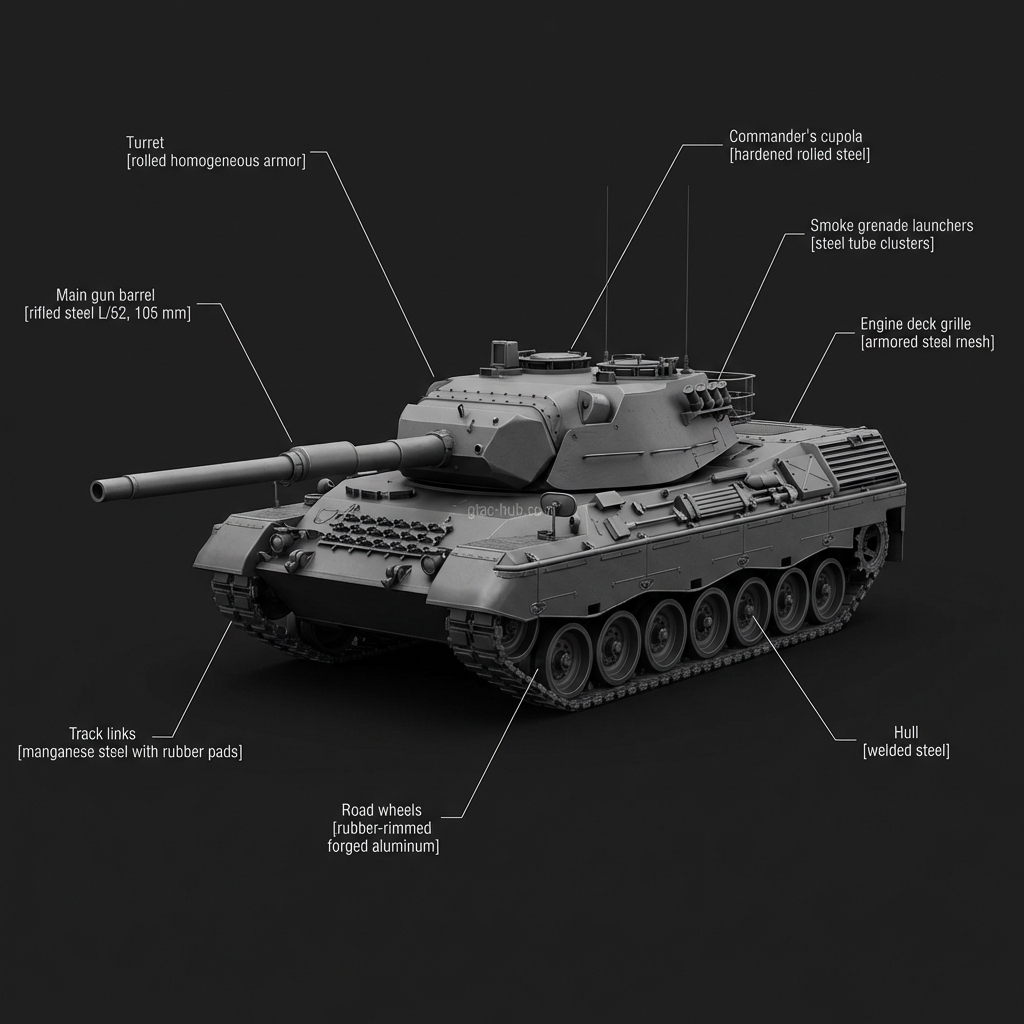
German Leopard 1 main battle tanks acquired secondhand and comprehensively modernized to 1A5BR standard providing Brazilian Army with modern armored capability at fraction of new tank costs. Brazil acquired 128 Leopard 1A5 from Belgium, Germany, and Netherlands (2007-2009) replacing obsolete M60A3 and locally-developed EE-T1 Osório prototypes. Brazilian modernization programme upgraded fire control systems, thermal imaging sights, laser rangefinders, ballistic computers, communications, and potentially armor. Features 105mm L7A3 rifled gun providing adequate firepower against most threats likely in South American context, modern fire control enabling accurate fire to 2,000+ metres day/night, stabilization enabling fire on the move, weight of 42 tonnes (lighter than modern MBTs), powered by 830 hp MTU diesel providing road speed of 65 km/h and excellent mobility, and crew of 4. The Leopard 1 emphasizes mobility and firepower over armor protection — appropriate doctrine for Brazilian requirements where peer armored threats are minimal. Brazilian Leopards equip armored brigades conducting training, territorial defense, and potential expeditionary operations. The tanks provide credible armored capability while Brazil allocates resources to higher priorities including aviation and naval modernization. Future potential upgrades or replacement with modern tanks under consideration. Represents cost-effective approach to maintaining armored capability.


- Proven and reliable design with decades of service
- 105mm gun adequate against regional armor threats
- Brazilian modernization adds improved FCS and optics
- Provides tracked armored capability until replacement arrives
- 1960s design; fundamentally obsolete by modern MBT standards
- Armor cannot protect against modern ATGMs or tank guns
- Spare parts increasingly scarce as global Leopard 1 fleets retire
- High maintenance burden for aging powertrain
Sign in to join the discussion and rate this weapon system
SIGN INNo comments yet. Be the first to share your analysis.


