
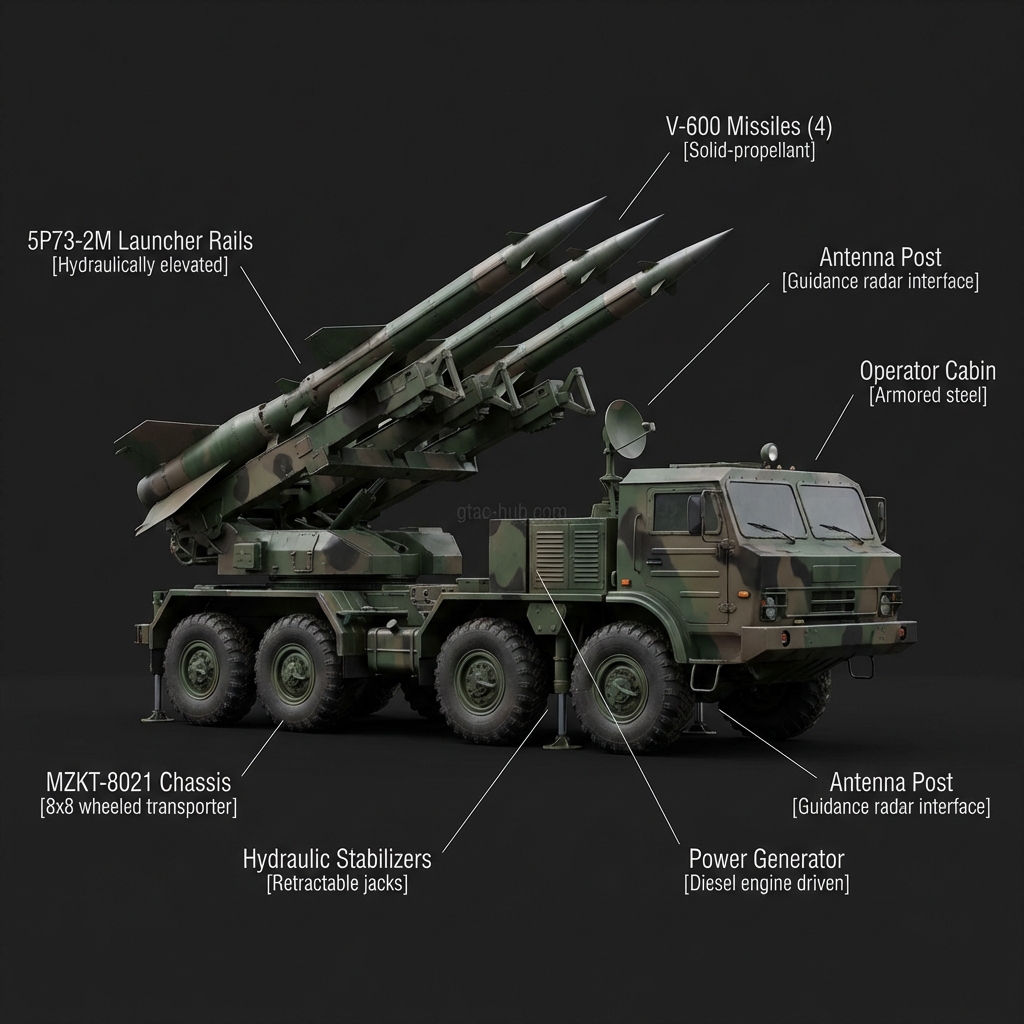
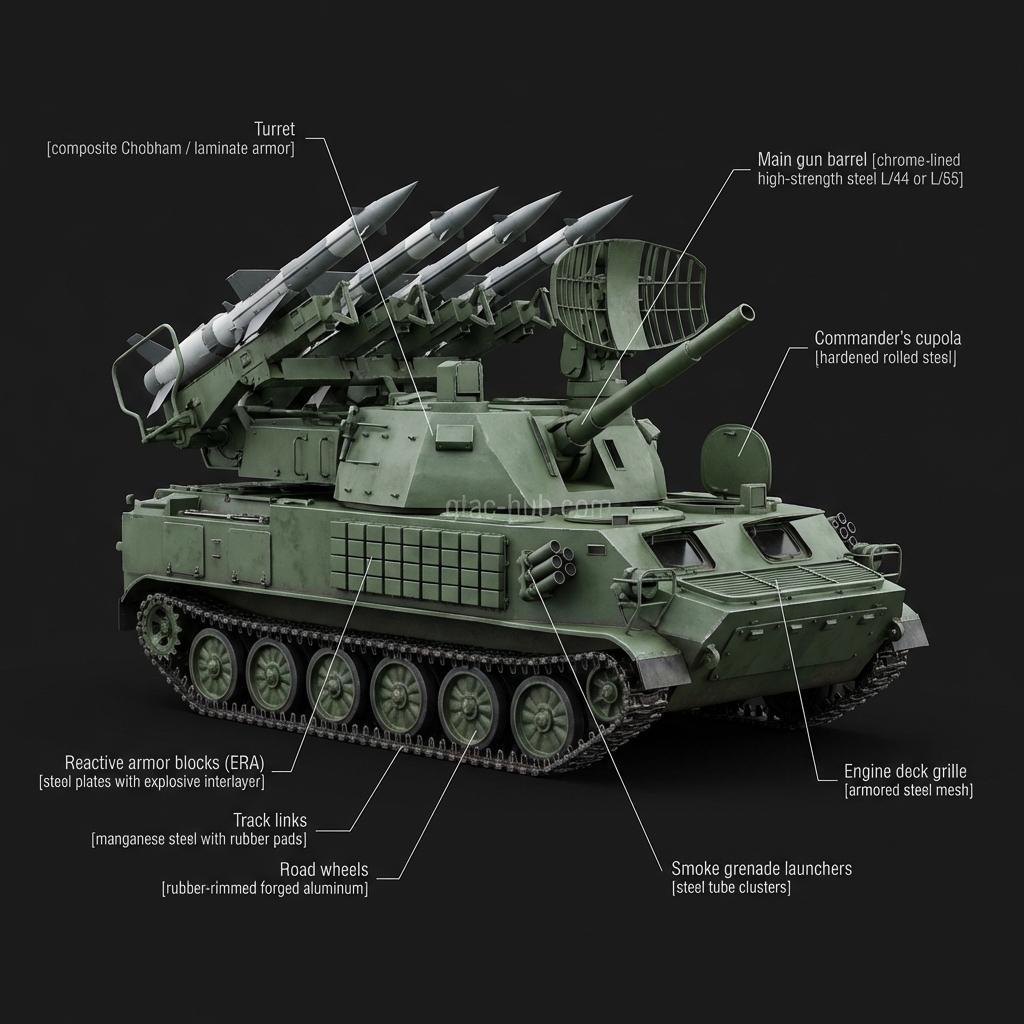
Peru operates a small number of S-125 Pechora (SA-3 Goa) low-to-medium altitude SAM systems acquired during the Soviet arms supply era. The S-125 uses radio command/semi-active radar homing guidance with a 35 km engagement range and 18 km altitude ceiling. Originally designed to complement the S-75 against low-altitude threats. Peru's systems are the baseline unmodernized version with analogue fire control. While some nations have upgraded to Pechora-2M standard with digital systems and ECCM improvements, Peru's examples remain original configuration. The system provides limited protection for fixed strategic sites but is operationally marginal against modern aircraft.



- Low-altitude target coverage complements higher-altitude SAM layers
- Dual-channel engagement allows simultaneous tracking and guidance
- Proven against subsonic aircraft and cruise missiles at 35 km range
- Some modernized variants (Pechora-2M) have improved ECCM
- 1960s-era design — highly vulnerable to modern anti-radiation missiles
- Fixed/semi-fixed deployment — not truly mobile against dynamic threats
- Original analogue guidance susceptible to ECM and jamming
- Spare parts scarce for original Soviet configuration
- Peru's systems are unmodernized baseline — operationally marginal
Sign in to join the discussion and rate this weapon system
SIGN INNo comments yet. Be the first to share your analysis.


