
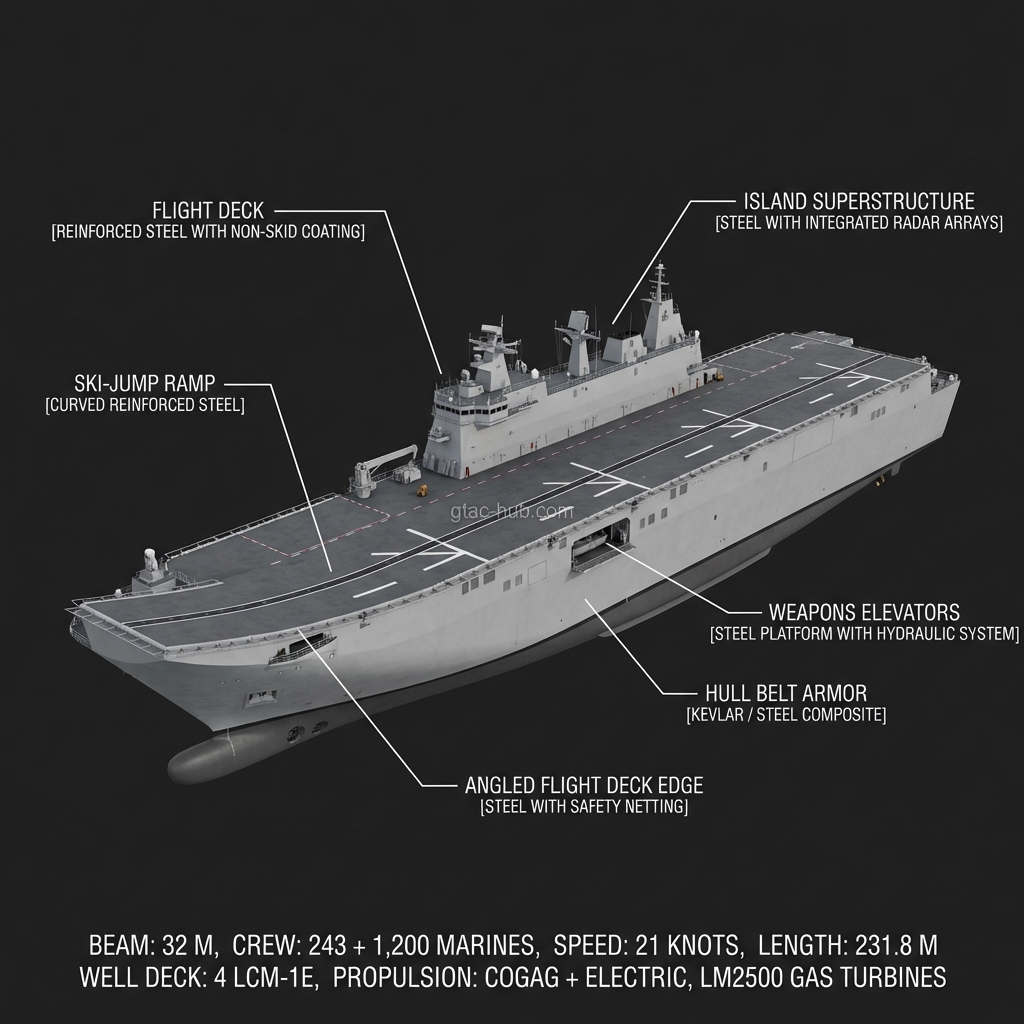
Brazilian multi-purpose helicopter carrier (formerly HMS Ocean) providing strategic sealift, humanitarian assistance, disaster relief, and power projection capability — the only helicopter carrier in Latin America. Acquired from Royal Navy 2018 for £84 million following British retirement of ship, commissioned into Brazilian Navy 2020 as NAM Atlântico (NAeL Atlântico, A140). Displacement of 21,758 tonnes with length of 203 metres — largest warship in Brazilian Navy. Features flight deck with 4 helicopter landing spots capable of operating medium and heavy helicopters, hangar accommodating up to 12 medium helicopters or mix of sizes, vehicle deck carrying armored vehicles and trucks, well deck capability for landing craft (added in British modification), accommodations for 830 marines/troops plus 285 crew, medical facilities including operating theaters and dental facilities, and command facilities for amphibious task force. Armed with defensive weapons including Phalanx CIWS, machine guns, and potentially short-range missiles. Propulsion via diesel providing 18+ knot speed. Brazilian modifications included tropical climate optimization and integration with Brazilian systems. The carrier operates SH-16 Seahawk (Brazilian designation for UH-60) and potentially other helicopters. Primary missions include amphibious operations, humanitarian assistance following natural disasters (frequent in Brazil), disaster relief, medical support to remote areas, strategic transport, and potentially expeditionary operations. Dramatically enhances Brazilian power projection capability providing mobile base for helicopter operations. Represents Brazilian blue-water navy ambitions following retirement of fixed-wing carrier São Paulo.

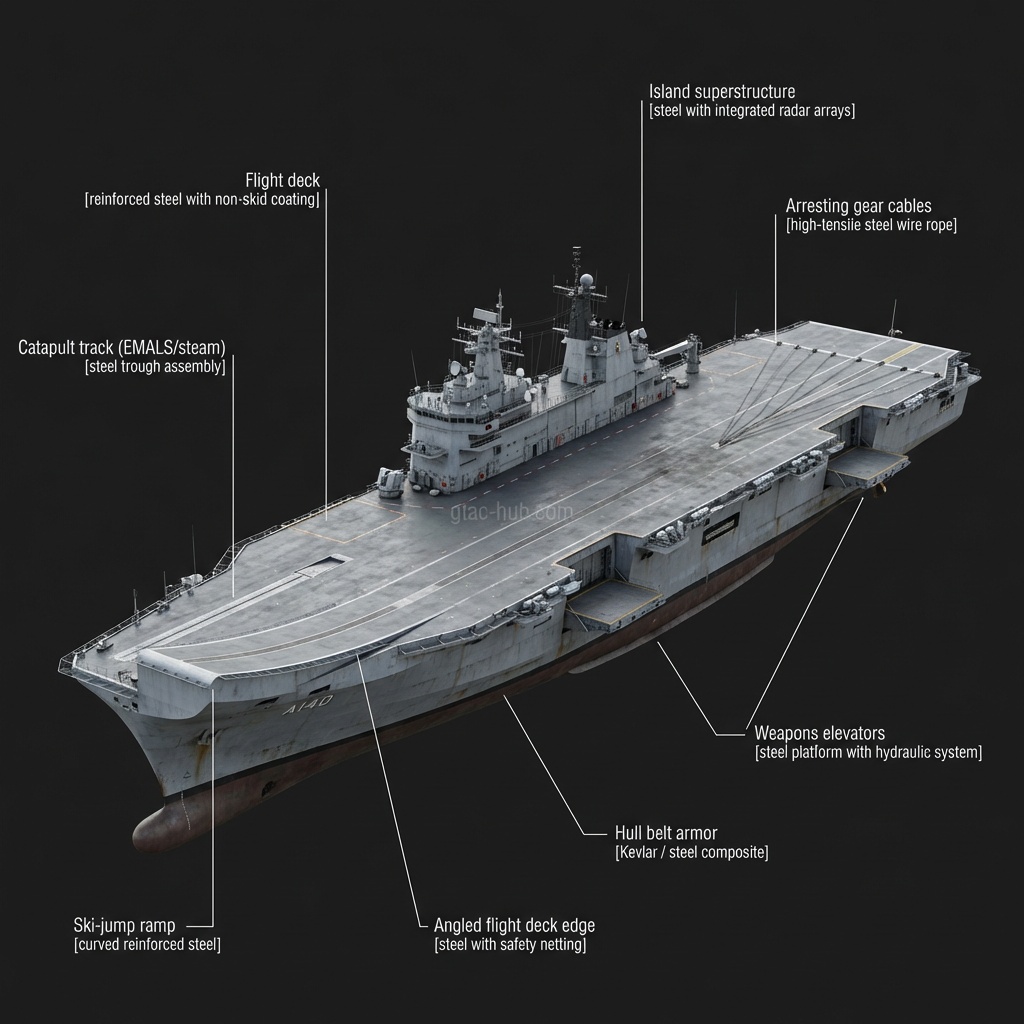
- Gives Brazil amphibious power projection capability unique in South America
- Can deploy Marines, helicopters, and landing craft simultaneously
- Platform for humanitarian and disaster relief operations
- Flagship for South Atlantic operations and UN missions
- Ex-Royal Navy ship with significant accumulated service hours
- Slow speed (18 knots) limits tactical flexibility
- Limited self-defense weapons (point defense only)
- High maintenance cost for an aging large vessel
- No fixed-wing aviation capability
Sign in to join the discussion and rate this weapon system
SIGN INSustained supersonic cruise changes the engagement timeline fundamentally — defenders have less decision time.
The crew ergonomics improvements here translate directly to reduced decision latency under fire.
The maintenance burden per flight hour will determine whether these numbers hold in extended operations.
The hull form indicates a deliberate choice for sea-keeping over sprint speed — correct priorities for sustained operations.