
American maritime patrol aircraft providing Argentine Navy with capability for maritime surveillance, anti-submarine warfare, and exclusive economic zone patrol over vast South Atlantic waters. Argentina acquired 2 P-3C Orion aircraft from Norway (2023) replacing capabilities lost with retirement of earlier maritime patrol aircraft. The P-3C represents proven maritime patrol platform with worldwide operation. Features include AN/APS-137 search radar detecting surface vessels at extended ranges, magnetic anomaly detector (MAD) boom for submarine detection, acoustic system with sonobuoy launcher, electro-optical/infrared turret, electronic warfare suite, comprehensive mission computer, and capability for anti-ship missiles, torpedoes, and depth charges. Crew of 10-11 including pilots, flight engineer, tactical coordinator, sensor operators. Endurance exceeding 12 hours enabling long-range patrols. Argentine P-3Cs conduct maritime domain awareness missions monitoring fishing vessels, surveying offshore oil reserves, search and rescue, and potential anti-submarine operations. Critical capability for monitoring extensive Argentine maritime zones including disputed areas near Falkland/Malvinas Islands. Norwegian aircraft delivered with some modernization but require further upgrades for long-term service. Represents Argentine commitment to maritime surveillance despite budget constraints. Future potential additional aircraft procurement or replacement with more modern platforms.


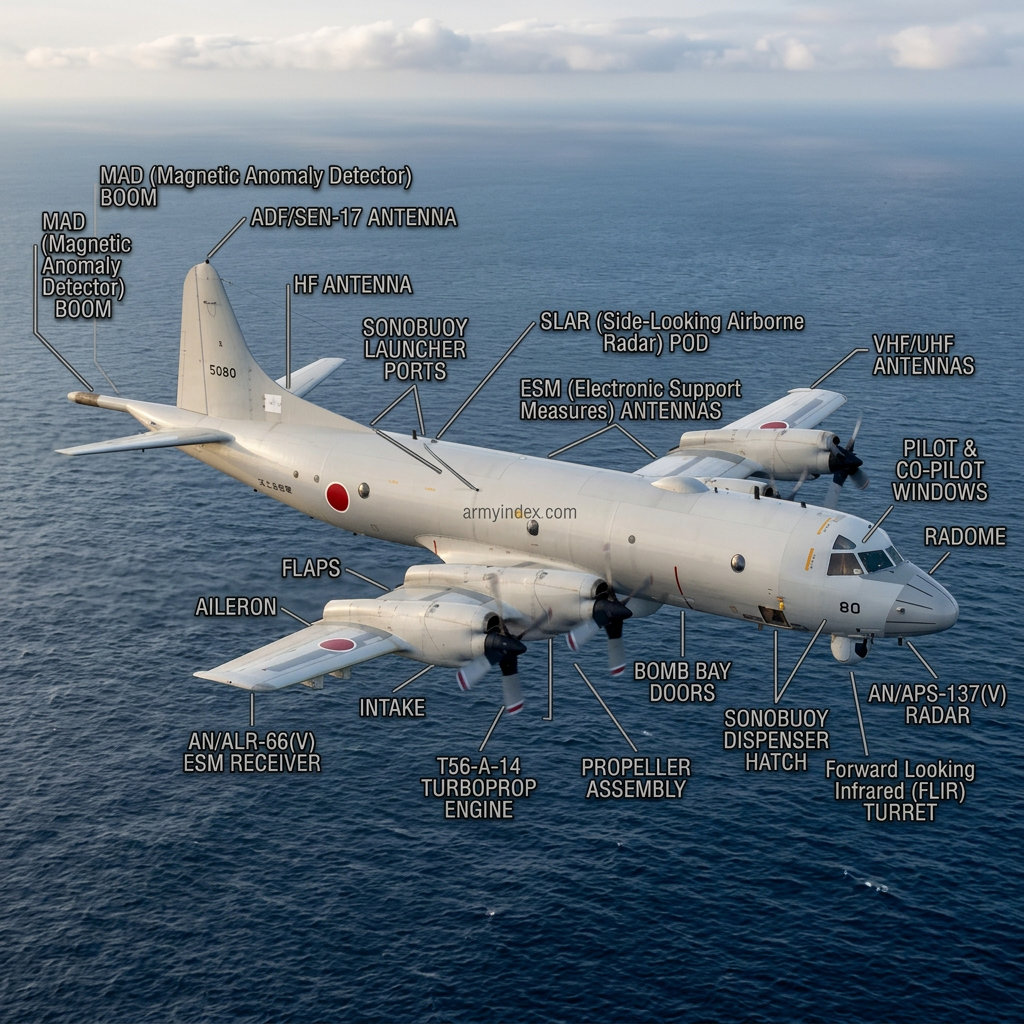
- Long-range maritime patrol covers Argentina vast Atlantic EEZ
- ASW capability provides submarine detection and prosecution
- Proven platform with decades of global service
- Multi-mission: ASW, anti-surface, ISR, search and rescue
- Aging airframes; ex-Norwegian aircraft have significant flight hours
- Four turboprop engines require intensive maintenance
- P-3 production ended in 1990; spare parts increasingly scarce
- Sensors may need updating for modern submarine detection
Sign in to join the discussion and rate this weapon system
SIGN INActive protection system integration at this weight class represents a significant leap in survivability calculus.
Sensor suite integration on this hull class gives it anti-submarine capability well above its tonnage class.