
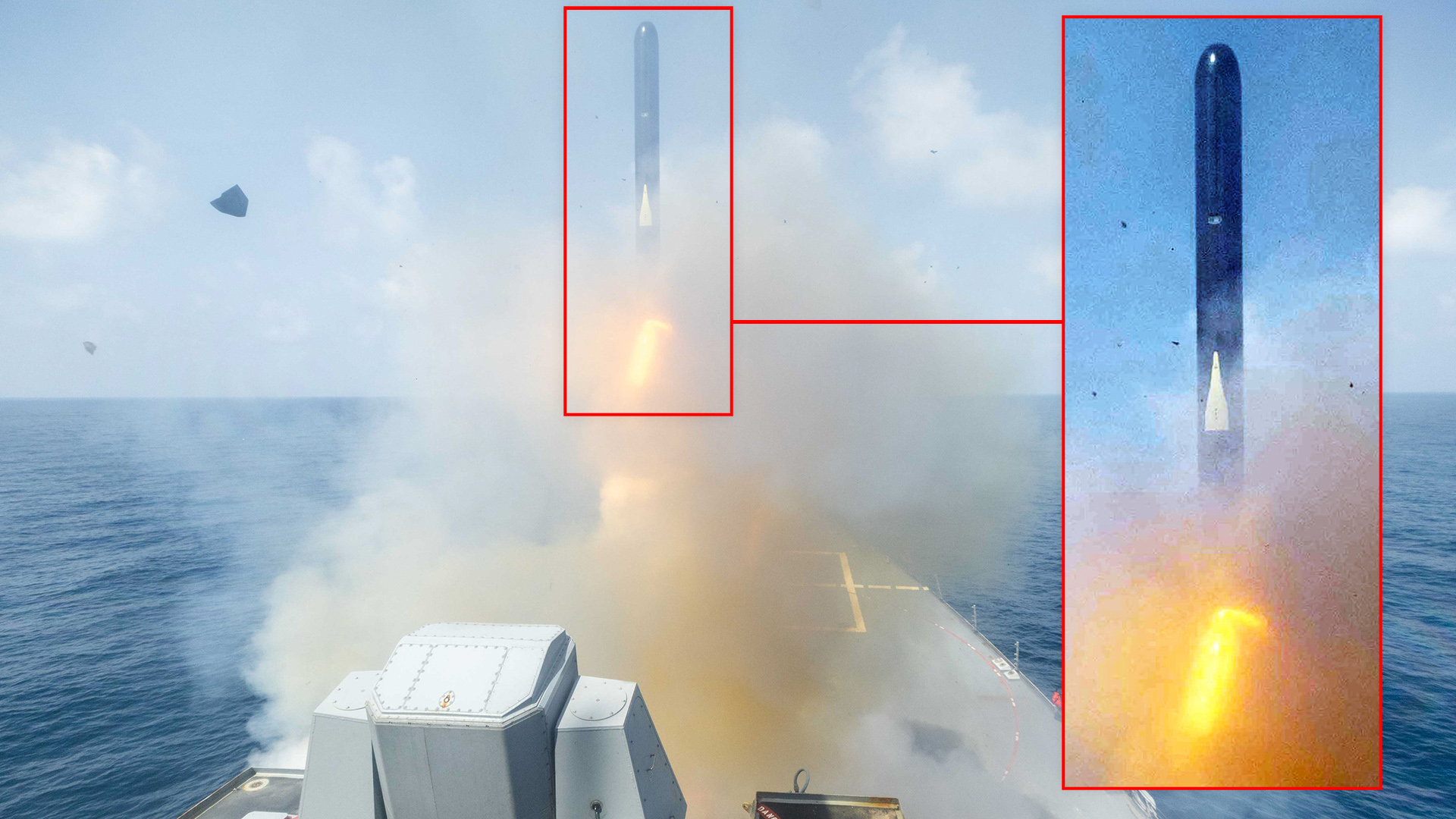
The United States has reportedly deployed the Maritime Strike Tomahawk, a variant of the Tomahawk cruise missile, in offensive operations against Iran, marking its first public appearance on the battlefield. This deployment indicates a shift in U.S. military strategy and an explicit intention to confront Iranian military threats with advanced weaponry. The use of these missiles signals a readiness to escalate military actions if deemed necessary.
Tensions between the U.S. and Iran have been simmering since the U.S. withdrawal from the Joint Comprehensive Plan of Action (JCPOA) in 2018 and subsequent economic sanctions tightening around Iran, which have fueled its proxy operations across the Middle East. The Iranian military's activities, including drone strikes and naval exercises, have intensified fears of a broader conflict. The significance of the Maritime Strike Tomahawk lies not only in its advanced capabilities but in the increased military pressure being exerted by the U.S. on Iran.
The strategic implications of deploying the Black Tomahawk are profound. By utilizing advanced missile technology, the U.S. increases its military options in a region fraught with threats to its interests and allies, especially as Iran continues to enhance its missile and drone capabilities. Iran's military posture is increasingly aggressive, and the introduction of this missile could provoke further retaliatory actions, escalating regional instability.
Key actors in this scenario include the United States, Iran, and their respective allies and adversaries in the region. The U.S. is motivated by a desire to deter Iranian aggression while reaffirming its commitment to regional partners. Conversely, Iran perceives the deployment of such advanced arsenals as a direct challenge to its sovereignty and a violation of its military security, prompting potential retaliatory measures.
The Black Tomahawk integrates advanced guidance technology and enhanced warhead capabilities, implying that it can target surface vessels or land-based targets with a high degree of accuracy. Unlike previous iterations, this model's design suggests a particular emphasis on naval superiority, with specifications possibly including improved range and payload capabilities for greater effectiveness against maritime targets.
The likely consequences of deploying the Black Tomahawk will include heightened tensions in the Persian Gulf, with the potential for an escalatory cycle of strikes and counterstrikes. Iran could escalate its proxy warfare tactics or enhance asymmetric responses to U.S. bases in the region. This cycle of retaliatory actions raises the specter of direct U.S.-Iran conflict, necessitating vigilant monitoring from global security analysts.
Historically, the introduction of advanced weaponry has often precipitated conflict escalation, as seen during the Gulf War when missile technology played a pivotal role in military strategies. Moreover, the ongoing arms race in the region shows that increased military capabilities can lead to miscalculations and unintended confrontations.
Moving forward, analysts should watch for signals from Iran regarding possible retaliatory actions against U.S. forces or allies. Furthermore, the response from U.S. military commanders and defense policymakers will be crucial in shaping the next phase of engagements in the region. Intelligence indicators such as troop movements, naval deployments, and communications intercepts will be vital in forecasting the dynamics of this growing crisis.