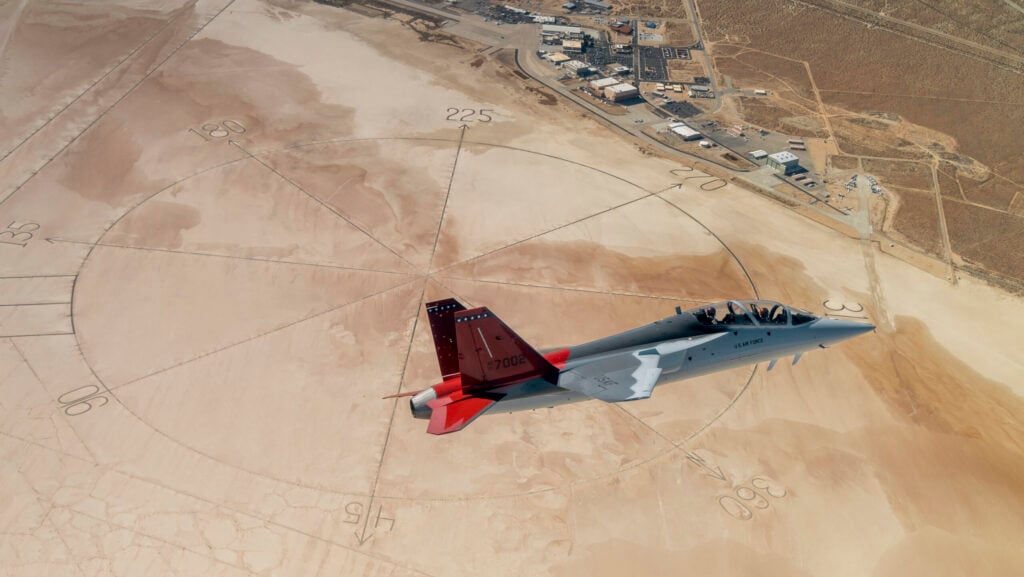
The United States Air Force is reportedly on the verge of granting approval for the production of the T-7A Red Hawk trainer aircraft, signaling a pivotal moment in the modernization of its pilot training program. Air Force Program Executive Officer for Training Rodney Stevens expressed confidence in the aircraft's design, stating readiness to demonstrate production capabilities at scale. The T-7A program has been under development to replace the aging T-38 trainer, which has been in service since the 1960s.
This production breakthrough comes at a time when global military aviation training standards must be elevated to meet the complexities of future combat environments, particularly with peer competitors enhancing their air combat training systems. The T-7A, with its advanced simulation and training technology, aims to develop pilots proficient in operating fifth-generation fighter aircraft, thus maintaining a technological edge in aerial combat.
Key players in this initiative include the US Air Force, Boeing (the contractor responsible for the T-7A design), and international allies who may seek to integrate similar training technologies. The motivations for this production approval are clear: to streamline pilot training and ensure rapid proficiency in next-generation combat aircraft. With significant international interest in modernizing training fleets, the T-7 could position the US as a leader in pilot training solutions.
Globally, the T-7A's production signals a shift towards more sophisticated pilot training initiatives, with potential implications for allied nations that could adopt similar platforms. The approval may also encourage further investments in military aviation sectors of partner nations, aligning training protocols with those of the United States, thus potentially enhancing interoperability in joint operations.
Historically, advancements in military trainer aircraft have often preceded major shifts in air combat capabilities. The T-7A could similarly herald a new era where training agility directly influences operational effectiveness, underscoring the interplay between training systems and real-world military readiness.
In conclusion, as the US Air Force prepares for T-7 production approval, the implications of this decision may extend beyond national borders, affecting global military training frameworks and collaborative defense initiatives. Analysts anticipate that successful integration of the T-7A into pilot training programs could lead to a re-evaluation of training methodologies among allied forces, ensuring readiness for contemporary aerial conflict scenarios.