
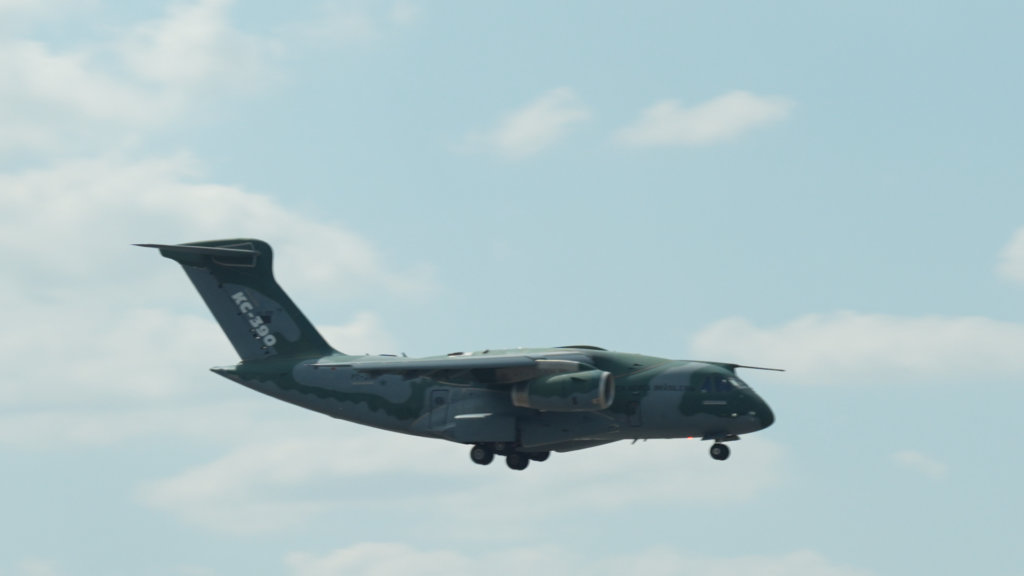
Northrop Grumman has announced a partnership with Brazil's Embraer to innovate an autonomous boom refueling system tailored for the KC-390 military transport aircraft. This agreement is formalized through a memorandum of understanding (MOU), which seeks to leverage Northrop's advanced technologies to enhance the operational versatility of the KC-390, a key platform within Brazil's defense modernization strategy. The collaboration also aims to showcase the KC-390's capabilities to a broader audience, including potential customers among key NATO allies and others evaluating modern airlift solutions.
The strategic significance of this partnership lies in the growing emphasis on autonomous systems within military operations and the increasing competition among global defense contractors to secure contracts for advanced military equipment. The KC-390's enhanced refueling capability could position it favorably against competitors in the tactical airlift segment, especially for countries looking to expand their logistical and operational capacities without extensive foreign procurement resets.
Key players in this initiative include Northrop Grumman, renowned for its defense technology innovations, and Embraer, which is actively seeking to strengthen its defense sector through international collaborations. The United States and Brazil have longstanding military relations, with Brazil being a key partner in hemispheric security, making this partnership attractive to US defense interests. Additionally, other countries engaged in regional security operations might find the KC-390 an optimal contender to meet their logistical needs, thereby encouraging broader adoption.
This development has potential implications across multiple regions. The modernization of the KC-390 could enhance Brazil's defense export capability, positioning the nation as a more prominent player in the international defense market. Furthermore, if successful, it could catalyze a new wave of competition among global defense firms as they innovate to keep pace with military demand for advanced air capabilities. The next steps following this partnership could see a shift in procurement dynamics, especially if the KC-390 is recognized as a viable alternative for nations currently reliant on US and European platforms.
Historically, international defense partnerships have demonstrated the potential to reshape strategic alliances and procurement decisions among military powers. The collaborative development of military platforms often reflects a deeper integration of defense strategies among partnering nations, as seen in past instances involving Brazil's defense establishment and various international collaborators.
Analyst assessment suggests this project could yield substantial developments in autonomous air refueling, aligning with the growing trend of automation in military logistics. Moving forward, the success of the KC-390 and its refueling capabilities could reinforce Brazil's role as a critical player in defense manufacturing and export, particularly within the Latin American market and beyond, influencing alliances and military engagements.