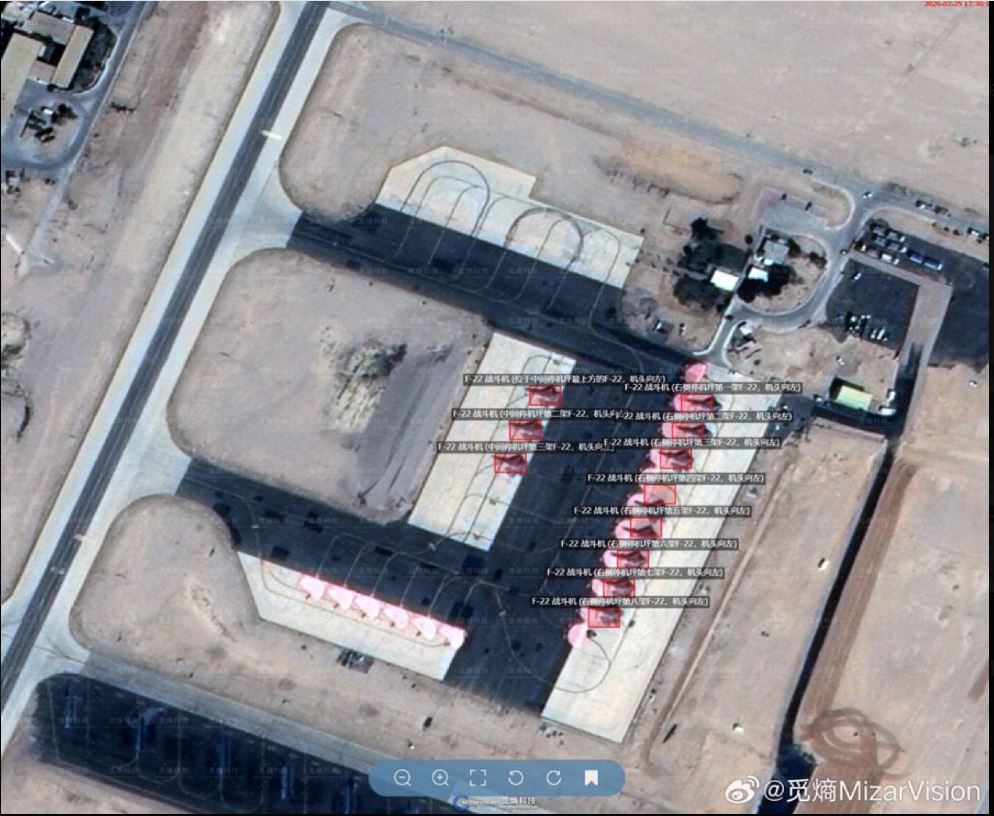
In a provocative intelligence move, China has publicly released detailed satellite imagery of U.S. F-22 Raptors stationed at Israel’s Ovda Air Base. This revelation comes less than 24 hours after the stealth fighter jets were reportedly forward deployed to the region amid rising tensions with Iran. The release of this information not only spotlights U.S. military operations but could potentially compromise their effectiveness in any forthcoming confrontations with Iranian forces.
The deployment of these cutting-edge F-22 Raptors appears to be a response to the deteriorating security situation surrounding Iran, marked by increasing military posturing from both Washington and Tehran. For years, the U.S. and its allies have worked to counter Iran's influence in the region, particularly after the withdrawal of the U.S. from the JCPOA in 2018. The decision to forward deploy the Raptors underscores the complex dynamic of U.S. support for Israel while simultaneously acting against Iranian aggression, making the exposure of this move even more critical.
This breach not only signifies China's growing capability in reconnaissance and military intelligence but also exposes vulnerabilities in U.S. operational security. By showcasing the F-22s, China directly undermines U.S. deterrence strategies that rely on the element of surprise and stealth. The implications extend beyond just military operational failures; this incident may embolden Iran to test U.S. resolve, knowing they have insight into American air capabilities.
The key actors at play include the U.S. military's strategic interests in protecting its allies in the Middle East, China’s objective to gain leverage over U.S. military operations, and Iran’s ongoing efforts to strengthen its military postures in the region. While the U.S. may portray the F-22 deployment as a defensive measure, China’s aggressive intelligence tactics suggest a desire to undermine American actions and reassert its own influence in global military affairs.
The F-22 Raptors are among the most advanced stealth fighters, renowned not only for their speed—capable of over 1,200 km/h—but for their advanced avionics and sensor systems that create a significant edge in combat scenarios. However, the exposure of their exact location diminishes their stealth advantages, effectively reducing U.S. air superiority in the event of a confrontation with Iran. With 11 Raptors now targeted, there is a heightened risk of Iranian kinetic counters, including missile strikes on the base that could result in severe U.S. losses.
The likely consequences include a rapid escalation of military tensions in the region, potentially prompting Iran to engage more aggressively in proxy conflicts or direct confrontations. It can lead to an involuntary cycle of retaliation, where the U.S. may feel compelled to respond with military strikes, thereby deepening the crisis. As China continues to exploit vulnerabilities in U.S. intelligence and military deployments, this incident serves as a wake-up call for American military planners.
Historically, similar exposures have led to significant shifts in military engagements and operational tactics. For example, during the Cold War, the discovery of U.S. surveillance capabilities often resulted in adjustments in military deployments and intelligence methods. The current context mirrors those tensions, indicating that operational security is paramount, as adversaries seek every possible advantage.
Going forward, military leaders and intelligence analysts must closely monitor Iranian military responses and any shifts in the geopolitical landscape around the Gulf. Signals of increased Iranian military activity, whether through troop movements or missile tests, could indicate a heightened threat to U.S. interests. Additionally, the response from the U.S. military regarding how they safeguarded their F-22s will provide critical insights into their strategic adjustments in light of this intelligence breach.