
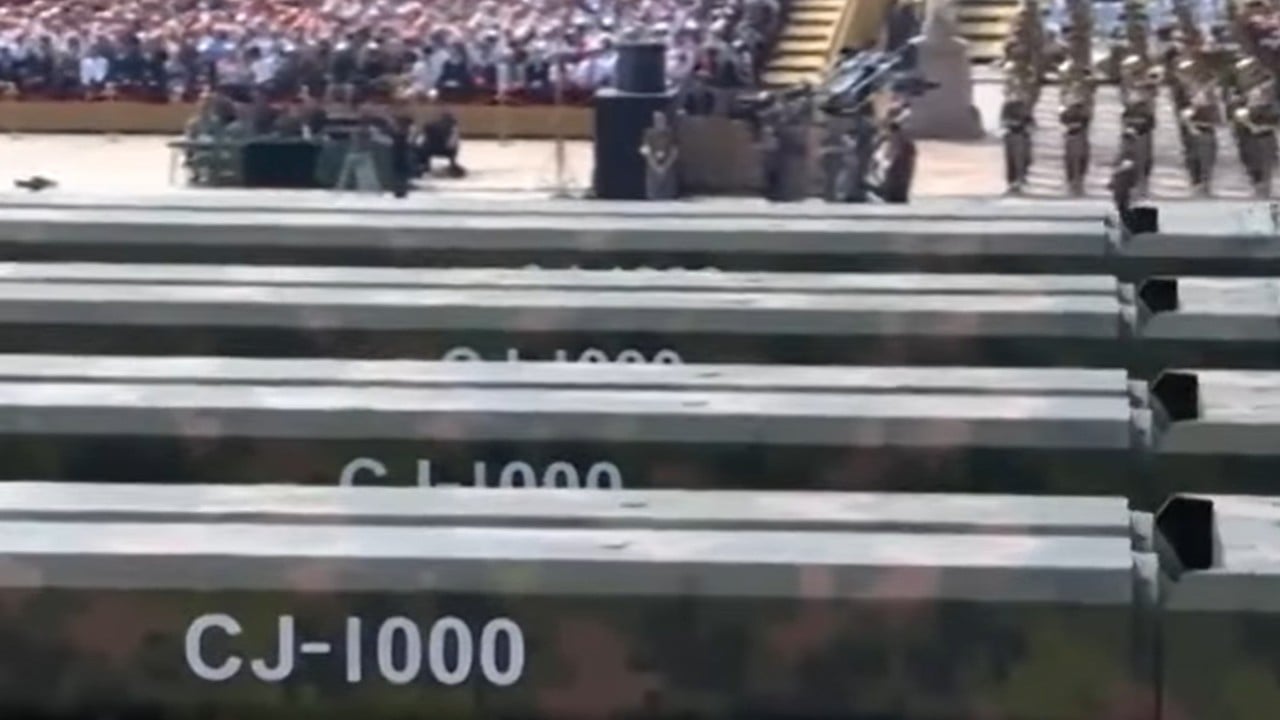
China recently showcased its long-range hypersonic CJ-1000 missile, marking a significant technological advancement in missile systems. This development was highlighted during the Victory Day military parade in Beijing in September, where the CJ-1000, alongside the ship-launched YJ-19, drew attention due to their advanced scramjet propulsion systems. Military analysts have noted that these two missiles represent the world's only operational hypersonic weapons equipped with air-breathing engines, a critical milestone in modern warfare technology.
The strategic significance of this advancement cannot be overstated, as hypersonic weapons like the CJ-1000 are designed to evade traditional missile defence systems through their speed and maneuverability. They are capable of flying at speeds exceeding Mach 5 and can alter their trajectory mid-flight, presenting a formidable challenge to existing air defence mechanisms that may struggle to intercept such fast-moving targets. As global military powers prioritize hypersonic capabilities, China’s lead in this area amplifies concerns regarding the protection of critical assets in future conflicts.
Key players in this development include the People's Liberation Army (PLA) and military analysts from various countries, including the United States, Russia, and NATO allies. China's motivation appears to stem from a desire to assert its military dominance while countering perceived threats, particularly from the U.S. and its allies in the Indo-Pacific region. Concurrently, U.S. military officials are re-evaluating their defence capabilities in light of China's advancements, recognizing the urgent need for enhanced missile defence systems and strategic adjustments.
The implications of China’s hypersonic advancements extend beyond regional security, potentially destabilizing the global military balance. As countries like Russia and India ramp up their own hypersonic missile programs in response, the resultant arms race may lead to increased tensions and fragility in strategic stability. Moreover, the ability of hypersonic weapons to bypass traditional defence systems poses an existential challenge to current military doctrines across various nations.
Historically, advancements in military technology have led to shifts in power dynamics, often requiring substantial adaptations of existing strategies and forces. The emergence of hypersonic capabilities reaffirms this trajectory, echoing the significant shifts witnessed during the Cold War era and the arms race that characterized it. With hypersonic technology becoming a pivotal focus for military planners, countries must reckon with the implications of this new reality.
Analyst assessments suggest that the U.S. and its allies will need to innovate rapidly in both defensive and offensive capabilities to counter the growing hypersonic threat. Future military budgets may increasingly reflect this imperative as nations seek to invest in research and development aimed at counteracting the challenges posed by countries like China, ensuring that they are not caught at a strategic disadvantage in the evolving landscape of modern warfare.