
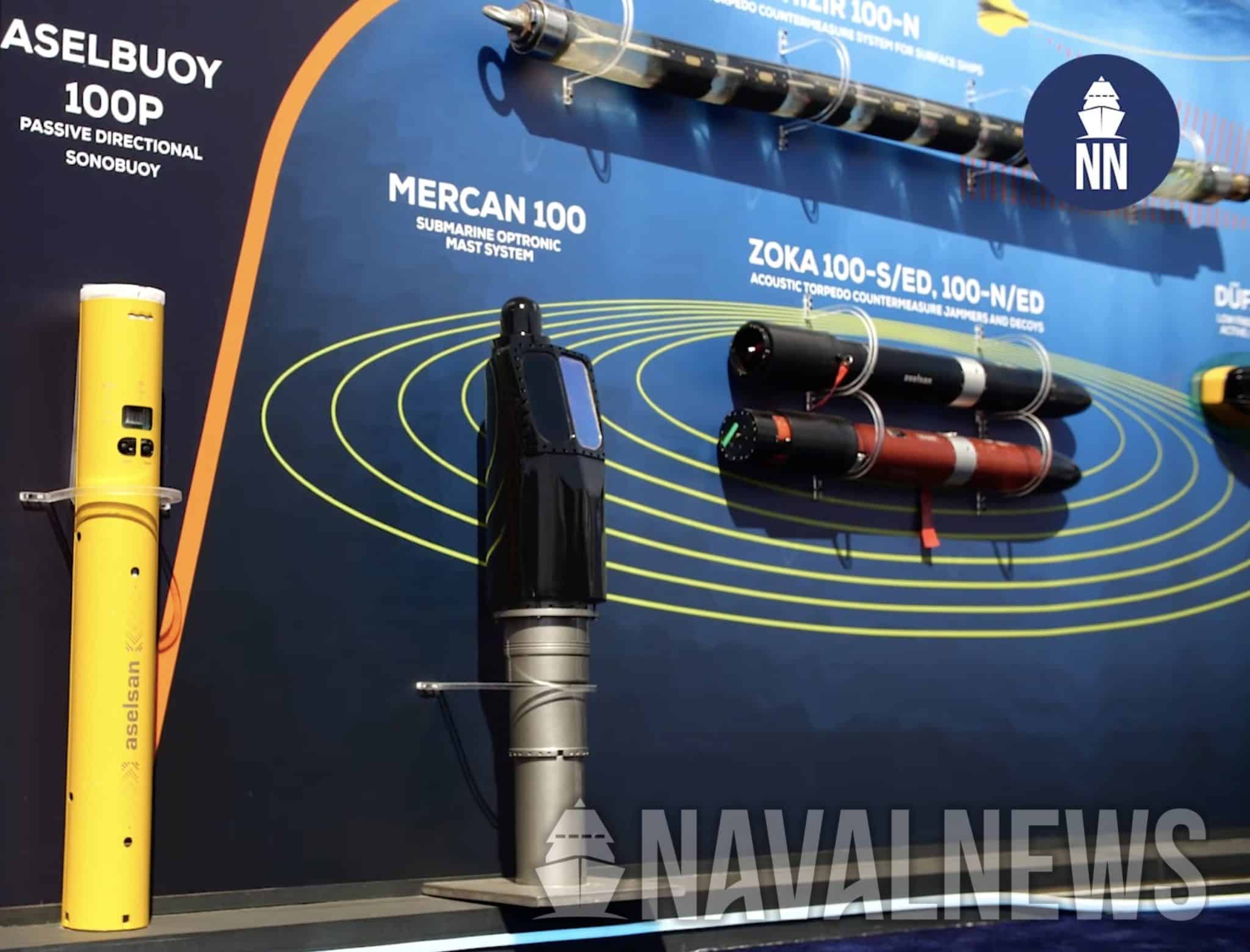
Aselsan, a leading Turkish defense electronics company, announced plans to conduct live tests of its new aselBUOY passive sonobuoys deployed from unmanned aerial vehicles in the forthcoming weeks. This announcement was made by Aselsan's CEO Ahmet Akyol in an interview during the World Defense Show 2026 in Riyadh. The aselBUOY system is designed for underwater surveillance and targets detection, thereby expanding the operational scope of UAVs in countering maritime threats.
The development comes at a time when naval power and anti-submarine warfare capabilities are pivotal to national security, particularly in contested waters. As Turkey continues to invest in unmanned systems and maritime technology, the deployment of aselBUOY from UAVs aligns with broader efforts to enhance naval warfare flexibility and operational reach. This capability will enable Turkish forces to conduct extensive surveillance operations over large maritime areas, which is crucial given the strategic significance of maritime routes in the Mediterranean and Black Sea regions.
Key players in this development include Aselsan and the Turkish Military, aiming to bolster Turkey’s defense exports and military self-sufficiency. Aselsan’s advancements in UAV systems reflect Turkey's increasing investment in indigenous defense projects, highlighting a strategic pivot towards advanced technologies in response to regional threats. Countries with regional maritime interests, including Greece and Cyprus, may view these developments with concern due to the historical tensions in the Eastern Mediterranean.
The introduction of the aselBUOY system not only enhances Turkey's operational capabilities but could also shift the balance of power in maritime operations within the region. Other nations, particularly those in NATO and neighboring states, may accelerate their own developments in anti-submarine warfare and reconnaissance capabilities as a countermeasure. Furthermore, the NATO alliance may need to reassess its maritime strategy in light of Turkey's enhanced surveillance capabilities, impacting collective security posture in the region.
Historically, Turkey has faced challenges in maritime operations amid rising regional tensions. The activation of systems like the aselBUOY illustrates a strategic effort to mitigate underwater threats and assert control over vital maritime zones. This initiative follows similar trends seen in other nations investing heavily in surveillance technologies and unmanned systems in response to increasing geopolitical competition.
Looking ahead, the successful integration of aselBUOY into Turkey’s military operations could redefine anti-submarine tactics, encouraging the development of additional UAV capabilities. The potential for enhanced maritime surveillance raises questions about the future dynamics of regional naval engagements and international collaborative security efforts.