
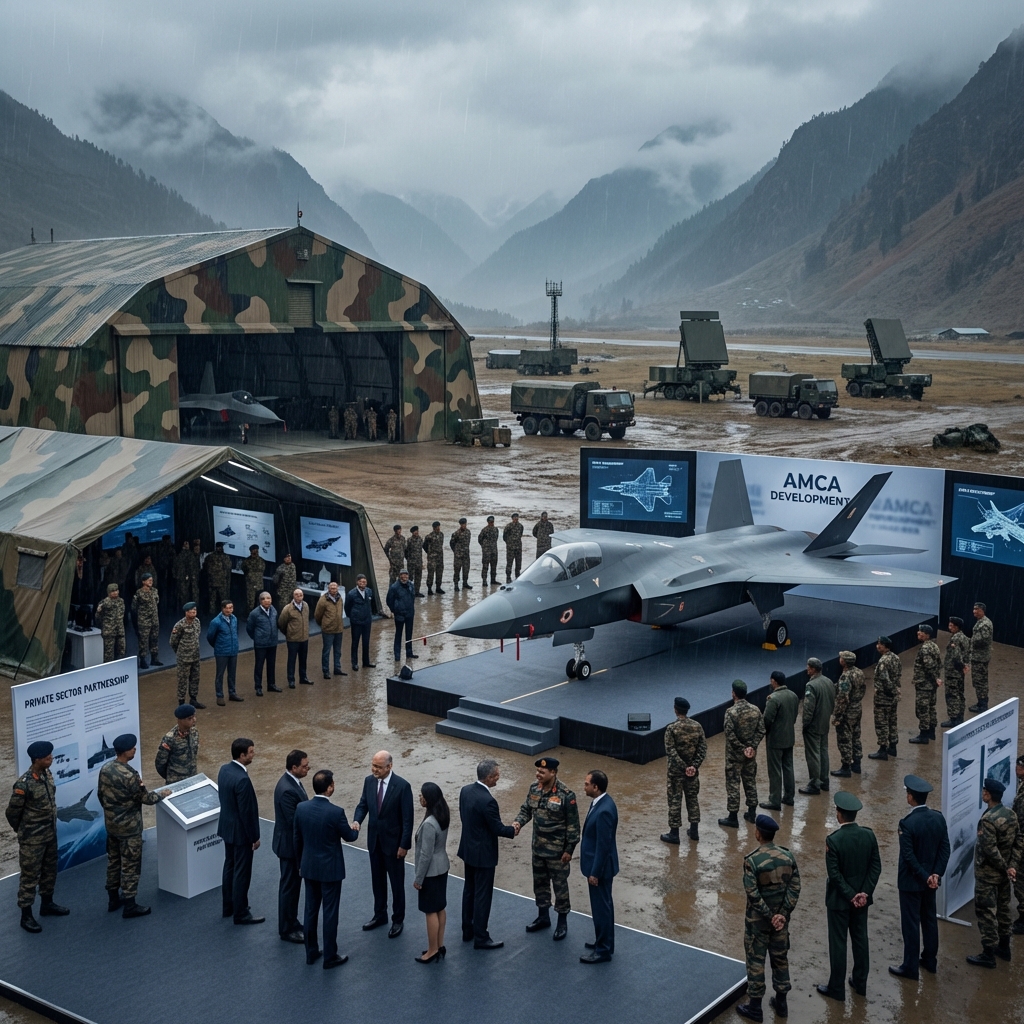
India's fifth-generation stealth fighter programme designed to provide the IAF with air superiority and strike capability against advanced integrated air defence systems. The AMCA features a twin-engine configuration (2x GE F414 initially, potentially indigenous Kaveri engine in later variants), stealthy airframe with serpentine engine intakes, internal weapons bays for 4 BVR missiles and 2 WVR missiles (additional external hardpoints for non-stealth missions), active electronically scanned array (AESA) radar, advanced sensor fusion including Distributed Aperture System (DAS), supercruise capability, and network-centric warfare integration. Maximum takeoff weight of approximately 25 tonnes with combat radius exceeding 1,000 km. Development is proceeding in two phases: AMCA Mk1 with GE F414 engines and AMCA Mk2 with more powerful engines (potentially 110 kN-class) for improved performance. First flight targeted for 2027-2028 with initial operational capability in the mid-2030s. Indian Air Force plans 120+ AMCA fighters to complement the foreign-sourced FGFA or Rafael.


- First indigenous stealth fighter program — major strategic capability leap for India
- Internal weapons bays maintain low-observable profile during operations
- Twin-engine design provides reliability for overwater and high-threat operations
- Full sensor fusion architecture planned from inception
- Extremely ambitious program for India current aerospace maturity level
- Indigenous Kaveri derivative engine not ready — interim foreign engine required
- First flight not expected before 2028–29; IOC likely 2035+
- Cost and timeline overruns historically high for programs of this complexity
Sign in to join the discussion and rate this weapon system
SIGN INNo comments yet. Be the first to share your analysis.


