
Underwater Missile Launch Pads: Chinese Study Indicates Feasibility
ЗАПУСК ПРОДУКТА

Underwater Missile Launch Pads: Chinese Study Indicates Feasibility

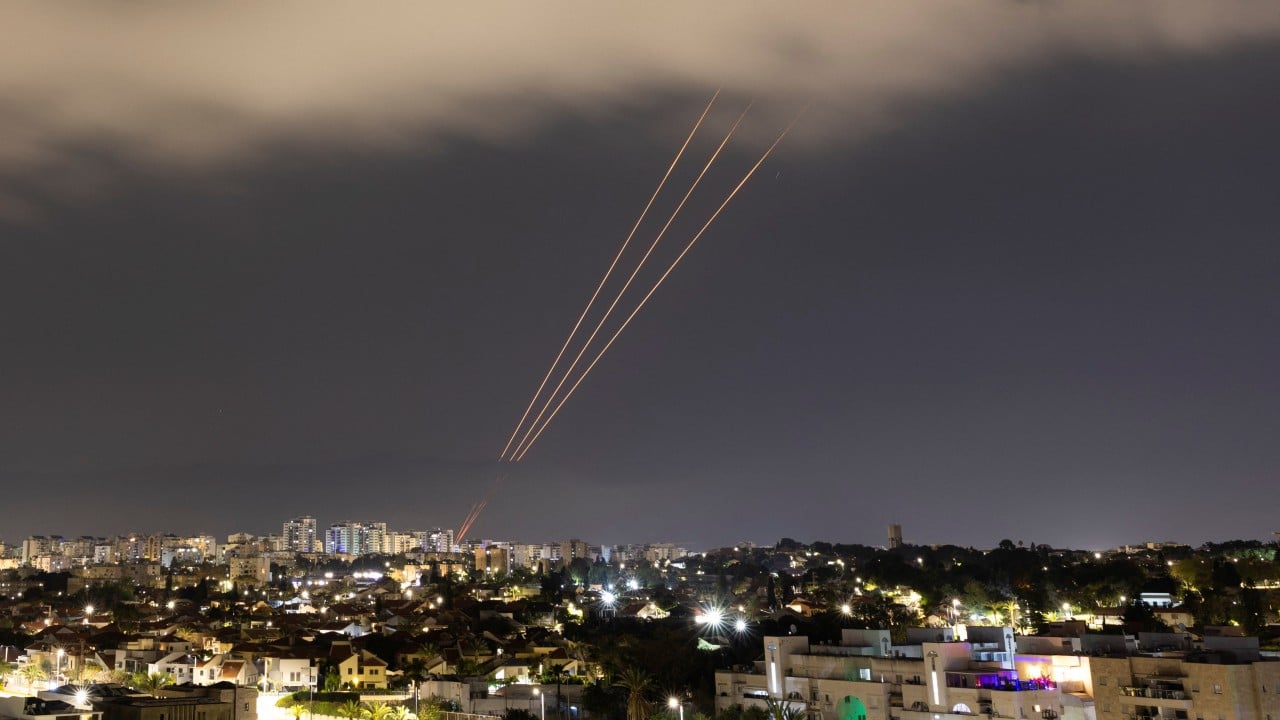
Фото: South China Morning Post
Восточная Азия
КРАТКОЕ РЕЗЮМЕ

Chinese researchers have successfully tested the ignition of solid rocket engines at depths of 200 meters underwater, surpassing current submarine-launched missile capabilities. This breakthrough opens the door for next-generation deep-sea weapon platforms with enhanced strategic flexibility.

Recent experiments conducted by Chinese defense scientists indicate that solid-fuel rocket engines can reliably ignite at depths of up to 200 meters underwater, a depth significantly greater than those used by existing submarine-launched ballistic missiles. Current underwater missile launches typically occur at much shallower depths, constrained by launch tube and pressure system limitations. The Chinese tests involved controlled simulations and live ignitions to validate engine performance under extreme hydrostatic pressure.

Technically, the capability to ignite a missile launch pad on the seabed at such depths enables new configurations of ballistic missile deployment, potentially independent of traditional submarine platforms. This could lead to fixed or mobile underwater missile silos that enhance strategic deterrence by complicating adversary targeting. The deep launch environment demands robust engineering to prevent seawater intrusion and manage thermal and mechanical stresses during ignition.

Chinese defense manufacturers, notably those developing the Julang ('Giant Wave') series of submarine-launched ballistic missiles, are likely leveraging these findings to diversify their strategic arsenal. By exploring seabed launch platforms, China could augment its second-strike capabilities, contributing to an escalated undersea strategic competition.

Strategically, this innovation offers operational advantages including stealthier launch signatures and reduced vulnerability of delivery systems. It could also enable missile deployment in contested or denied environments where submarine access is limited. However, challenges remain in infrastructure deployment, maintenance, and command-and-control of seabed missile facilities.

In conclusion, the demonstration of underwater solid rocket ignition at 200 meters represents a significant technological step, suggesting new directions for undersea weapons systems. This development warrants close attention from global defense analysts as it could alter the strategic balance related to naval ballistic missile deterrence.

ИСТОЧНИКИ РАЗВЕДКИ
СВЯЗАННЫЕ РАЗВЕДДАННЫЕ
Lessons for China from Iran War on Missile Interception
ВОСТОЧНАЯ АЗИЯ
ОБОРОННАЯ ВЫСТАВКА

Lessons for China from Iran War on Missile Interception

A Chinese military publication highlights the escalating missile threats from the US, its allies, Taiwan, and India, urging Beijing to enhance its air-based missile interception capabilities. The ongoing Iran conflict demonstrates the challenges posed by ballistic missile barrages to existing midcourse and terminal phase defense systems.

14Д НАЗАДЧИТАТЬ
Chinese Advisers Urge Government 'Red Lines' for AI Applications
ВОСТОЧНАЯ АЗИЯ
ИССЛЕДОВАНИЕ

Chinese Advisers Urge Government 'Red Lines' for AI Applications

Chinese experts advocate for government-imposed limits on AI to mitigate job displacement and security risks. They emphasize cautious AI deployment to ensure service quality and protect data integrity.

14Д НАЗАДЧИТАТЬ
Climate Change Behind Collapse of Ancient Chinese Civilization
ВОСТОЧНАЯ АЗИЯ
ОБОРОННАЯ ВЫСТАВКА

Climate Change Behind Collapse of Ancient Chinese Civilization

Recent studies attribute the decline of a 4,500-year-old Chinese civilization in Hubei to significant climate shifts. These environmental changes disrupted agriculture and water management, leading to societal dispersal.

15Д НАЗАДЧИТАТЬ
Drone Footage Exposes Damage from Iranian Missile in Arad
REGION.ISRAEL
НОВЫЕ ТЕХНОЛОГИИ

Drone Footage Exposes Damage from Iranian Missile in Arad

Recent drone reconnaissance has provided detailed imagery of the structural damage in Arad following an Iranian missile strike. The surveillance highlights the missile's impact on civilian infrastructure, emphasizing the need for enhanced missile defense systems.

13Д НАЗАДЧИТАТЬ