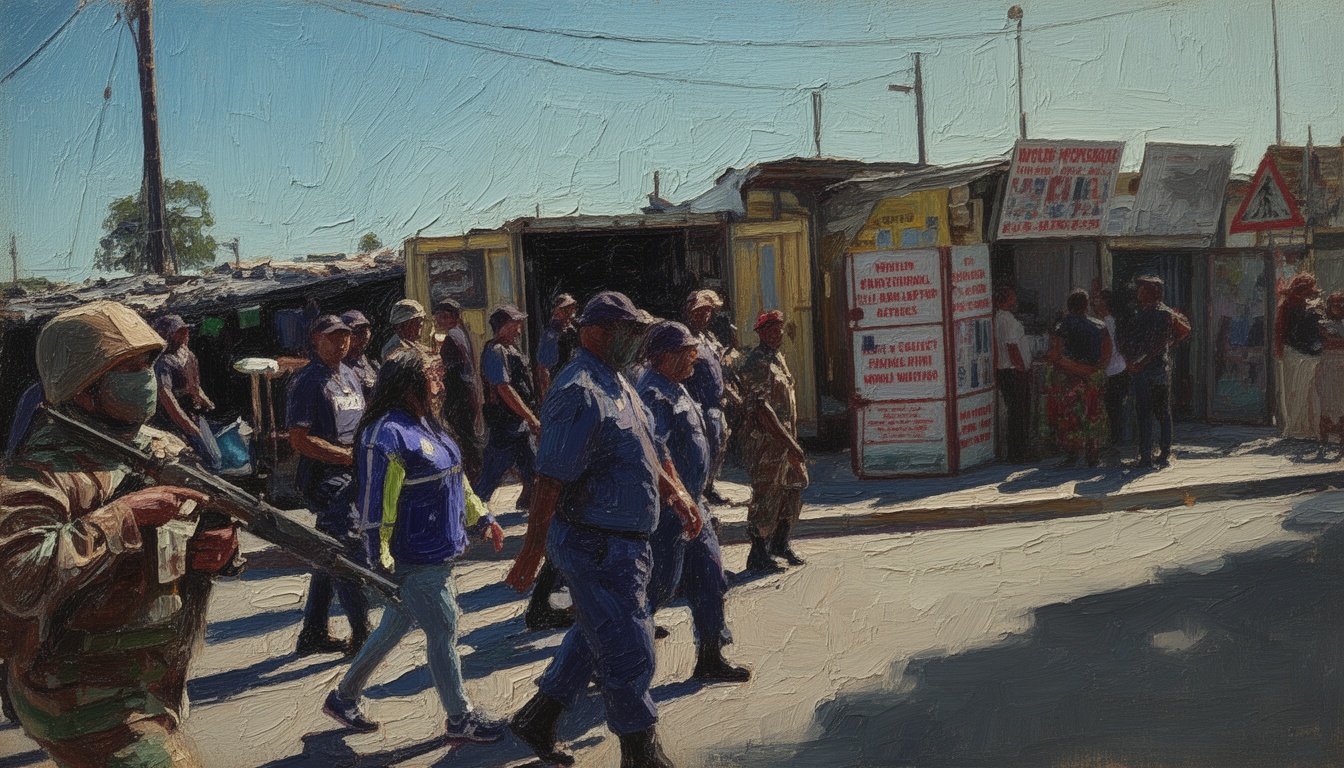
In a drastic response to escalating violence, South African President Cyril Ramaphosa has deployed the military to combat rampant gang activity across three provinces. This militarization of policing arrives as gang-related crimes surged, prompting citizens to voice deepening fears of lawlessness. Critics are concerned that the military's involvement could lead only to further violence, making the situation more precarious for already vulnerable communities.
Historically, South Africa's gang issue has spiraled out of control, particularly in urban townships facing systemic poverty and high unemployment. The rise of organized crime in cities like Cape Town and Johannesburg can be attributed to decades of social inequalities and weakened law enforcement structures. Previous attempts at policing these communities have often met with resistance and have failed to create lasting improvements in safety, setting a troubling precedent for the current intervention.
The significance of this deployment cannot be overstated; it highlights a dramatic deterioration of public security. The South African National Defence Force (SANDF) mobilization is not only a response to crime but indicates a broader government defeat in maintaining civil order. This military action may destabilize the very communities it aims to protect, creating an environment ripe for clashes between soldiers and gang members, with innocent civilians caught in the crossfire.
Key players in this scenario include the South African government, which seeks to restore its reputation and authority amid growing unrest, and the gangs that operate as quasi-governments in their territories. Ramaphosa's decision reflects a prioritization of demonstrative action over comprehensive policy solutions to the underlying causes of crime, such as poverty and lack of opportunity, which many see as a signal of desperation.
Operationally, the SANDF's forces, although not specified in terms of numbers, comprise specialized units trained for urban conflict, and their engagement could escalate already high tensions. The estimated budget for this operation is significant, with resources likely redirected from more proactive community outreach and development programs. This shift may lead to shortsighted tactics rather than sustainable peace.
The consequences of this military deployment could further embolden gangs, provoking violent retaliation that could spiral into civil unrest. If incidents of collateral damage occur, public sentiment may sway against the military, inciting protests that could complicate an already dire security landscape. There is potential for greater militarization of policing throughout the country, leading to a cycle of violence and mistrust as communities become hostile towards both police and soldiers alike.
Historical parallels exist in other nations tackling similar issues through militarization where the situation worsened rather than improved, highlighting the risks involved. The militarized responses in Mexico to drug cartels led to increased violence and instability, serving as a cautionary tale for South Africa's strategy.
In the coming weeks, analysts will monitor for indicators such as civil unrest, changes in crime rates, and the military's engagement strategies. Intelligence efforts should focus on how community sentiment evolves, as public pushback or support can significantly influence the operational effectiveness of the SANDF’s deployment. Furthermore, potential shifts in gang tactics in response to military presence will provide critical insights into the stability of the region going forward.