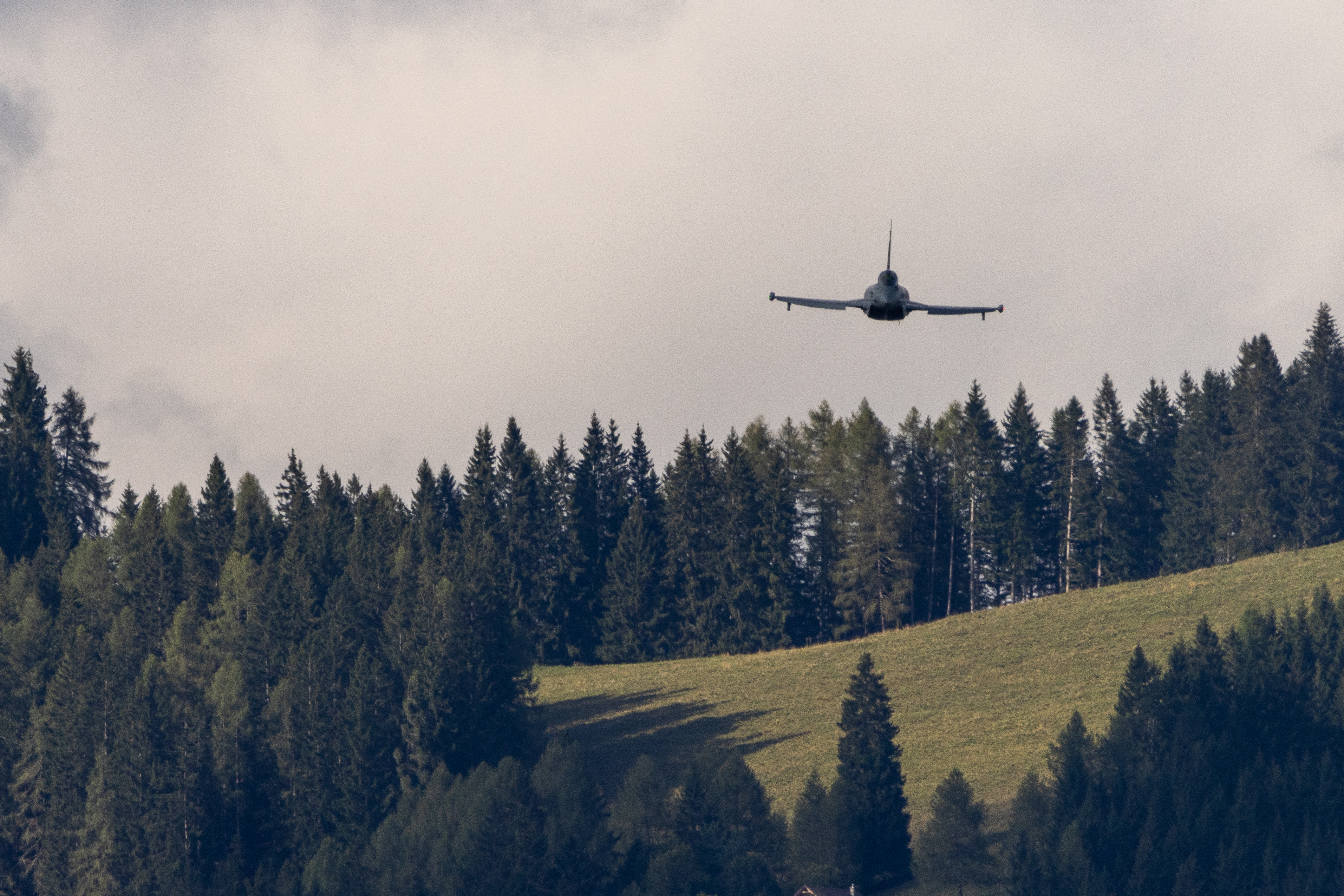
Germany and Austria have enacted a new law enabling rapid pursuit of airspace violations and unknown threats across their shared border. This move formalizes efforts to enhance airspace situational awareness and response capabilities against potential threats perceived as non-military. The law comes amid increasing concerns over aerial incursions and data regarding unidentified aerial phenomena.
Historically, Germany and Austria have maintained a cooperative approach to security, especially given their geographical and operational shared interests. However, the context has evolved due to rising geopolitical tensions across Europe, including heightened Russian military activity and the increase in unauthorized aerial incursions from neighboring regions. The new law is a direct response to these evolving threats, marking a shift towards a more proactive defense posture.
This development carries significant implications for European security dynamics. The expansion of airspace surveillance among these two Central European nations underscores the fragility of airspace sovereignty and the potential for unintended confrontations. Enhanced surveillance capabilities may exacerbate tensions if misinterpretations occur, especially in the context of recent non-state aerial threats, which have been increasingly reported across Europe.
Key actors in this initiative include the German Air Force (Luftwaffe) and the Austrian Air Force (Österreichische Luftstreitkräfte), both of which are under pressure to modernize their systems for rapid identification and engagement of aerial threats. Their motivations extend beyond mere border security; they reflect a broader urgency to project strength and readiness as they adapt to an uncertain security environment that includes both military and non-traditional threats.
Operationally, this law may lead to collaborations involving advanced radar systems and drone technology to bolster monitoring capabilities. Germany's Luftwaffe is equipped with the Eurofighter Typhoon and the A400M Atlas for surveillance missions, while Austria utilizes the Saab 105 and Eurofighter Typhoon. As funding details emerge, the emphasis will likely be on integrating technology for real-time data sharing and coordinated responses.
The likelihood of unintended escalations or cross-border incidents increases with the implementation of this law. Miscommunications or misidentified aircraft could provoke military responses, drawing both nations into a crisis situation. Furthermore, if this initiative intersects with NATO activities, it could complicate response strategies and collective defense assumptions.
Historical precedents illustrate the risks of escalating surveillance and military posturing, as seen during the Cold War when heightened aerial surveillance contributed to multiple near-confrontations. The expanded roles of both air forces could repeat these crises if missions lead to encounters with foreign assets, particularly along the Eastern European borders where tensions are continuously simmering.
In the near term, observers should monitor collaborations among defense ministries to gauge how surveillance technology develops and integrates into existing frameworks. Intelligence indicators will include aerial activity patterns near the border, changes in military readiness status, and potential joint training exercises that could signal a broader shift towards military readiness in the region.