Ghatak UCAV
India's stealthy unmanned combat aerial vehicle (UCAV) demonstrator programme designed to validate technologies for autonomous strike missions deep in contested airspace. The Ghatak (Sanskrit for "Lethal") features a flying-wing configuration with no vertical tail surfaces for reduced radar cross-section, internal weapons bay for stealth, autonomous flight control, and jet propulsion (believed to be an NPO Saturn 36MT turbofan). Expected maximum takeoff weight of approximately 12-15 tonnes with weapons payload of 1,500+ kg. The internal bay can carry precision-guided bombs, cruise missiles, or air-to-surface missiles. The UCAV is designed to penetrate advanced air defences and conduct Suppression of Enemy Air Defences (SEAD), strategic strike, and reconnaissance missions without risking manned aircraft. Development includes collaboration with Indian private industry on autonomous systems, sensor fusion, and data links. Ground testing and taxi trials completed with first flight expected in 2025-2026. If successful, the Ghatak will provide India with an autonomous strike capability similar to the US X-47B or Chinese GJ-11.
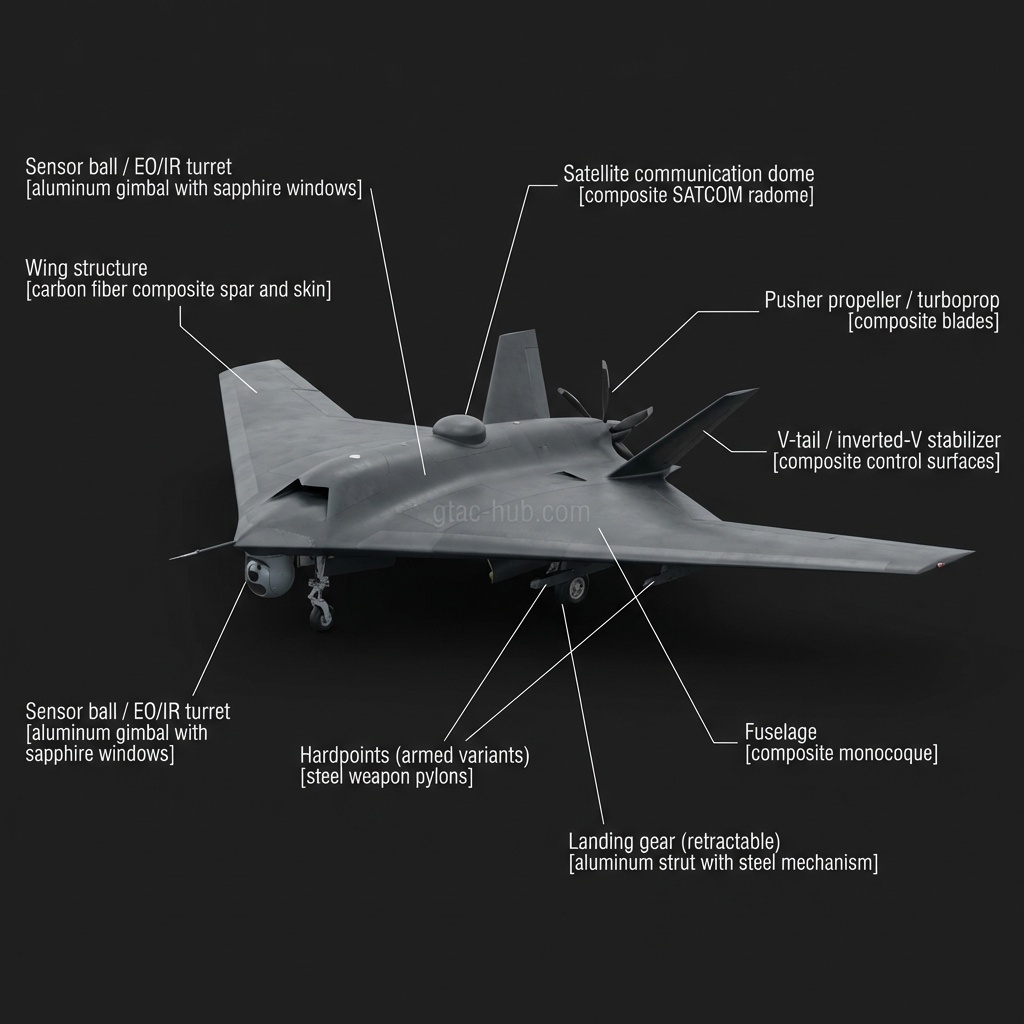
- Flying-wing stealth design for penetrating contested airspace
- Autonomous deep strike capability — removes crew from high-risk environments
- Indigenous design reduces foreign technology dependency
- Complements manned fighters in high-threat SEAD environments
- Very early development stage — demonstrator only, no production decision
- Indigenous jet engine development remains a critical bottleneck
- Operational induction likely a decade or more away
- India lacks established UCAV development track record at this scale
Sign in to join the discussion and rate this weapon system
SIGN INNo comments yet. Be the first to share your analysis.