Bombardier Global 5000 ISR
NATO: GL5T / Sentinel R1 / E-11A BACN / ASTORThe Bombardier Global 5000 ISR is a military Intelligence, Surveillance, and Reconnaissance platform derived from the Bombardier Global 5000 ultra-long-range business jet. The most prominent variant is the Raytheon Sentinel R1 operated by the Royal Air Force as a wide-area battlefield surveillance aircraft, equipped with the ASTOR (Airborne Stand-Off Radar) system combining GMTI radar and SAR imagery. The United States Air Force operates the E-11A Battlefield Airborne Communications Node (BACN), which uses a modified Global 5000 as a flying relay to extend communications networks in mountainous terrain. The high-altitude, long-endurance characteristics make it ideal for standoff ISR missions without requiring overflight of contested areas. The RAF retired the Sentinel R1 in 2021 following the Strategic Defence Review, while USAF continues E-11A operations.


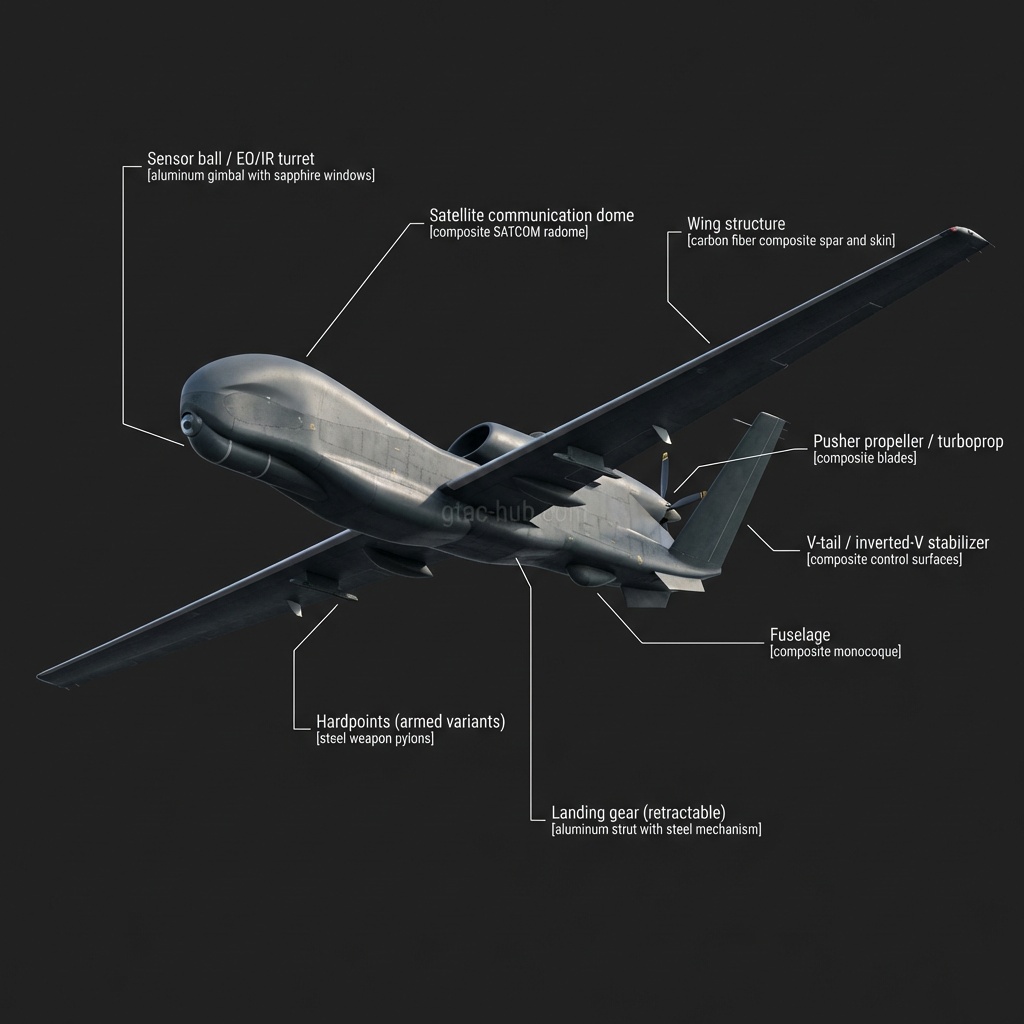
- Ultra-long endurance (~13 hours) ideal for persistent ISR missions
- High ceiling at 51,000 ft enables safe standoff beyond most air defence threats
- ASTOR radar provides real-time wide-area ground surveillance up to 200 km
- E-11A BACN capability: critical communications relay in mountainous terrain
- Low visual and acoustic signature compared to dedicated military platforms
- Rapid reconfiguration between ISR roles
- No organic offensive capability — purely ISR/communications relay platform
- Sentinel R1 retired by RAF in 2021, reducing operational footprint
- Limited availability: small fleet sizes constrain sortie generation
- High operating costs relative to newer UAV ISR alternatives
- Unarmed and relies on escorting fighters in contested airspace






Sign in to join the discussion and rate this weapon system
SIGN INNo comments yet. Be the first to share your analysis.