
The core development is blunt and shocking: a covert operation in Caracas reportedly abducts President Nicolas Maduro and his wife, triggering near-simultaneous nationwide power failures and communications blackouts. Within hours, the crisis complexion shifts as connectivity is restored not through exhausted terrestrial networks, but via space-based infrastructure. Starlink’s network, activated across the country, provides a lifeline to civilians and institutions alike through user terminals distributed to households and businesses. The interplay of a ground-based assault and orbital communications creates a hybrid battleground where information flows can reappear even as physical networks falter.
Context matters. Venezuela has long been a testing ground for hybrid coercion in which political legitimacy, infrastructure resilience, and external influence collide. The event sits at the intersection of counterterrorism-style raid dynamics and strategic information resilience, emphasizing how non-traditional channels can stabilize or destabilize a sudden power vacuum. Space-enabled comms have moved from a niche capability to a strategic variable in crisis management, especially in regions where terrestrial networks are vulnerable to sabotage, fragmentation, or state transition shocks. The Caracas episode thus reframes who can shape the information environment when conventional control is compromised. The role of a private sector space platform in a national security crisis also foregrounds broader questions about regulatory sovereignty, digital lifelines, and the public-private architecture of crisis response.
Strategically, the episode tests two core axes of modern geopolitics: deterrence and resilience. On deterrence, space-based comms become a parallel arena where a state’s reach and a non-state actor’s capabilities collide. The ability of Starlink to quickly restore connectivity demonstrates how a global network can function as a force multiplier or, conversely, as a political wildcard in crises that involve leadership legitimacy. On resilience, the incident exposes how critical civilian infrastructure can become dependent on orbital assets that remain beyond the immediate control of national authorities. The balance between ground disruption and orbital redundancy will influence how states plan for continuity of governance, emergency communications, and crisis management under duress.
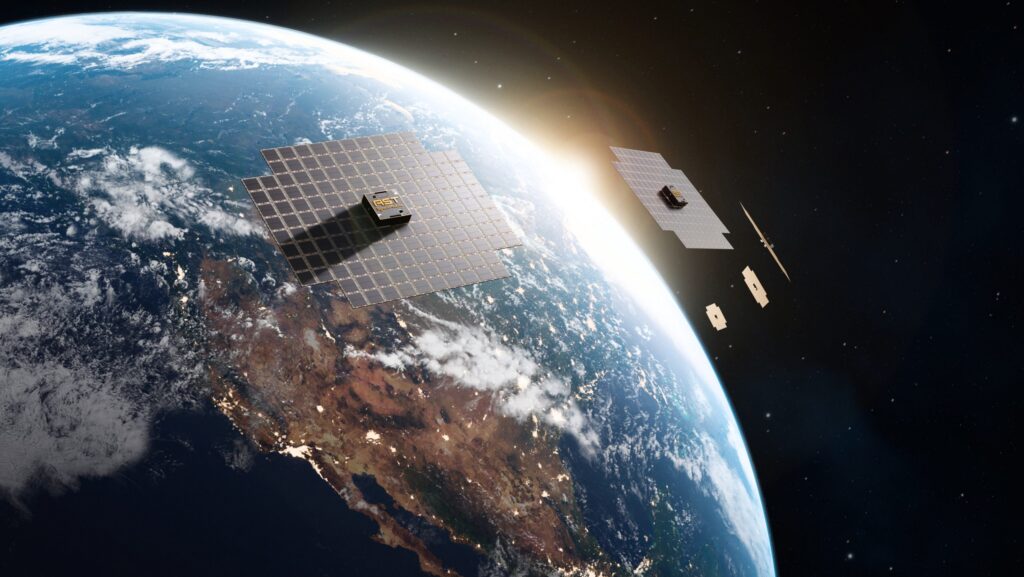
Technically, the episode highlights the operational characteristics of modern satellite constellations. Starlink’s architecture—dense satellites in low Earth orbit enabling low-latency links—facilitates rapid provisioning of communications across volatile environments. The infrastructure leverages user terminals that can be deployed with relative speed, bypassing damaged fiber and terrestrial backhauls. While the precise hardware and spectrum allocations in Venezuela remain unconfirmed publicly, the scenario underscores a growing trend: planetary-scale constellations can substitute for or augment national telecom resilience during upheaval, potentially altering the calculus for both attackers and defenders in future confrontations. The case emphasizes that space-enabled comms are not a luxury but a strategic necessity in contemporary crisis responses.
Looking forward, the Maduro kidnapping-turned-information crisis could catalyze several outcomes. First, states may accelerate investments in space-based redundancy to ensure continuity of governance and security operations, particularly in politically volatile theaters. Second, international responses will weigh the legal and normative implications of space-enabled interventions in internal crises, shaping future norms around sovereign control of critical communications. Third, armed groups or rival powers might seek to exploit orbital assets as levers of political pressure, complicating attribution and escalation dynamics. Overall, the Caracas incident foreshadows a trajectory where space-enabled resilience becomes a standard layer in crisis doctrine, with implications for alliance cohesion, deterrence postures, and the future architecture of global information warfare.