
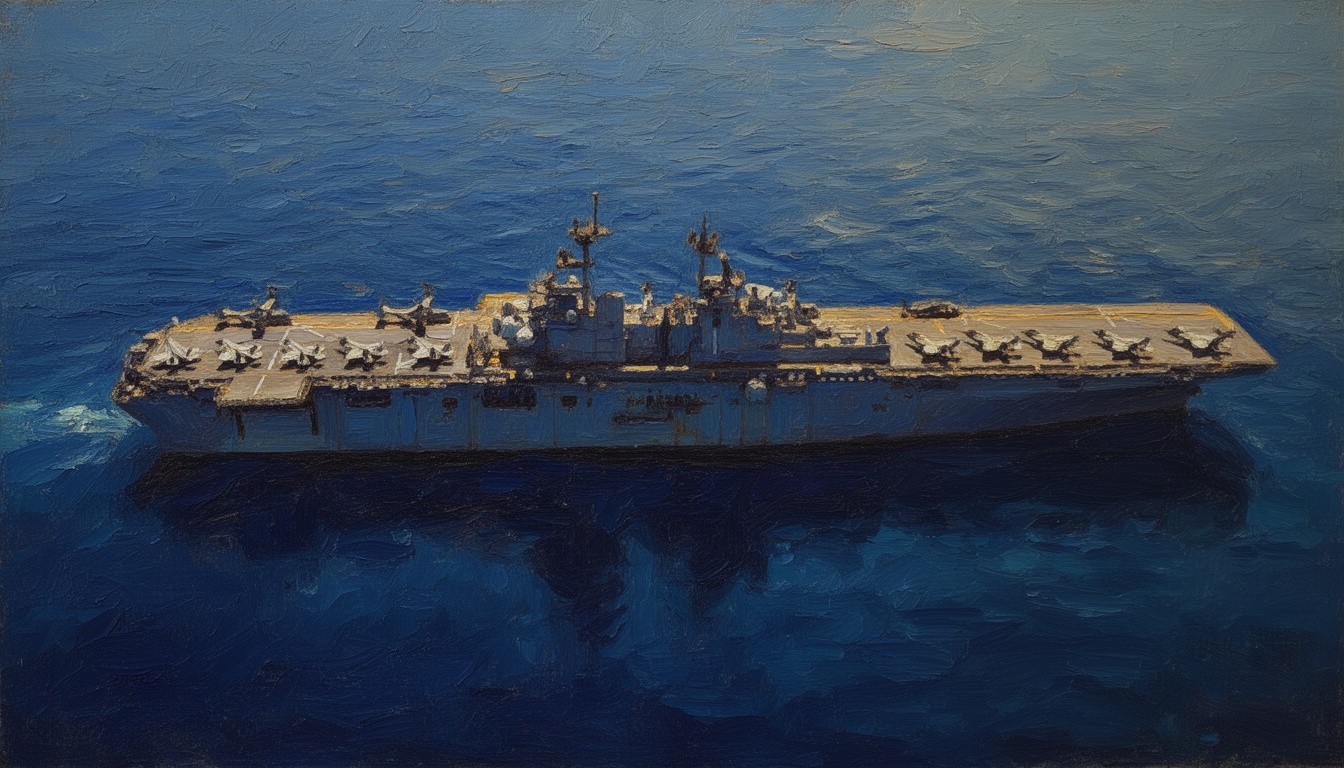
The US Navy has confirmed that it will extend the service life of the USS Wasp, an amphibious assault ship, by five years. This decision follows a comprehensive study that assessed the operational readiness and structural integrity of Wasp-class ships, highlighting their ongoing strategic importance in naval operations.
The USS Wasp, commissioned in 1989, serves as a critical asset in projecting power and conducting amphibious operations globally. The extension will allow the vessel to remain in active service, ensuring that the Navy can maintain its fleet size and operational capabilities without immediate investment in new construction.
The strategic significance of extending the USS Wasp's service life lies in the evolving nature of amphibious warfare. The Navy's ability to deploy rapidly and maintain operational flexibility is crucial as geopolitical tensions escalate in various regions. The USS Wasp's capabilities bolster marine expeditionary units' ability to respond to crisis situations efficiently.
Currently, the US Navy is conducting further studies on amphibious dock landing ships, which may inform future decisions on extending other vessels' operational timelines. This focus reflects a broader trend towards optimizing existing naval assets amid budgetary constraints and the increasing demand for amphibious capabilities.
Likely consequences of maintaining the USS Wasp in service include enhanced readiness for amphibious operations and the potential for increased support for allied forces in regional conflicts. As the geopolitical landscape continues to shift, the Navy's strategic choices will remain pivotal in maintaining maritime security and operational effectiveness around the globe.