
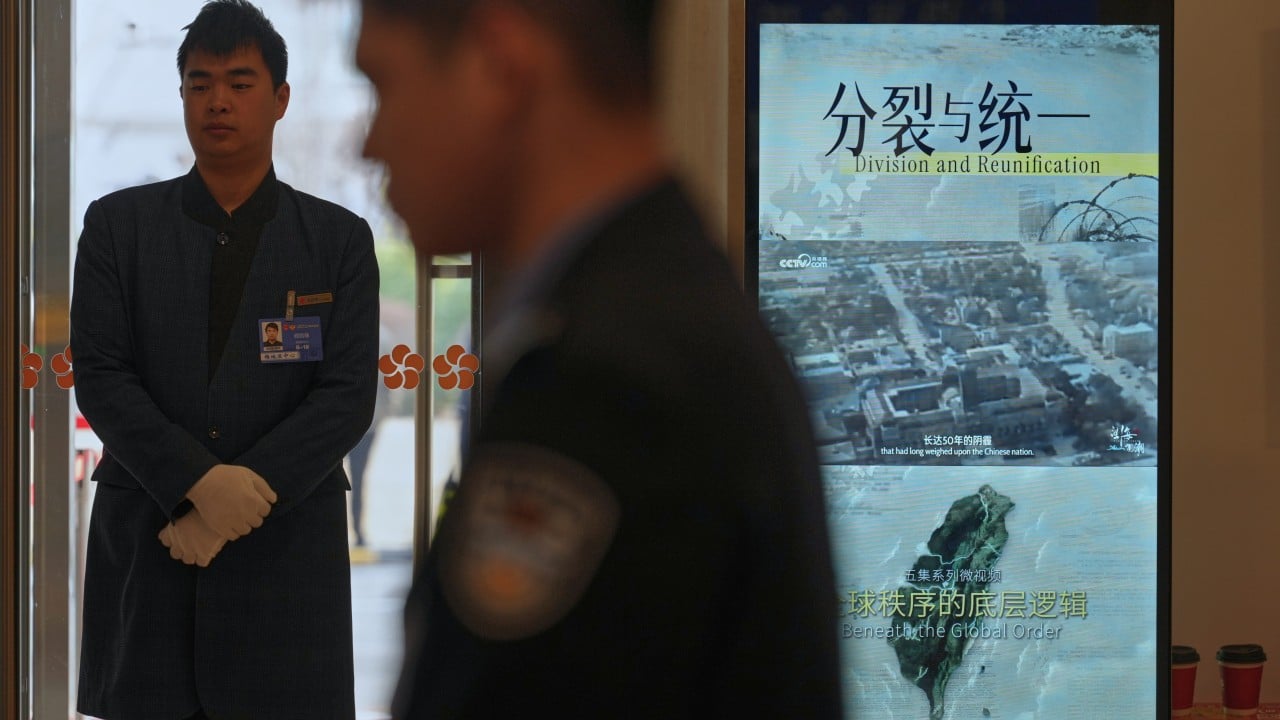
Escalating tensions in the Taiwan Strait have been declared the foremost external security threat for China for 2026, according to the Centre for International Security and Strategy (CISS) at Tsinghua University. This assessment highlights the urgent nature of the crisis, as Beijing faces increasing pressures from both domestic and foreign policy challenges. The think tank's forecast indicates that these tensions are expected to intensify, driven by pivotal geopolitical developments and a re-evaluation of China's defense posture in response to perceived threats.
Historically, the Taiwan Strait has been a flashpoint in Sino-US relations, with China's claims over Taiwan and its military posturing underscoring a long-standing narrative of national sovereignty. The situation has grown more complex amid fears surrounding the upcoming US midterm elections, which could instigate shifts in American policy towards Taiwan and influence regional actors. Furthermore, Japan's evolving defense strategy, including bolstering its Self-Defense Forces and potential military collaboration with the US and other regional partners, has added to the pressure on Beijing to react decisively to what it perceives as encirclement.
The significance of this declaration cannot be overstated. The renewed focus on the Taiwan Strait reflects an acknowledgment that a crisis here would not only destabilize the region but could also trigger broader security implications involving major powers, compounding the risks of military miscalculation. An aggressive response from China could undermine regional security frameworks and escalate tensions with neighboring countries, particularly Japan and the United States, who are keenly watching the situation.
Key actors in this scenario—China, the United States, and Japan—are motivated by differing interests. China seeks to assert its territorial claims and maintain its influence, while the US aims to uphold its commitments to Taiwan and counterbalance China's maritime expansion. Japan, reacting to heightened regional threats, is aligning its defense policy more closely with the United States, seeking to prevent any unilateral changes to the status quo in the Taiwan Strait.
From a military and operational standpoint, China continues to enhance its capabilities around Taiwan, including naval and aerial resources. Recent reports indicate that the People’s Liberation Army (PLA) has increased the frequency of military drills near Taiwan, which now involves advanced systems such as the Type 055 destroyers and J-20 stealth fighters. Budget allocations for military modernization further indicate a focus on deterrent capabilities that could engage in a potential confrontation in 2026 and beyond.
The consequences of these developments are dire. Should tensions escalate, one potential vector is an increase in military confrontations, possibly resulting in armed conflict across the Strait. Moreover, a misstep by any key actor could lead to a disastrous chain reaction, plunging the region into a broader conflict that could involve multiple nations and complicate existing security alliances.
Historical parallels can be drawn to the Cold War confrontations, particularly the Cuban Missile Crisis, where miscalculations resulted in a standoff that brought the world to the brink of nuclear warfare. The Taiwan Strait stands on similar precarious ground, where one wrong move could lead to dire consequences not only for the parties involved but for global stability as well.
Looking forward, attention should be directed towards military maneuvers occurring in both the Taiwan Strait and the surrounding region. Key intelligence indicators will include the frequency and scale of PLA military drills, US and Japanese responses in defense posturing, and any shifts in political rhetoric from Beijing. Monitoring these developments will be crucial in gauging the trajectory of tensions leading into 2026 and beyond.