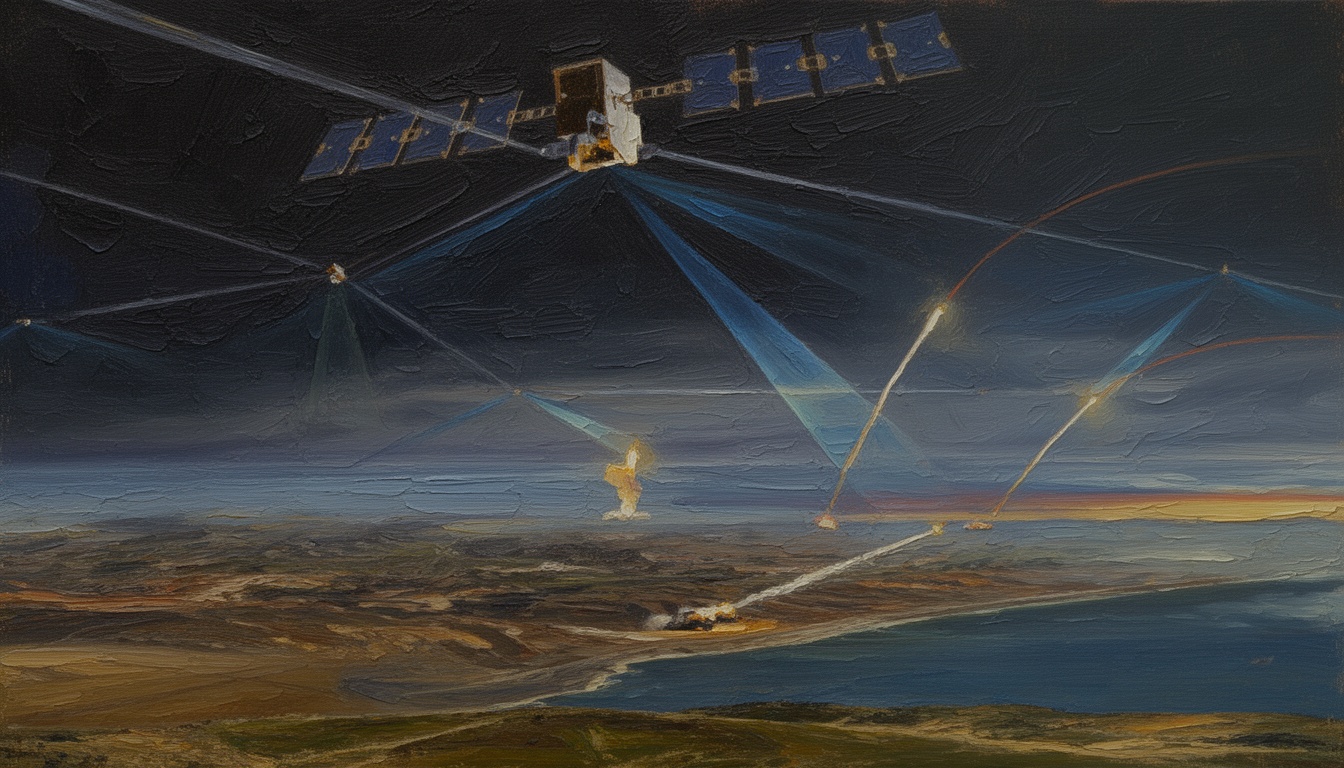
SpaceX and Blue Origin have announced a strategic refocusing of their resources and development efforts towards lunar exploration projects. This shift comes at a pivotal moment as the U.S. Department of Defense (DOD) undertakes plans for its next-generation missile defense system, known as the 'Golden Dome'. Both companies aim to develop technologies and infrastructures that support lunar missions, which includes potential partnerships and contracts linked to NASA’s Artemis program for returning humans to the Moon by 2024.
The strategic importance of lunar development cannot be overstated. The Moon is viewed as a critical staging ground for deeper space exploration and potential military applications. Technologies developed for lunar operations may enhance U.S. capabilities in terms of defense and security in extraterrestrial environments. This pivot by commercial companies aligns with the growing recognition of space as a domain of strategic competition, notably against assertive actions by China and Russia in space.
Key players in this landscape include not only SpaceX and Blue Origin but also the Department of Defense and NASA. The DOD’s interest in bolstering missile defenses amid an evolving threat landscape reflects broader security concerns tied to advancements in missile technology by peer nations. SpaceX's and Blue Origin's interests are driven by both market opportunities and the potential for aligned government contracts, influencing their strategic trajectories.
The implications of these developments could be profound. An increased focus on lunar capabilities may lead to enhanced U.S. presence and influence in space, counteracting adversarial maneuvers in military and civilian space domains. Cooperation in space exploration can also strengthen alliances with partners like the European Space Agency and Japan, as collective efforts become critical in securing interests and addressing shared challenges in the increasingly contested arena of outer space.
Historically, shifts in space policy and commercial capacity have paved the way for military advancements. The establishment of space as a tactical theater, especially post the Cold War, saw contributions from private entities impacting military evolution. The interest in lunar operations may echo past endeavors, where commercial initiatives enhanced national security frameworks.
From an analytical standpoint, this strategic redirection by key commercial players signifies a potential turning point in U.S. military and space policy. As 2024 approaches and with heightened competition in space, continued investments in lunar and defense synergies will be crucial for the U.S. to maintain its strategic upper hand. Observers should monitor how this evolution unfolds and the responses from global competitors, particularly in the context of developing robust space policies and defense mechanisms.