
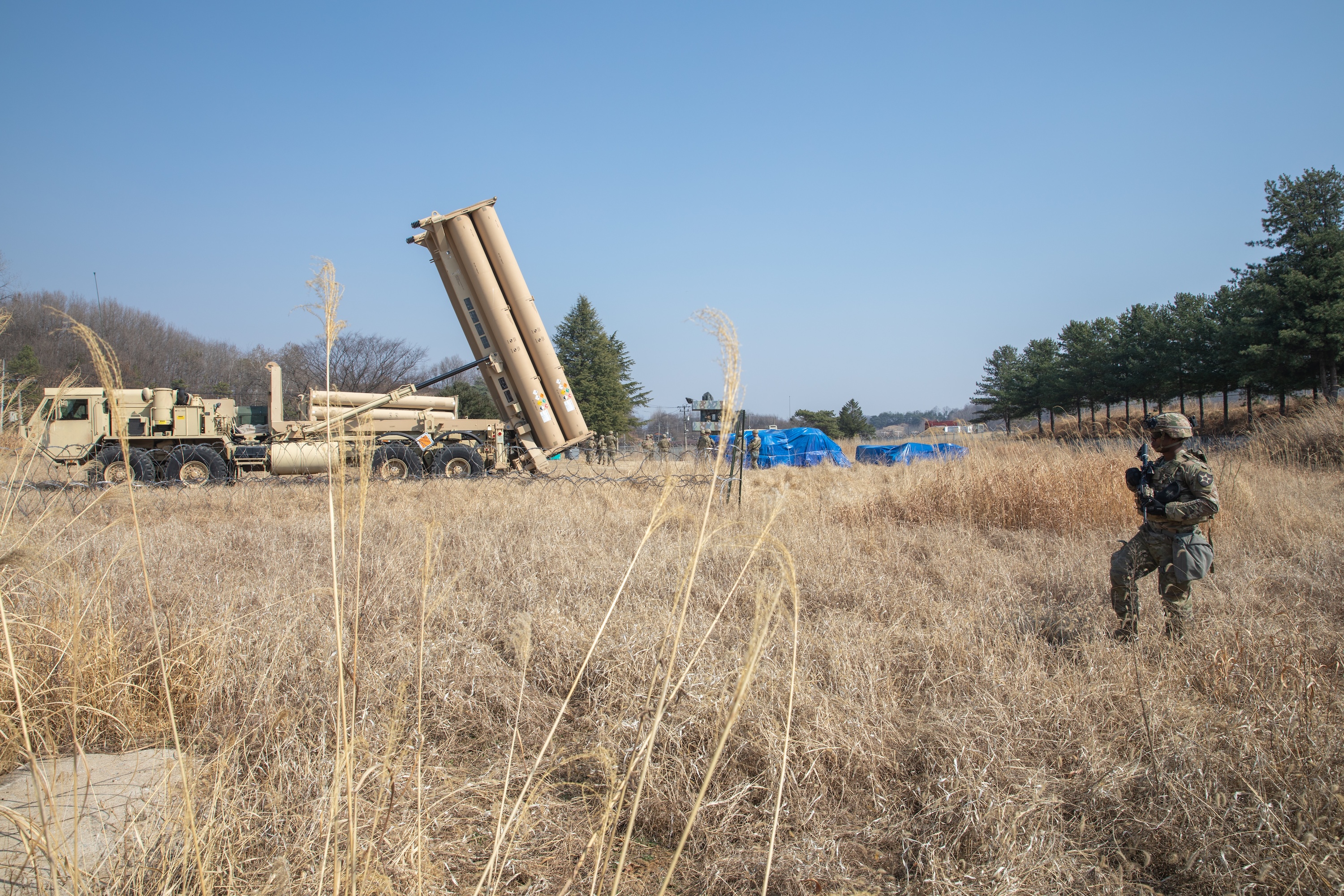
The escalating threat from Iran’s missile program may prompt the United States to reconsider its missile defense deployments in Asia, including the Terminal High Altitude Area Defense (THAAD) systems stationed in South Korea. Seoul's defense officials have signaled that the U.S. might move these systems to counterbalance Iranian aggression, given the limited number of THAAD batteries available worldwide. Such a shift could leave South Korea more exposed to North Korean missile threats.
FERIA DE DEFENSA
Iran Threat Forces U.S. to Reallocate THAAD Defenses in Asia
Foto: Sgt. Gregory Menke
Asia Oriental
RESUMEN EJECUTIVO
Iran's growing military capabilities could compel the U.S. to withdraw missile defense systems from South Korea, exposing vulnerabilities in regional security. This potential strategy shift raises alarms about defense readiness against North Korean threats.
INTELIGENCIA DE FUENTE
INTELIGENCIA RELACIONADA
ASIA ORIENTAL
POLÍTICA GLOBAL
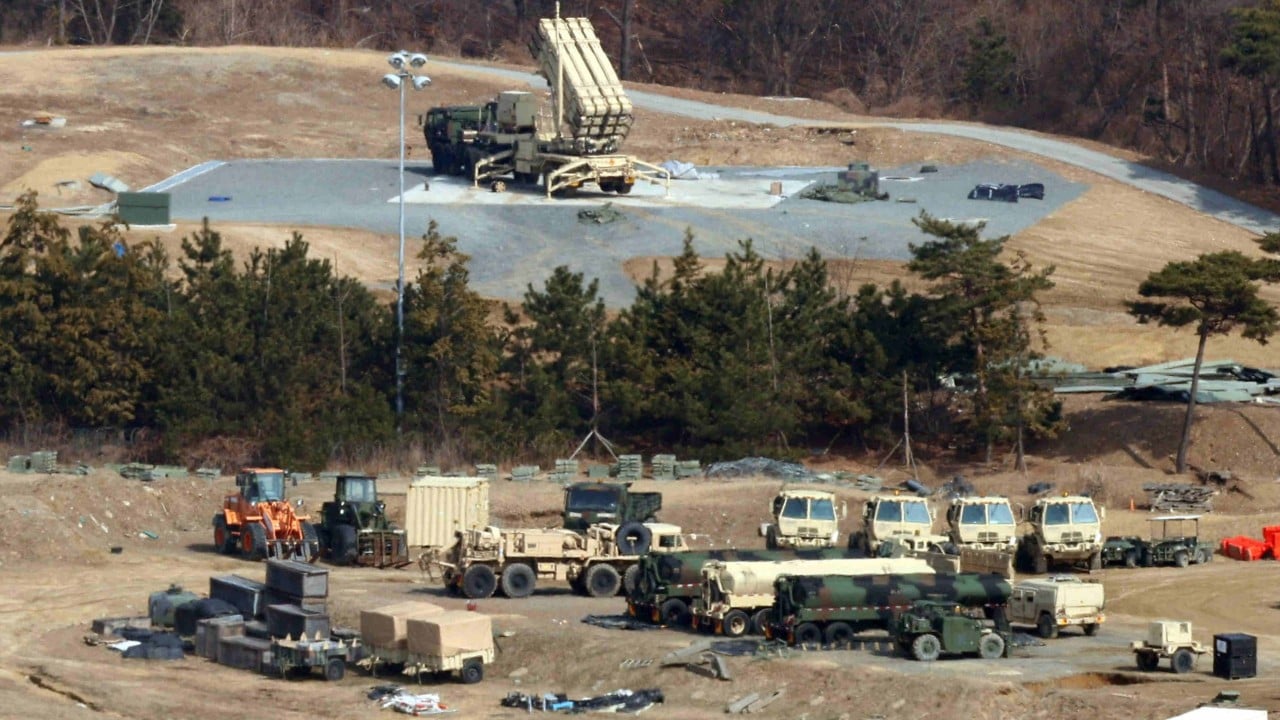
US Moves THAAD from South Korea to Middle East, Exposing Regional Vulnerabilities
The US's relocation of THAAD systems signals a shift in missile defense strategy, potentially emboldening adversaries like China. This maneuver reveals both strategic flexibility and the precarious security landscape in Asia.
HACE 1DLEER

ASIA ORIENTAL
LANZAMIENTO
North Korea Missile Launch Escalates Tensions with US, South Korea
North Korea's provocative missile launch during US-South Korean military drills underscores the escalating tensions in the region. This move highlights Pyongyang's defiance and could further destabilize East Asia, affecting security alliances and power dynamics.
HACE 10HLEER

ASIA ORIENTAL
POLÍTICA GLOBAL
China Boosts AI Radar Tech Amid Escalating Drone Threats in Iran War
China's latest AI enhancement for radar systems reveals a direct response to emergent drone swarm tactics, exacerbating geopolitical tensions in the region. The implications for both military strategy and international security are profound.
HACE 2DLEER

ASIA ORIENTAL
POLÍTICA GLOBAL
North Korea Fires Rockets, Escalating Tensions with US-South Korea
North Korea launched rockets 360 km away amid joint US-South Korea military drills, intensifying regional tensions. Kim Jong Un's direct involvement suggests a deliberate message to Washington and Seoul.
HACE 11HLEER