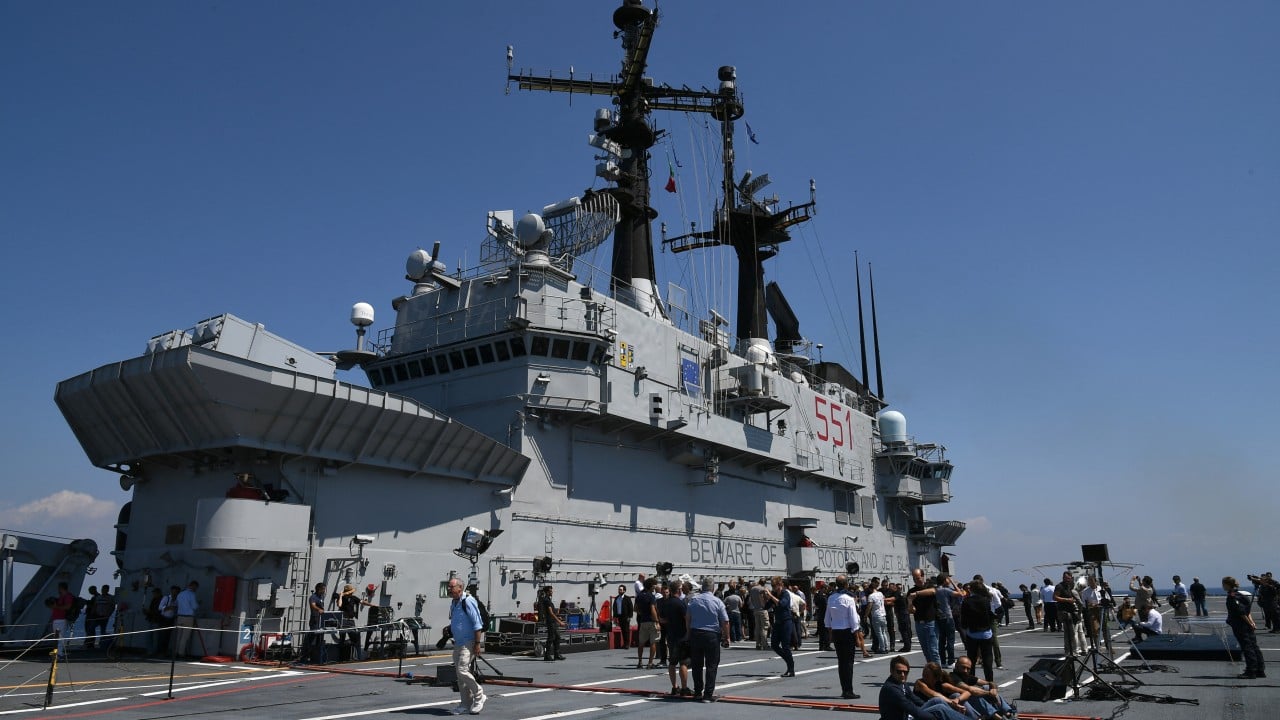
Indonesia has announced plans to procure an aircraft carrier, escalating its maritime capabilities and altering the balance of naval power in Southeast Asia. In contrast, the Philippines grapples with budget constraints that prevent the acquisition of such advanced warfighting assets. This disparity not only reveals Indonesia's strategic ambitions but also highlights the Philippines' growing vulnerabilities, particularly amid increasing tensions with China over contested maritime turf.
The push for Indonesia's aircraft carrier comes against a backdrop of heightened regional tensions, particularly in the South China Sea. Jakarta's ambition for a blue-water navy has been amplified by China's assertive maritime claims and military fortifications in nearby waters. For the Philippines, which has a history of reliance on external defense partnerships, the lack of a strong naval deterrent raises critical concerns about its territorial integrity and potential security shortfalls in an increasingly hostile environment.
This development significantly alters maritime power dynamics in the region. With Indonesia enhancing its naval capabilities, the Philippines risks becoming geopolitically isolated, particularly as China continues to strengthen its presence in the South China Sea. The gap in naval strength could embolden aggressive maneuvers from China or other regional players who may perceive the Philippines as less capable of defending its sovereign claims.
Key actors here include President Joko Widodo of Indonesia, who seeks to bolster national prestige through military modernization, and Philippine President Ferdinand Marcos Jr., who is struggling to secure effective defense capabilities amidst financial limitations. The Philippines' apparent need for cost-effective maritime alternatives, such as missile systems and smaller naval platforms, may stem from a recognition of its inability to sustain heavy investments in large-scale naval warfare.
Operational details reveal that Indonesia's future aircraft carrier will likely be a conventionally powered vessel, enabling extended operations within the region. As Indonesia's defense budget reportedly exceeds $8 billion for 2023, it is harnessing domestic shipbuilding capabilities to bolster its naval fleet. The Philippines, conversely, has a defense budget around $4 billion, insufficient for purchasing and maintaining a carrier and the requisite support infrastructure.
The implications of this naval disparity are dire; Indonesia's enhanced capabilities could lead to an escalation of military posturing in the South China Sea, increasing risks of conflict. The Philippines, if left to depend solely on less capable assets, might struggle to deter aggressive actions from both state and non-state actors, undermining its sovereignty and regional stability.
Historically, similar military imbalances have prompted aggressive territorial claims. The naval expansion of one state often triggers regional arms races, compelling neighboring countries to reassess their military strategies. The Philippines appears to be at risk of being outmatched, similar to situations seen before conflicts in the South China Sea.
Looking ahead, key indicators include any developments in the Philippines' military procurement strategies in response to Indonesia's advancements. The strength and effectiveness of ongoing partnerships with nations such as the United States and Japan in developing integrated defense capabilities will also be crucial to watch. As the balance of naval power shifts, the Southeast Asian region may find itself at a precipice of increased military readiness or conflict escalation.