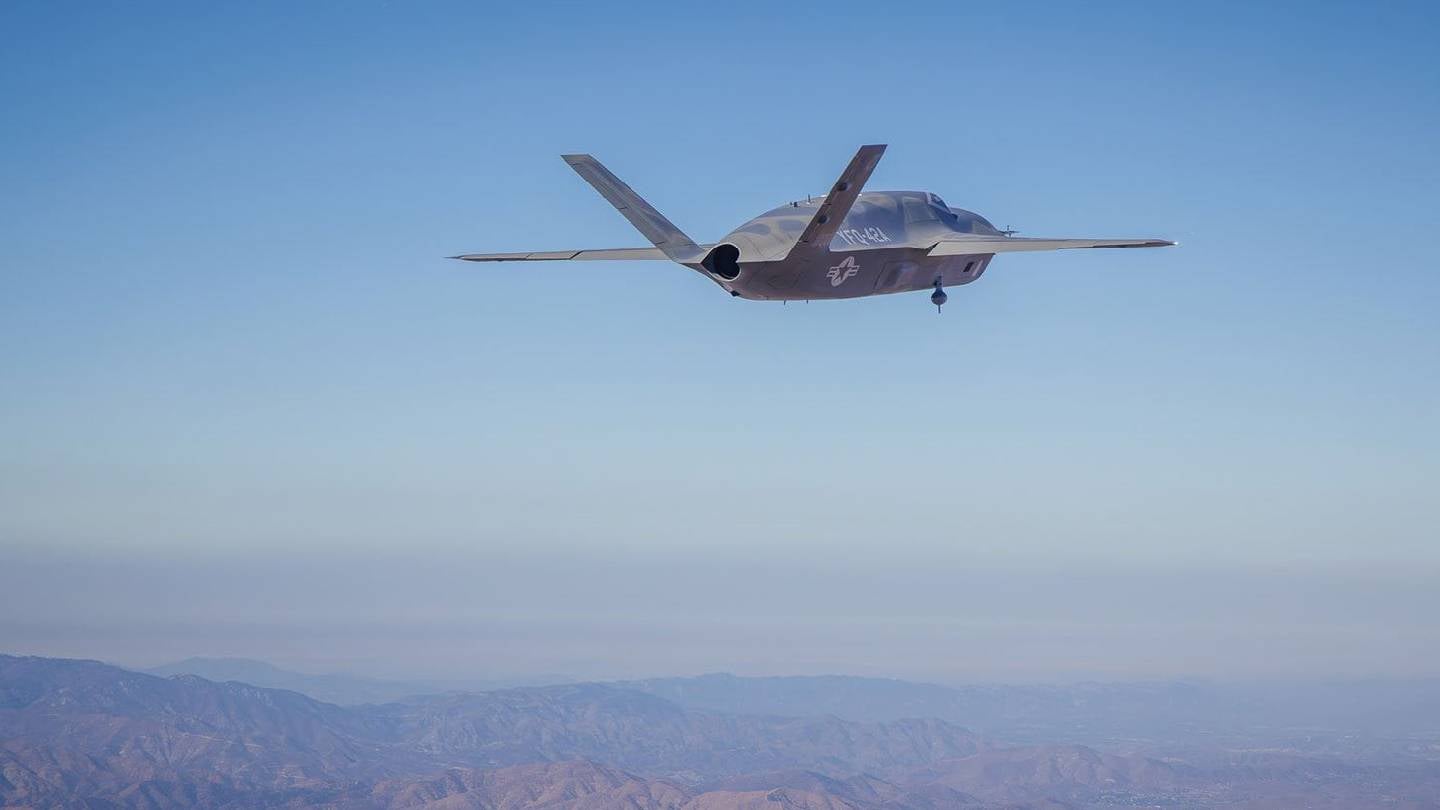
Collins Aerospace announced the successful completion of a flight test demonstrating its Sidekick mission autonomy software, deployed on the YFQ-42A uncrewed jet developed by General Atomics Aeronautical Systems Inc. The flight took place under controlled conditions, showcasing the software's capabilities in managing mission parameters autonomously. The YFQ-42A, designed for intelligence, surveillance, and reconnaissance (ISR), is equipped to support advanced mission autonomy, resulting in enhanced operational efficiency and reduced pilot workload during complex missions.
This demonstration is pertinent to the evolving landscape of unmanned combat systems and autonomous military operations. As nations increasingly seek to enhance their aerial capabilities, the integration of sophisticated autonomy software like Sidekick could provide a significant edge in situational awareness and decision-making. The testing aligns with global trends towards greater reliance on robotic systems in military applications, reflecting a shift in tactics and strategies in potential conflict zones.
Key players in this development include Collins Aerospace and General Atomics, both of which aim to enhance the efficacy of unmanned systems within military frameworks. Collins' Sidekick technology focuses on enhancing mission execution autonomy, while GA-ASI leans on its advanced UAV design and development capabilities. The continued collaboration between defense contractors in deploying sophisticated autonomy systems signals a robust commitment to maintaining technological superiority in aerial combat environments.
The global implications of this advancement could stretch across multiple theaters of operation, as nations invest in advanced UAV technology capable of operating with reduced human intervention. Success in integrating autonomy in UAV platforms like the YFQ-42A could lead to increased operational deployment of such systems, fundamentally altering engagement protocols, reconnaissance missions, and even offensive operations in future conflicts. Additionally, this may spark an arms race in UAV capabilities among major powers as they seek to keep pace with technological innovations.
Historically, developments in UAV technology have transformed military operations since the early 2000s, with systems gradually becoming more autonomous. Noteworthy examples include the advancements in the MQ-9 Reaper and other combat drones that increasingly rely on automation for various functions. The successful flight test of Sidekick aligns with this trajectory of innovation within aerial warfare.
Looking ahead, analysts anticipate that further testing and integration of autonomy software will soon transition into operational applications, prompting a re-evaluation of combat protocols and engagement strategies among military planners worldwide as they adapt to these new capabilities.