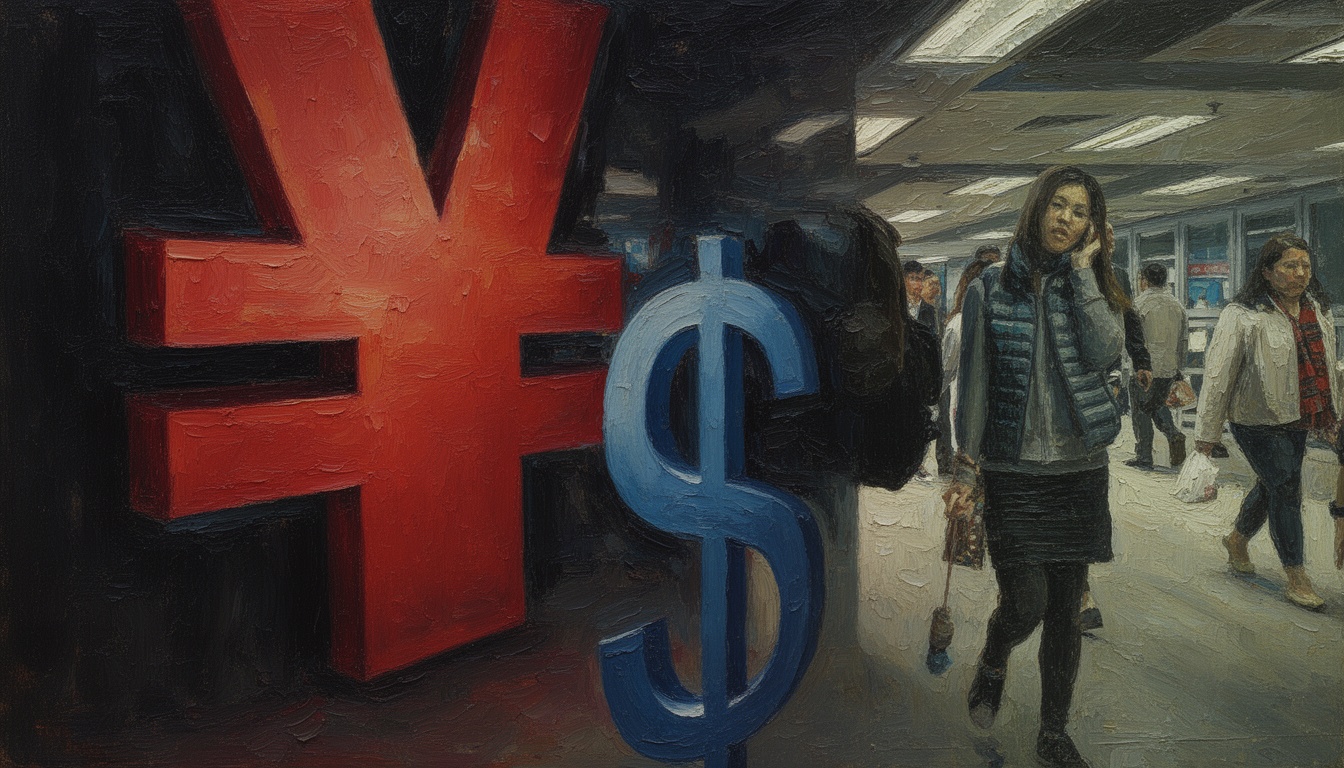
Yuan’s Golden Window Opens as Dollar Credibility Wobbles
A former PBOC governor argues the US policy mix has cracked confidence in the dollar, creating a rare opening for the yuan to gain global traction. The claim frames a shift in the international monetary system, with potential ramifications for reserve diversification, trade invoicing, and financial markets. Analysts caution that translating a window of opportunity into durable change requires credible monetar y policy and sustained demand for yuan-denominated assets.
A former head of the Chinese central bank has described a rare, tactical opening for the yuan amid mounting questions about the credibility of the US dollar. Zhou Xiaochuan told a Chinese think tank report that the international monetary system’s current recalibration is driven largely by Washington’s policy choices, not purely by market forces. He framed the dollar’s standing as frayed by shifting tariff regimes and recurring policy reversals that undermine long-term trust in US-led arrangements. The piece frames this as a golden window for Beijing to push broader use of its currency in global trade and finance.
Background context centers on a long arc of financial leadership shifting away from dollar-dominant models. Policymakers in several major economies have dangled incentives to settle trades in alternatives, driven by concerns about domestic debt, inflation, and the political acceptability of the dollar’s dominance. The argument rests on the premise that a credible, liquid yuan market could displace or complement the dollar in regional settlements, commodity pricing, and cross-border financing. The report notes the political economy of reserve diversification as a growing strategic vector for many states.
Strategically, the piece ties currency credibility to broader geopolitical contests. If central banks perceive stable yuan instruments—sovereign bonds, futures, and liquid offshore markets—as reasonably secure and well-governed, that perception could alter swap line dynamics and payment rails. The argument is that the monetary system could fragment along digital- and macro-policy lines, intensifying competition for seigniorage and financial influence. The assessment treats the yuan as not merely a commercial instrument but a potential pillar in a multipolar reserve framework.
Technical and operational details touch on monetary policy signaling and market depth. Zhou’s remarks underscore China’s ongoing efforts to liberalize capital markets, broaden bond issuance, and expand the CNY’s acceptance in international markets. They also imply a need for transparent rulemaking, credible inflation targeting, and reliable macroeconomic data to sustain confidence. The analysis implies increased attention on cross-border clearing, currency swaps, and yuan-denominated liquidity in global financial hubs.
Consequences and forward assessment warn of a slow, uneven transition rather than an abrupt shift. A yuan opening would likely compel dollar-sensitive sectors to diversify, raising hedging costs and re-pricing risk. Yet the window could close if US policy normalizes, if trust in Chinese financial governance falters, or if rival currencies gain stature. In the near term, expect intensified diplomacy on currency cooperation, more currency swap arrangements, and a careful read of fiscal and monetary signals from Beijing and Washington.