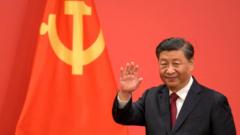
Xi's Ongoing Purge Exposes Ruthless Quest for Absolute Loyalty
Xi Jinping's relentless anti-corruption campaign signals deep-seated fears within the CCP, revealing a need to eliminate dissent and consolidate military control. This purge threatens stability within the armed forces and raises alarms over internal dissent in China's leadership.
Xi Jinping's anti-corruption campaign has intensified over the last 14 years, now escalating into a deep-rooted purge that has left no corner of the Chinese Communist Party (CCP) untouched. High-profile military leaders and officials are being ousted in a bid to cement Xi's control, with reports suggesting thousands have been disciplined or prosecuted for corruption. Critics describe this systematic elimination of rivals as a chilling reminder that loyalty to Xi is paramount, overshadowing the party's stated goals of integrity and transparency.
The campaign traces its roots to Xi's ascension to power in 2012 when he vowed to eradicate corruption within the party and the military. However, this endeavor has morphed into an expansive operation that critics claim is driven more by paranoia than reform. Xi's predecessors also faced corruption issues, but their approaches were less severe and more focused on collective leadership — a model Xi has dismantled in favor of a centralized power structure that relies heavily on fear and loyalty.
These purges are significant not only for the internal stability of the CCP but also for China's military posture. A destabilized military, rife with fear of proactive purging, risks operational effectiveness and cohesion. The objective of bolstering party control could inadvertently expose the armed forces to vulnerabilities during critical operational decisions, where trust and collaboration are paramount. Potential factional disputes could worsen amid Xi's increasingly authoritarian regime, raising concerns about a possible backlash from disenfranchised ranks within the military.
Key actors in this saga include Xi and his inner circle, whose motivations have morphed from a genuine fight against corruption to a ruthless strategy of self-preservation and consolidation of power. This targeted campaign eliminates potential rivals, sending a stark message to military leaders and political figures: loyalty to Xi is non-negotiable, and any deviation from this path could result in severe punishment. The ongoing purges have created an atmosphere of distrust and caution, essential for anyone navigating the treacherous political waters of the CCP.
Operationally, this campaign has led to the removal of notable military leaders, including the recent detention of General Zhang Shengmin, reportedly for failing to demonstrate absolute allegiance to Xi. The campaign has resulted in a larger pattern of top-down discipline that costs the party not only in trust-building but also in operational continuity. Moreover, defense budgets that previously allocated significant funds for modernization may now be diverted to fortify Xi's grasp on loyalty, potentially impacting long-term military readiness and advancements.
As purges continue, the potential for civil unrest or military disquiet increases. The rapid succession of purged officials could leave strategic roles filled with less experienced personnel or loyalists lacking necessary qualifications. Longer-term consequences might involve operational disruptions, miscalculations in defense strategy, or even aggressive foreign policy moves aimed at distracting the population from internal strife.
Historically, this pattern resonates with previous authoritarian regimes where purges were employed to ensure power retention; from Stalin’s Great Terror to Turkey’s purges under Recep Tayyip Erdoğan. Such campaigns often destabilize national security apparatuses, prompting an environment where critical breakdowns occur, as loyalty overshadowed efficacy in strategic military operations.
Looking ahead, observers must monitor shifts within the Chinese military and the CCP for signs of further discord or consolidation of power. Key intelligence indicators would include changes in military leadership, alterations to defense spending priorities, and shifts in China's foreign policy actions that may hint at trying to project power abroad as a means of masking vulnerability at home. The implications of Xi's purges may extend well beyond immediate loyalty—potentially reshaping China's military engagement across its borders.