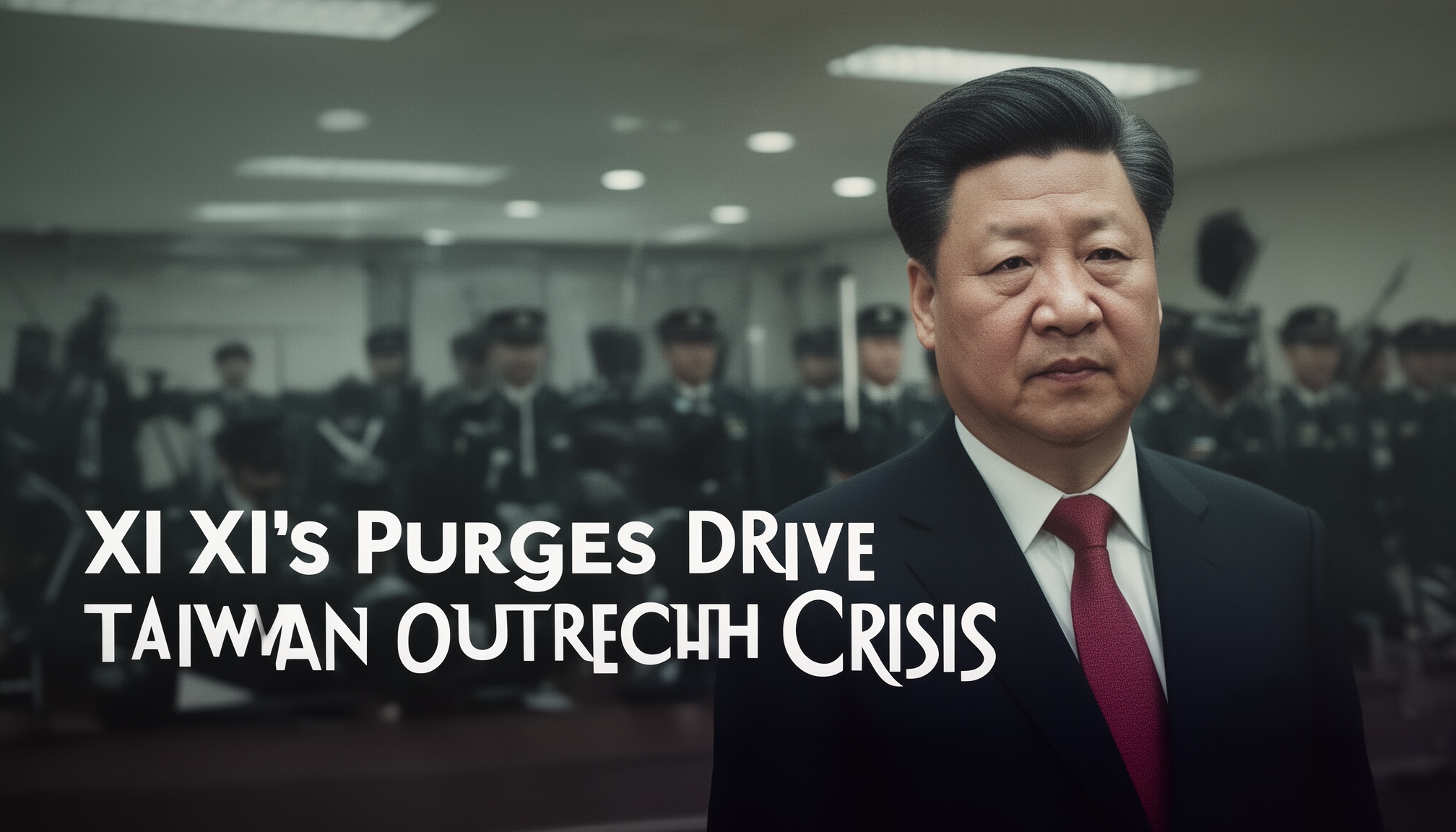
Xi Xi's Purges Drive Taiwan Outreach Crisis
Xi Jinping leverages internal security purges to initiate high-stakes talks with Taiwan's KMT leadership. The move signals intensified coercive diplomacy as Beijing seeks to reassert control amid internal power shifts. Analysts warn the developments could reshape cross-strait deterrence and regional alignments.
The core development is blunt: military purges within China's security apparatus have prompted a high-level outreach from Xi Jinping to Taiwan's KMT leadership. Beijing signals that control over the security sphere now supersedes routine cross-strait diplomacy, pushing for a public and visible political channel with Taiwan's main opposition party. The contact appears aimed at calming hardline signals from within the PLA and related security organs while presenting a facade of restraint to external observers. The announcements emphasize a centralized decision-making loop that places Xi at the apex of strategic risk management.
Background context: Cross-strait tensions have repeatedly spiked when domestic power consolidation processes intersect with Taiwan's political landscape. The KMT has historically favored dialogue with the mainland, but Beijing's recent purges indicate a broader purge-and-persuade tactic applied to the entire governance ecosystem. Analysts note that purges can destabilize internal rivalries and ultimately drive senior leaders to seek visible external signals to legitimize the regime's choices. The move also aligns with a broader trend of coercive diplomacy, where Beijing uses selective engagement to shape Taiwan's political environment without committing to a full-scale military gambit.
Strategic significance: The episode underscores a shift in Beijing's deterrence calculus. If Xi uses internal consolidation to press for a negotiated outcome with the KMT, Taiwan faces intensified political pressure while the United States and regional partners reassess their presence and reassurance options. The talk amplifies questions about the durability of the Taiwan Strait status quo and whether Beijing intends to leverage insider purges to catalyze faster, though riskier, diplomacy rather than overt coercion. The framing suggests Beijing wants to pool domestic legitimacy with external negotiations, raising the stakes for regional power balance and alliance dynamics.
Technical/operational details: While public details are sparse, observers point to parallel signals from security services and the military as the purges appear to target informal power centers and chain-of-command loyalties. If financial or personnel purges accompany doctrinal shifts, Beijing could reallocate resources toward rapid amphibious or air-breathing deterrence options. The narrative emphasizes centralized command, with Xi personally overseeing the messaging and engagement strategy, potentially reshaping how the PLA and security organs prioritize Taiwan-related operations in the near term.
Consequences and forward assessment: The outreach to the KMT could harden Taiwan's domestic political calculations, inviting a more cautious stance from authorities in Taipei while squeezing independent actors. Regional powers—including the United States and allied partners—may recalibrate deterrence guarantees and war-prevention diplomacy, balancing risk with the desire to avoid miscalculation. Over the medium term, expect Beijing to couple internal stability drives with selective diplomacy that tests Taiwan's political alignments, while the PLA maintains a credible territorial deterrent in parallel.