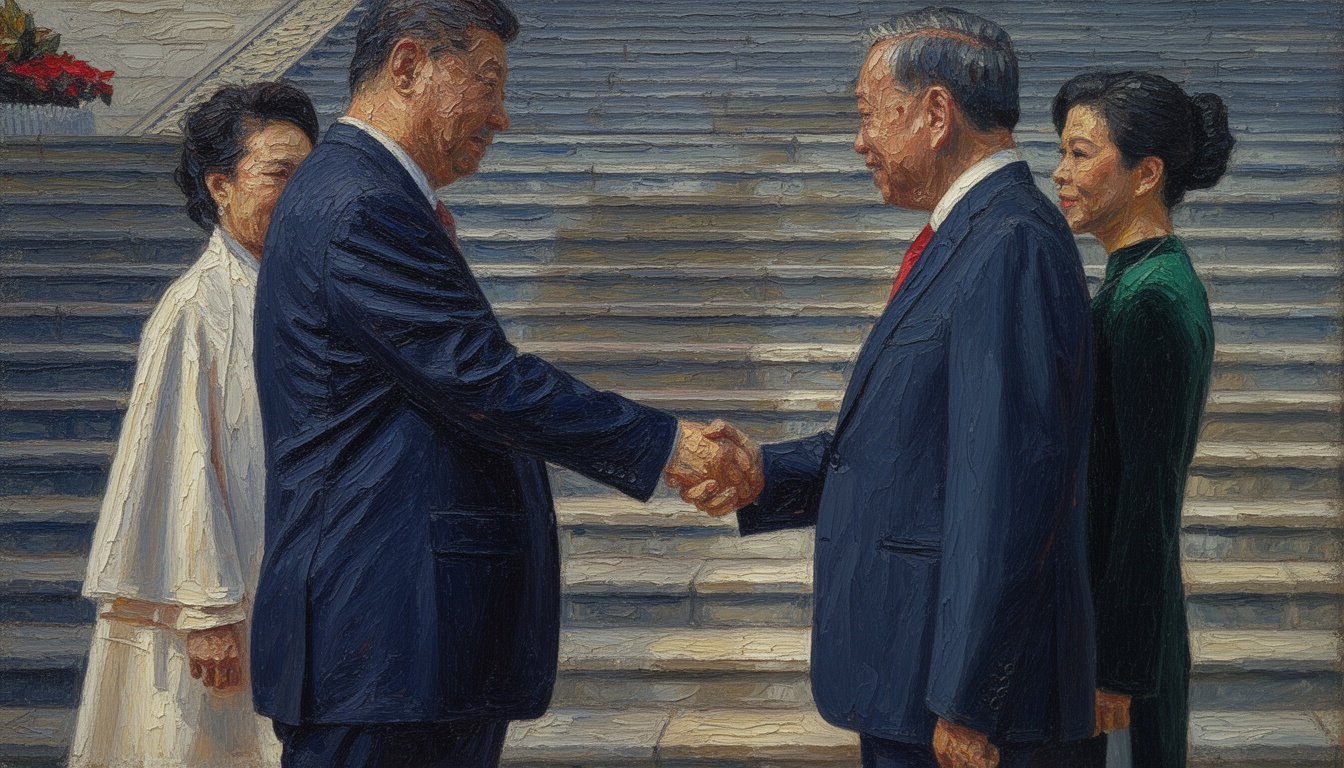
Xi Jinping Urges Vietnam to Jointly Oppose Unilateralism
Beijing signals a broader push for multilateral response to global governance shifts. The Xi-Vietnam meeting foregrounds China’s preference for coordinated regional stances against unilateral actions amid energy strains tied to the Iran situation. The exchange reinforces Hanoi’s balancing act between security guarantees and economic competition with Beijing.
English content:
Xi Jinping pressed Vietnam to stand together against unilateralism and protectionism in a high-level exchange that underscored Beijing’s preference for multilateral, rule-based responses to global challenges. The Chinese president told Vietnam’s top leader that both nations should defend a liberal trade order and ensure resilience across supply chains as tensions around Iran intensify energy markets. The remarks reflect a broader Chinese strategy to mobilize regional partners around shared interests in stability, development, and economic openness.
Background lies in a long-running Sino-Vietnamese relationship characterized by cooperation mixed with strategic caution. Vietnam has sought to diversify its energy and trade partnerships while maintaining a careful balance with China on sensitive issues in the South China Sea and regional infrastructure projects. The current dialogue signals a reiteration of joint stances on global governance rather than a shift in concrete security commitments. Beijing appears intent on presenting a united front with Southeast Asian partners against protectionist trends and externally driven disruption to trade.
Strategically, the meeting signals that China intends to deepen regional coordination to deter coercive unilateral moves that could fracture regional integration. Vietnam’s leadership is navigating the dual pressures of securing energy access and safeguarding its own industrial competitiveness. The discourse aligns with China’s push for strategic integration of supply chains and common standards to minimize disruption from outside actors and sanctions regimes. The outcome strengthens the narrative of a shared regional approach to economic security and political risk management.
Technical or operational details are sparse, but the dialogue likely touched on energy diversification, cross-border infrastructure connectivity, and finance-infrastructure collaboration that can bolster resilience in both economies. The two sides may explore joint research on clean energy, digitization of trade, and seamless customs. They could also discuss mechanisms for crisis coordination to dampen volatility in global markets linked to Iran-related tensions.
Likely consequences include a more predictable regional stance against unilateral policies, with Vietnam gaining a firmer voice in economic forums aligned with China’s agenda. The partnership could shape Southeast Asia’s responses to external sanctions regimes and energy shocks. Analysts expect a pragmatic emphasis on managing competition and avoiding open clashes, with the potential for expanded people-to-people and business-to-business exchanges that support shared growth and stability.