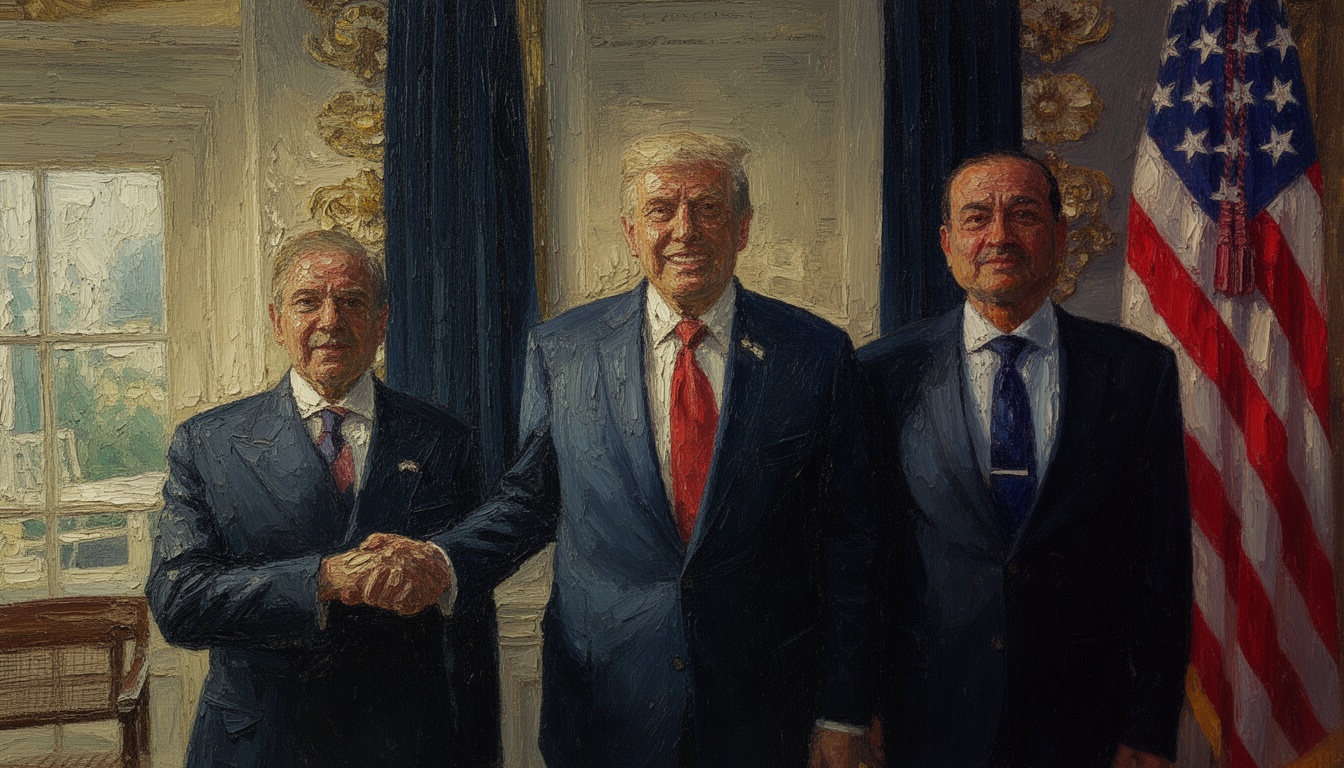
Who is Asim Munir and how did he bring Iran and the US to the talks table?
Pakistan’s military chief Asim Munir brokered a two-week US-Iran ceasefire, marking his ascent as a key international diplomatic actor and reshaping regional power dynamics. His mediation underscores Pakistan’s emerging role in Middle East diplomacy and broader geopolitical contests.
Pakistan’s Chief of Defence Staff Asim Munir has played a pivotal role in securing a two-week ceasefire agreement between the United States and Iran, a significant breakthrough amid escalating tensions. This truce represents a rare diplomatic success in a prolonged period of confrontational rhetoric and proxy conflicts, spotlighting Munir’s influence beyond Pakistan’s borders.
Appointed in 2022 as Pakistan’s first ever Chief of Defence Staff, Munir consolidates command over the country’s army, navy, and air force, positioning him as the most powerful military figure domestically. His growing stature now extends into international diplomacy, evidenced by both US President Donald Trump and Iran’s Foreign Minister Abbas Araghchi publicly acknowledging his contribution to the ceasefire.
Strategically, Munir’s mediation symbolizes Pakistan’s bid to assert itself on the global stage, particularly in Middle Eastern geopolitics where US-Iran hostility threatens broader regional stability. By facilitating dialogue, Munir has enhanced Pakistan’s credentials as a bridge-builder, potentially opening new diplomatic channels between powerful adversaries.
Operationally, this achievement reflects Munir’s deft use of Pakistan’s intelligence and diplomatic networks to engage multiple actors, balancing relations with both Washington and Tehran. His military background combined with political acumen enables nuanced negotiation, influencing a conflict long dominated by hard power dynamics.
Looking ahead, Munir’s role may signal new shifts in regional alignments and crisis management approaches. The ceasefire could pave the way for cautious dialogue resumption, although fragile. Pakistan’s emergence as a diplomatic intermediary also implies risks, including backlash from entrenched rival factions and the challenge of sustaining influence amid superpower contestation.