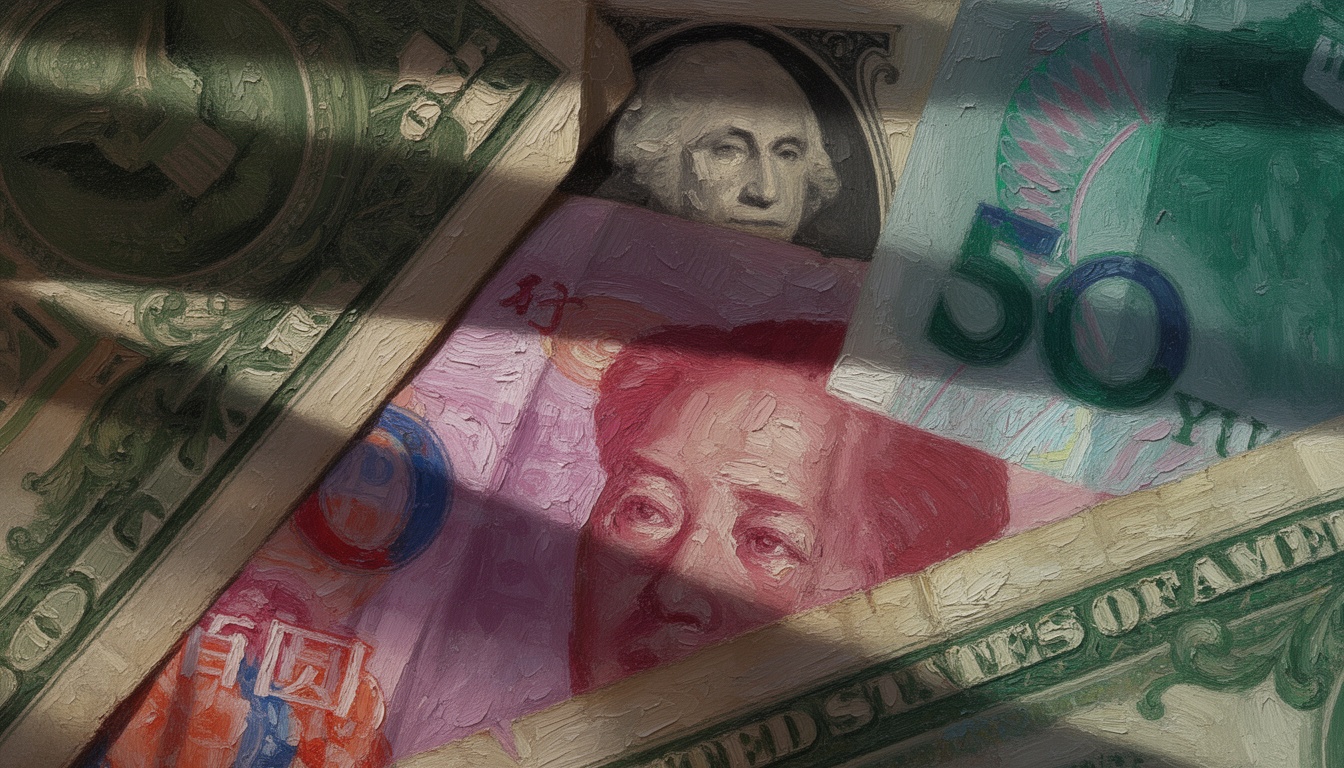
Washington’s Self-Inflicted Threat to Global Dollar
Analysts warn that while China builds market mechanisms to reduce dollar dependency, the more immediate risk to the dollar’s global dominance may originate from Washington’s own policy tools and missteps. Economic sanctions and access to US-led banking frameworks remain potent levers, but their potential overreach could undermine long-term confidence in the dollar. The testimony before a key congressional advisory panel frames a crisis of credibility as much as a crisis of currency.
The core development is that speculators and policymakers see a real possibility that Washington’s own actions could erode the dollar’s primacy. China, seeking to diversify away from the dollar, has crafted markets, mechanisms, and incentives designed to tilt trade and finance toward alternatives. Yet the most destabilizing factor may be Washington’s approach to economic statecraft, which could provoke unintended reactions from global partners. Witnesses testified that US sanctions power and access to global banking systems remain formidable, but carry the risk of provoking reactionary shifts away from dollar-dominated instruments. The immediate takeaway is that policy balance matters as much as the policy tools themselves.
Background context centers on the global push to reduce exposure to the dollar’s hegemonic role. Beijing has pursued currency and settlement alternatives, including swap lines, more diversified commodity pricing, and increased use of non-dollar clearing mechanisms. This trend has accelerated as nations seek resilience against unilateral sanctions and financial coercion. The advisory committee’s hearing underlined that these shifts are neither transient nor purely symbolic; they reflect a broader realignment in international finance and trade architecture. Washington’s policy choices, therefore, are read against a backdrop of evolving multi-polar finance.
Strategic significance lies in how the dollar’s reserve and transaction roles affect deterrence, defense budgeting, and alliance cohesion. If major trading partners reduce dollar-denominated flows, the United States could face higher borrowing costs and greater exchange-rate volatility. For partners, a diversified liquidity toolkit reduces exposure to unilateral US actions, but complicates alliance finance and joint operations planning. The tension is a crisis of confidence: the dollar’s dominance depends on perceived reliability as a system of rules and access, not merely on market size.
Technical and operational details include references to sanctions regimes, their scope, and the architecture of US-led financial infrastructure. Experts highlighted that secondary sanctions and export controls exert outsized influence on global banks and correspondent relationships. They noted the dollar clearing network’s centrality to commodity finance, energy markets, and cross-border settlement. Budget signals and strategic reserves decisions were cited as elements that could either reinforce or undermine confidence in a dollar-based order.
Likely consequences and forward assessment point to a nuanced future: if Washington refines targeted tools and preserves global financial openness, the dollar can maintain dominance without eroding strategic partnerships. Conversely, aggressive sanctions without credible alternatives could spur a gradual de-dollarization. In the near term, markets may price in higher risk premiums on dollar funding and greater diversification in reserve holdings, reshaping the balance of global financial power over the coming years.