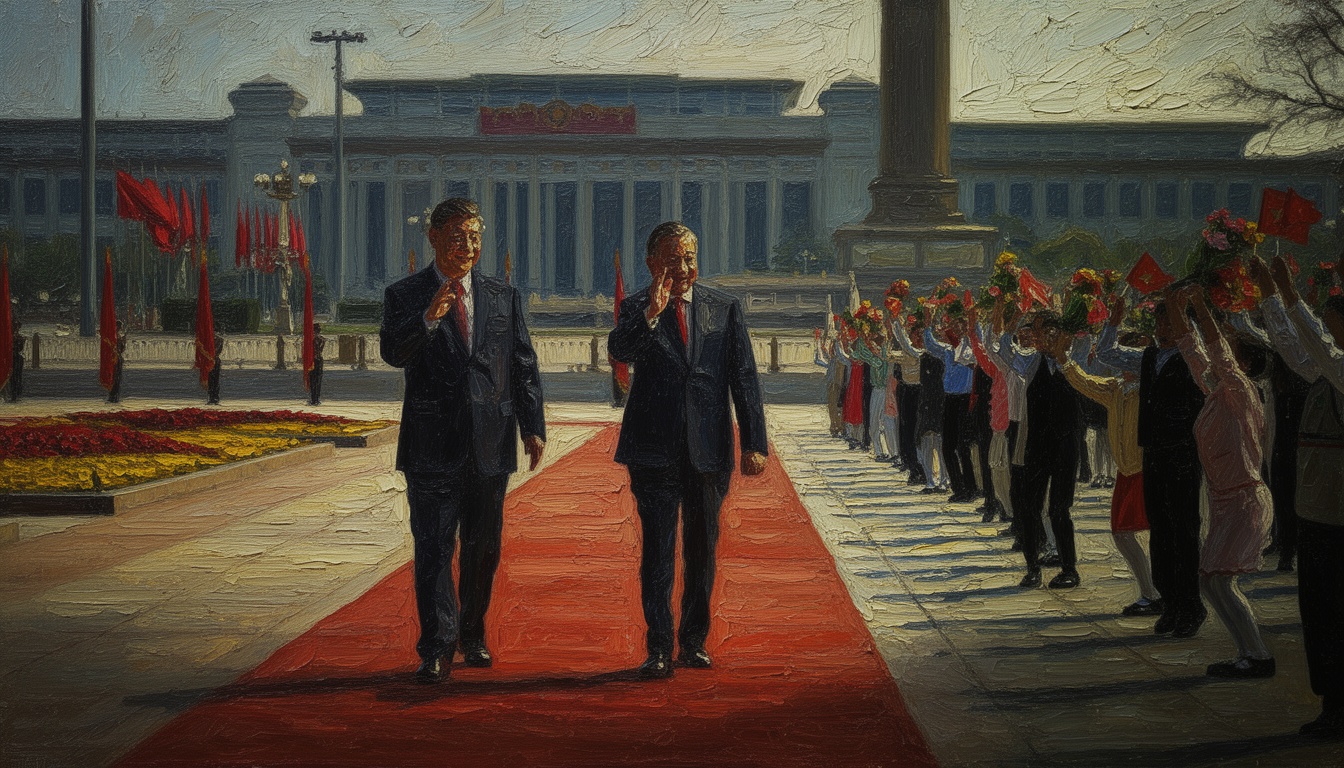
Vietnam-China alignment signals shift in Asia balance
A secret 2024 document allegedly shows Vietnam rejecting U.S. China containment, signaling a strategic pivot toward Beijing. The move, if confirmed, could realign regional power dynamics and complicate Washington’s Indo-Pacific posture. Analysts warn of a growing great-power competition in the South and Southeast Asia.
The core development argues that Vietnam and China are moving toward a closer strategic alignment, with Hanoi reportedly rejecting participation in the United States' China containment strategy in the Asia-Pacific. The document, described as secret and dated August 2024, reportedly frames Washington's “freedom and democracy” rhetoric as a strategic ploy to sustain regional hegemony. If authentic, this would mark a significant shift in how Hanoi views the U.S. role and could reshape bilateral security calculations across the South China Sea. The immediate implication is a potential reconfiguration of regional blocs and defense alignments in a crisis-prone neighborhood.
Background context points to Vietnam's long-running balancing act between major powers in the Indo-Pacific. Hanoi has historically leveraged its strategic position to maximize national autonomy while maintaining economic ties with Beijing. The current discourse appears to escalate that stance, casting U.S. policy moves as detrimental to Vietnam's core interests. Regional allies and rivals will be watching closely as statements attributed to the document circulate among defense circles. The development also coincides with heightened Chinese maritime activity and persistent U.S.-China strategic rivalry in maritime zones.
Strategic significance centers on the potential erosion of a U.S.-driven regional order and the emergence of a more multipolar security environment. A Vietnamese departure from active participation in U.S. China containment would undermine Washington’s ability to sustain a coalition framework in Asia-Pacific crises. Beijing could view this as a green light to intensify maritime and land-based pressure in contested theatres. For Tokyo, Manila, and Singapore, the shift could prompt recalibrations of allied deterrence, intelligence sharing, and joint exercise plans in the near term.
Technical or operational details in the document reportedly cover doctrinal shifts, force posture, and external security commitments. While specifics are not fully disclosed, the text allegedly emphasizes Vietnam's emphasis on sovereignty, maritime domain awareness, and regional naval capabilities aligned with Chinese strategies. The document may also reference economic levers and regional connectivity projects that intersect with security objectives. If authentic, these elements would illustrate a broader realignment of defense planning and industrial collaboration across the region.
Likely consequences and forward assessment suggest a more fluid security landscape in the Asia-Pacific. Washington could respond with intensified diplomatic engagement, enhanced security guarantees to partners, and targeted military-to-military channels to deter escalation. Beijing would likely interpret the shift as validation of its regional approach and ramp up its own deterrence and crisis-management efforts. For Vietnam, the strategic calculus will hinge on balancing economic benefits, domestic political considerations, and external security assurances as the regional order recalibrates.