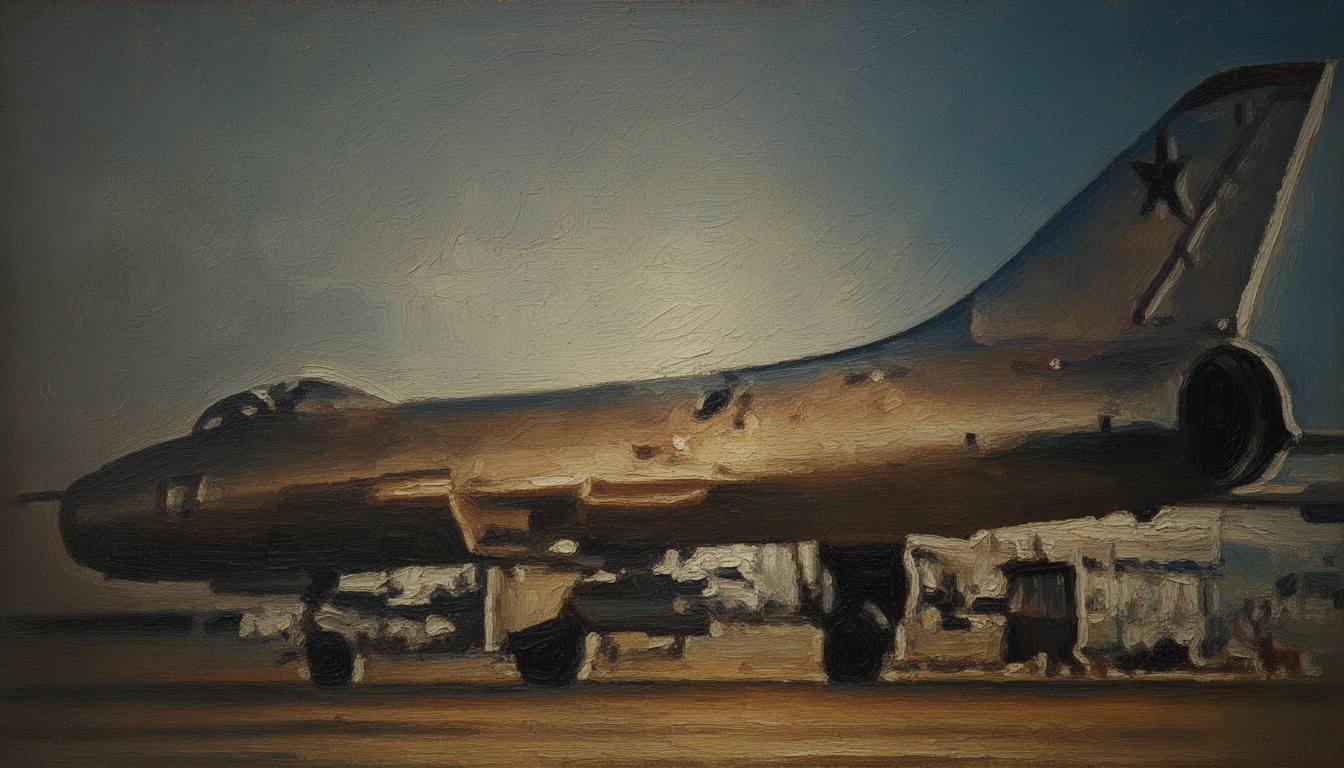
Video Suggests Soviet Su-7 Dropped Live Tactical Nuclear Bomb
A rare clip purports to show a Soviet Su-7 fighter-bomber delivering a live tactical nuclear weapon during a Cold War end-to-end drill. If authentic, the footage would illustrate explicit air-delivered nuclear capability and its role in Soviet deterrence doctrine. The clip invites renewed scrutiny of Cold War exercise protocols and escalation control measures.
A rare video clip, if authentic, appears to depict a Soviet Su-7 Fitter attack jet releasing a live tactical nuclear device during a planned end-to-end drill. The claim centers on a high-risk test scenario intended to validate delivery reliability, aiming to demonstrate that a frontline aircraft could deploy a nuclear payload in a simulated combat environment. The footage, circulating in niche defense archives, fuels ongoing debate about the completeness of Cold War escalation controls and the explicit integration of nuclear use into conventional air attack profiles. The authenticity and provenance of the recording remain a focal point for analysts, with skepticism warranted until independent verification is obtained.
Background context anchors the image in a period when both superpowers pursued explicit theatrical demonstrations of nuclear-armed reach. The Su-7, a robust early jet designed for ground-attack missions, was prolific in Soviet close air support and interdiction roles. During the Cold War, doctrinal work emphasized the capability to strike with precision from airfields at the edge of contested air space, including scenarios in which tactical nuclear weapons would be employed to shape battlefield outcomes. This potential capability would have fed into broader deterrence calculations, signaling to NATO that nuclear options remained on the table in the deepest layers of crisis scenarios. While the post-Soviet era reframed many of these narratives, archival footage of such tests remains a focal point for understanding historical thresholds of restraint and risk.
Strategic significance rests on what the clip implies about deterrence architecture and crisis dynamics. If the event occurred as described, it would illustrate a deliberate bridging of conventional and nuclear warfare domains within a single air arm. Such demonstrations inform theories of escalation ladders, where air-delivered weapons could be used to degrade critical infrastructure or compel favorable battlefield outcomes without full-scale strategic exchange. The broader implication concerns how adversaries perceived escalation thresholds and whether contemporaneous command-and-control procedures could withstand the moral and political hazards of nuclear-armed demonstrations. Interpreters must weigh these signals against the era’s treaty framework and the potential for miscalculation in high-tension moments.
Technical and operational details, while not exhaustively specified in the clip, point to a tactical air-to-ground engagement profile. The Su-7 would have needed supporting air superiority or at least suppression of adversary air defenses to reach a contested target. A live tactical nuclear device implies a complex release sequence, armed safety protocols, and post-release hazard management that could influence sortie timing and recovery. If the weapon was indeed deployed in an end-to-end exercise, planners would have incorporated strict conformance to drill objectives, threat simulations, and verification checks to minimize the risk of inadvertent escalation. Such a scenario underscores how air forces weighed the trade-offs between rapid delivery, survivability, and political ramifications.
Forward assessment suggests this footage, once corroborated, would reshape understandings of Cold War experimentation with nuclear delivery in conventional-combat theaters. It could indicate that planners treated air-delivered tactical nuclear weapons as a credible option within limited-conflict contingencies, potentially shaping force structure choices and training regimens for decades. The episode would also feed contemporary debates about how past demonstrations inform present dissuasion and crisis stability, including how allied commanders interpreted the credibility of any nuclear-armed platform. Looking ahead, analysts would expect renewed interest in archival declassified materials, cross-referencing with other service drills, and modeling to gauge whether such demonstrations materially altered regional deterrence dynamics or strategic risk budgets.