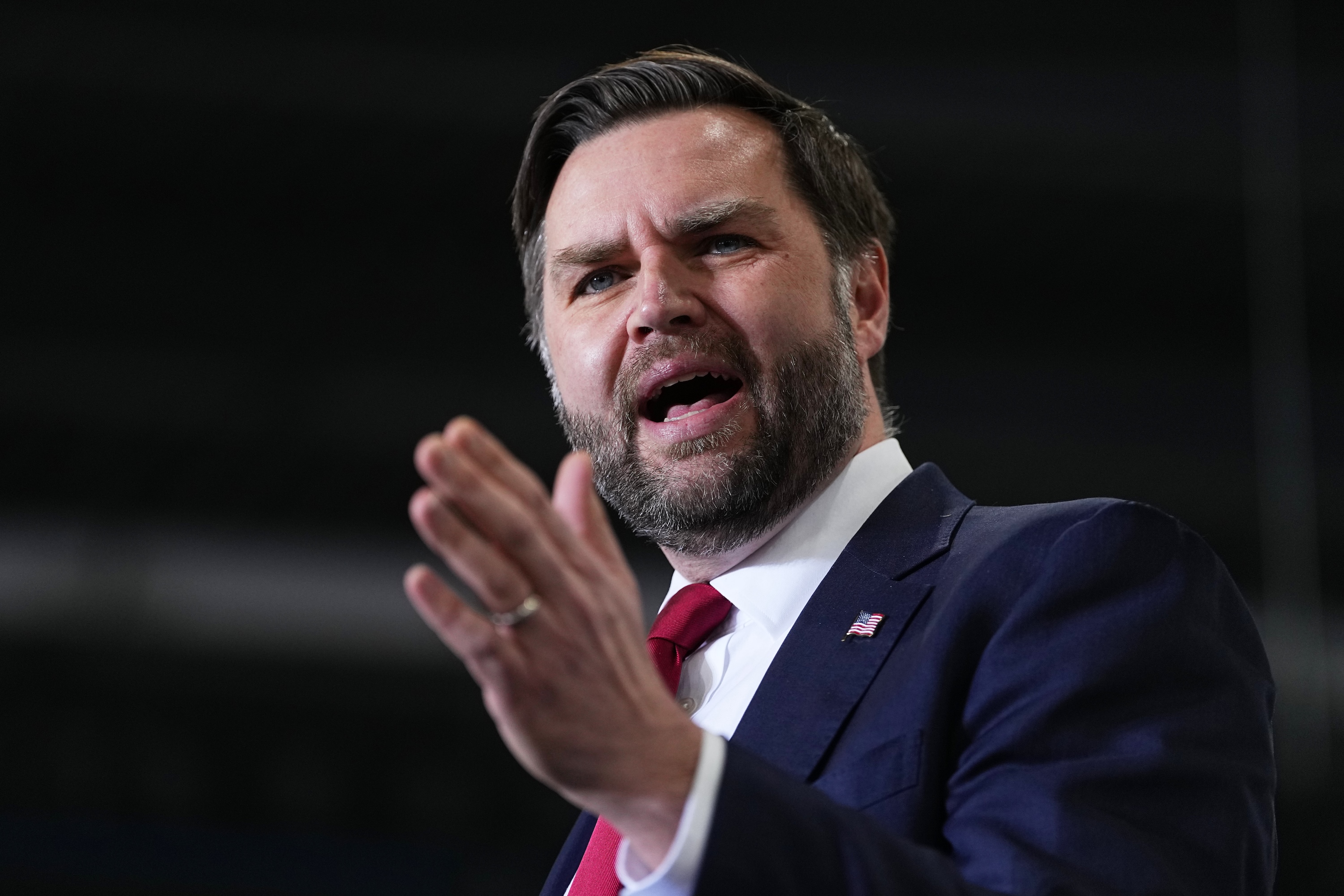
Vance Signals Trump Will Not Commit to Extended Iran War
Senator J.D. Vance's assertion suggests a shift in U.S. military strategy regarding Iran, emphasizing rapid objectives to avoid prolonged conflict. This stance could influence global perceptions of U.S. resolve in the Middle East.
Senator J.D. Vance stated unequivocally that former President Donald Trump will not permit a drawn-out war with Iran, framing the current military engagement as fundamentally distinct from previous conflicts. Vance, who has experience from the Iraq War, emphasized that under Trump’s leadership, military objectives are clearly defined and aimed at achieving swift results rather than prolonged engagements. This statement appears to reflect the growing sentiment among U.S. lawmakers to avoid the pitfalls of extended military interventions observed in Iraq and Afghanistan.
The backdrop to Vance's comments lies in the escalating tensions between the U.S. and Iran, particularly following the U.S. withdrawal from the Joint Comprehensive Plan of Action (JCPOA) in 2018. Iran’s subsequent advancements in nuclear capabilities and military posturing in the region have raised alarms in Washington and contributed to debates on military readiness. The shadow of the Iraq War, characterized by an uncertain mission and quagmire, looms large over U.S. policy discussions regarding Iran.
This situation is significant as it highlights the potential for a shift in U.S. military doctrine towards rapid engagement and exit strategies, reflecting a broader trend in international security where major powers are cautious of lengthy conflicts that drain resources and political capital. Vance’s remarks suggest a pivot away from traditional containment policies toward a more aggressive posture aimed at demoralizing Iran quickly, possibly inviting criticism from those wary of escalating tensions further.
Key actors in this scenario include not only the U.S. administration and its military leaders but also Iran's Revolutionary Guard, which has already expressed hostility towards any perceived U.S. incursions in the region. Vance’s underlying motivations seem rooted in both personal military experience and a political calculation to align with Trump’s vision of strong, assertive foreign policy. He may also be signaling to Trump's base that a proactive stance against Iran is necessary to quell potential threats.
Operationally, Trump's military strategies, if pursued, could involve utilizing advanced military technology like drones and precision strikes, similar to past actions against alleged Iranian threats in Syria and Iraq. The administration might focus on swift and decisive attacks rather than establishing a prolonged presence, potentially reallocating military resources efficiently to avoid overstretch.
The consequences of Vance's statements could lead to increased military actions in the region, heightening the risk of miscalculation by both U.S. forces and Iranian military units. The potential for armed conflict could destabilize the already volatile Middle East, impacting global oil markets and security dynamics. Furthermore, if the administration opts for swift military engagement without clear coherence in strategy, it may face significant pushback domestically and from allies.
Historically, the U.S. has grappled with defining its military objectives abroad, particularly after the experiences in Iraq and Afghanistan. Vance’s emphasis on a decisive outcome may resonate well with constituents wary of 'forever wars,' yet risks re-evaluating the lessons learned from those interventions. There is a palpable concern that the U.S. might repeat past mistakes if not careful in assessing the Iranian response.
Looking forward, observers should watch for signs of increased military mobilization in the Persian Gulf, potential strikes on Iranian assets, and any signs of Iranian retaliation. Intelligence indicators on troop movements, drone activity, and naval deployments will be critical in assessing the likelihood of conflict escalation. Continuous developments in dialogue between Washington and Tehran should also be closely monitored to gauge shifts in strategic calculations on both sides.