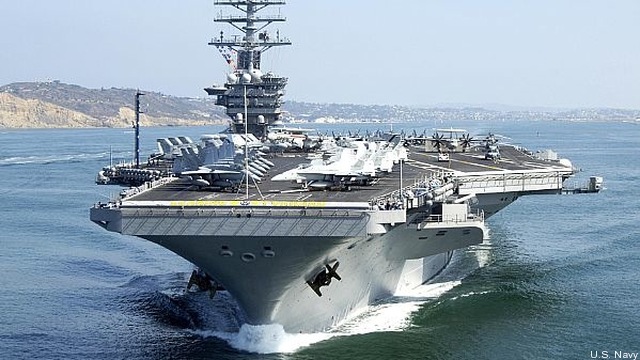
USS Nimitz Service Life Extended, Decommissioning Delayed to 2027
The USS Nimitz, a cornerstone of U.S. naval power, will remain operational until 2027, contrary to earlier plans for imminent decommissioning. This decision reinforces U.S. military presence amid rising global tensions.
The USS Nimitz, a Nimitz-class aircraft carrier, will not be decommissioned until 2027, extending its service life significantly beyond the original May 2023 deadline. This decision reflects the increasing demands on naval power in a significantly tense geopolitical landscape. The announcement was made by a service spokesperson late Friday, highlighting a strategic pivot in U.S. maritime capabilities as it grapples with various international challenges.
The USS Nimitz has been in service since 1975, serving as a critical asset for naval dominance across key maritime theaters. The shift in decommissioning timeline underscores concerns over regional conflicts, particularly in the Indo-Pacific, where U.S. naval presence is frequently challenged by China’s expanding fleet. As maritime confrontations escalate, maintaining operational carriers like the Nimitz is essential for U.S. strategic deterrence and power projection.
This extended service life is significant as it reveals the U.S. Navy’s need to adapt amid military resource constraints and ongoing global tensions. The Nimitz remains a vital asset capable of conducting air operations, missile strikes, and power projection across vast distances. Delaying its decommissioning aligns with a broader strategy to counterbalance adversarial forces that threaten U.S. interests and allies worldwide.
Key actors in this decision include the U.S. Navy brass, who face increased scrutiny over fleet readiness, and the Department of Defense, which prioritizes deterrence capabilities amid strategic competition with China and Russia. The Nimitz’s presence will likely amplify U.S. military operations in contested waters, which can be interpreted as a direct challenge to adversaries.
The Nimitz-class carriers, capable of carrying over 60 fixed-wing aircraft and able to operate in various maritime environments, are indispensable to U.S. naval strategy. The operational costs to keep the Nimitz in service, including maintenance, crew training, and upgrades, could reach thousands of millions of dollars. The engineering modifications needed to ensure the carrier's reliability and safety will also demand significant investment.
The likely consequence of delaying the Nimitz’s decommissioning is the potential escalation of naval confrontations in the Western Pacific, as rivals may misinterpret this strategic extension as U.S. aggression. Furthermore, maintaining this carrier will necessitate increased naval operations around critical chokepoints, raising the likelihood of engagement with Chinese and Russian assets in contested waters.
Historically, similar extensions of service life have occurred during periods of heightened tension, such as the Cold War, when aging assets were kept active to deter Soviet expansion. The reliance on legacy carriers during times of conflict can lead to a misallocation of resources and a reduced focus on incorporating new technologies and platforms into naval operations.
Going forward, watch for indicators related to U.S. naval exercises, carrier strike group deployments, and potential revisions in maritime strategy that could emerge in response to this decision. Intelligence assessments will also monitor how China and Russia react to continued U.S. carrier presence in their respective operational theaters.