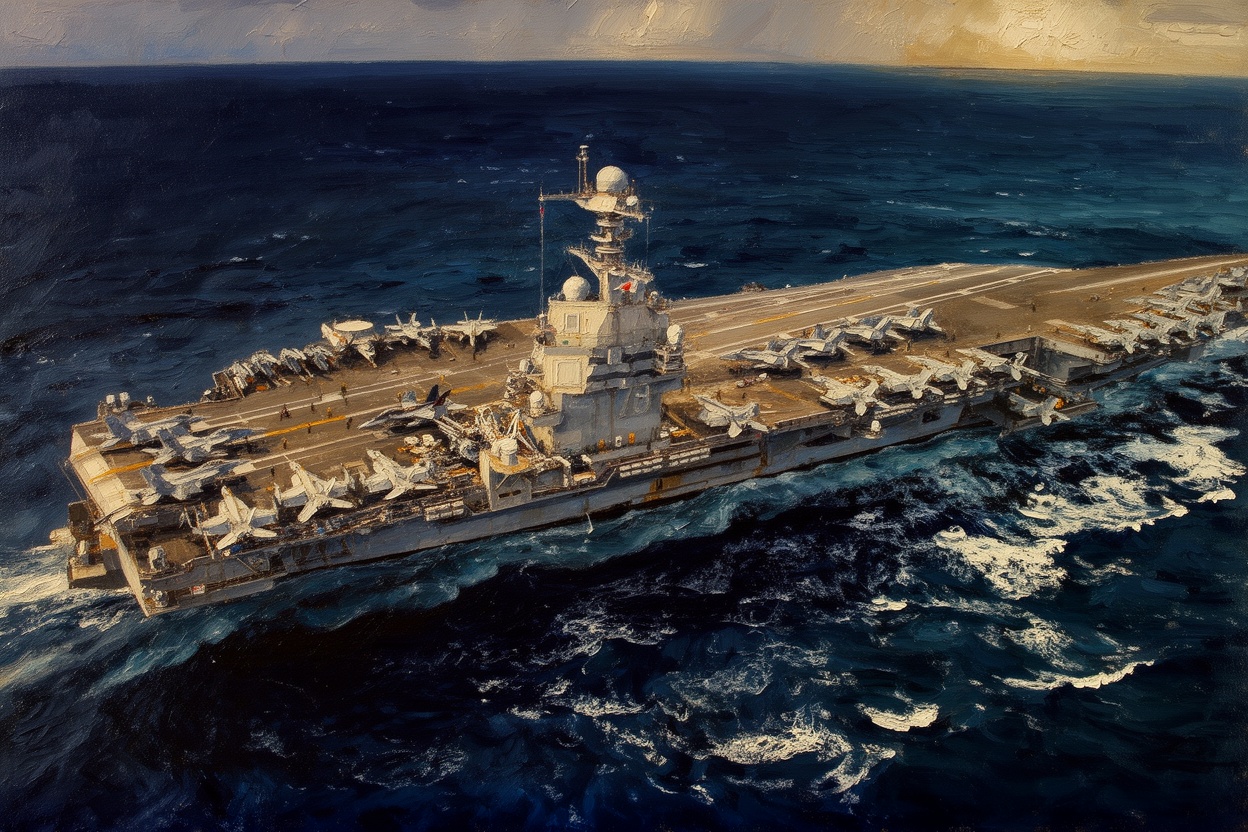
USS Gerald R. Ford Returns to Sea After Croatian Port Call
The US Navy's latest supercarrier, USS Gerald R. Ford, resumed sea operations following a brief Croatian visit, signaling ongoing strategic power projection amid heightened European tensions. Its participation in Operation Epic Fury remains unconfirmed, leaving questions on its combat role in current regional confrontations.
The USS Gerald R. Ford, the United States Navy's newest and most advanced aircraft carrier, has returned to sea following a short port call in Croatia. This deployment underscores the continued American naval presence in Europe during a period of increased geopolitical tension.
The aircraft carrier visited the Croatian port as part of forward operations in the region but details about its next mission have not been disclosed. Speculation surrounds whether the Ford will engage in Operation Epic Fury, a US-led multinational naval effort aimed at countering hostile forces in contested waters.
Strategically, the Ford class carrier embodies a significant leap in capabilities with its electromagnetic catapult system and enhanced stealth features, projecting US naval power and reinforcing NATO maritime deterrence. Its operations near Croatia send a clear message to regional adversaries about the US commitment to security in Europe and the Mediterranean.
The USS Gerald R. Ford displaces around 100,000 tons, carries over 75 aircraft, and utilizes the advanced EMALS catapult for faster, more efficient aircraft launches. With its advanced radar and defense systems, it symbolizes a technological edge in naval warfare against emerging threats.
Looking forward, the carrier’s movements will be closely monitored by both allies and adversaries as the situation in Eastern Europe remains volatile. Should Ford engage actively in Operation Epic Fury, it could escalate maritime confrontations and influence regional power dynamics significantly.