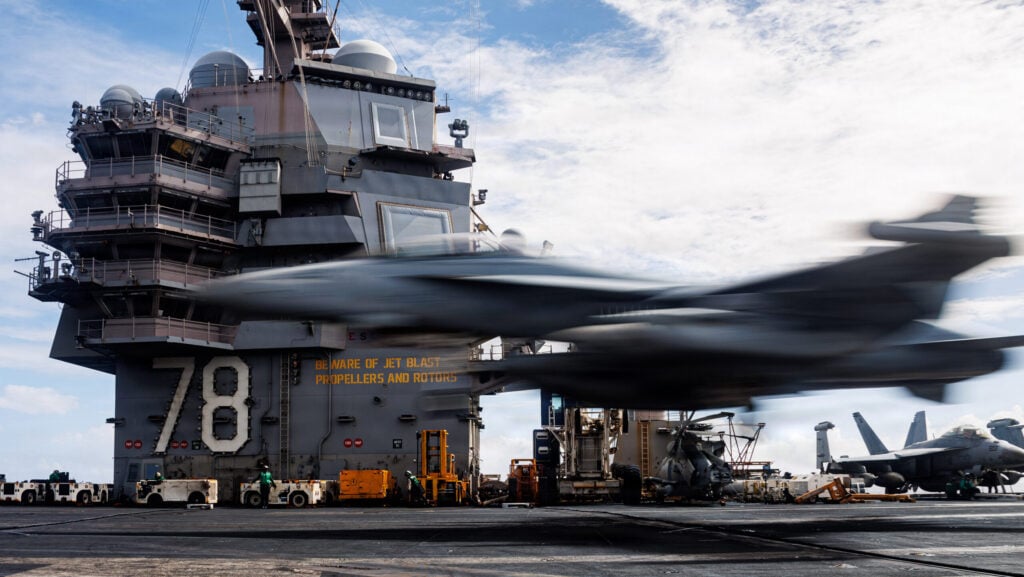
USS Gerald R. Ford Faces Record-Length Deployment Amid Rising Global Tensions
The potential 11-month deployment of the USS Gerald R. Ford raises serious concerns regarding US naval readiness and global maritime security. Such extended missions test fleet capabilities in an increasingly contested environment.
The USS Gerald R. Ford is poised for an unprecedented deployment of up to 11 months, a move that could set a record for the longest continuous mission for a US aircraft carrier since the USS Midway's 332-day deployment during the Vietnam War. This announcement comes amidst escalating military tensions in critical regions, particularly in the South China Sea and the Eastern Mediterranean, where the Ford's presence is likely to be a point of contention.
Historically, the deployment of US naval vessels has been a strategic lever used to project power and deter adversaries. The USS Midway's record set in 1974 has long stood as a testament to endurance and commitment during the Cold War. However, with the Ford scheduled to operate in high-stakes environments increasingly rife with conflict, this extended mission raises questions about wear and tear, crew fatigue, and overall operational readiness of the fleet.
The implications of an 11-month deployment are significant for global security dynamics. An overstretched naval force risks compromising US maritime dominance in vital areas while signaling to both allies and adversaries that it is prepared to confront challenges head-on. The Ford's extended presence could inadvertently escalate tensions, particularly with China's aggressive maneuvers in the South China Sea and Russia's naval activities in Europe.
Key players in this scenario include the US Navy, seeking to reaffirm its operational capabilities, and regional powers like China and Russia, whose military decisions are influenced by perceived weaknesses in US resolve. The Ford's deployment signals an American commitment to maintaining freedom of navigation, yet it also puts the US at risk of confrontation with nations that view such maneuvering as provocative.
Technical specifications of the USS Gerald R. Ford underscore its significance in modern naval warfare. Equipped with advanced systems such as the Electromagnetic Aircraft Launch System (EMALS) and next-gen radar, the Ford represents a leap in carrier capability but also comes at a financial cost, with a construction budget exceeding $13 billion. With only one active carrier of its class, the strain on resources could become increasingly evident with a protracted deployment.
Potential consequences of this extended deployment include operational failures or miscalculations that could lead to naval clashes. Such a time frame could erode public and political support for long-term military engagement, especially if the mission encounters unexpected challenges. Monitoring the health of naval personnel and equipment will become critical as the situation develops.
Historically, long deployments have often led to significant strain on military personnel, thinning operational effectiveness as seen in past conflicts. The Vietnam War’s Midway deployment illustrated the risk of overstretch, leading to questions about military readiness. As such, naval expertise suggests that this proposed 11-month mission could repeat historical mistakes, placing undue pressure on personnel and equipment alike.
Looking forward, several key indicators will signal the Ford's operational success or looming crises. Intelligence assessments should focus on the readiness and morale of the crew, the condition of equipment after extended deployment, and the reactions from regional adversaries. Any engagement with adversarial naval forces or significant geopolitical developments warrant close monitoring as the Ford embarks on this unprecedented mission.