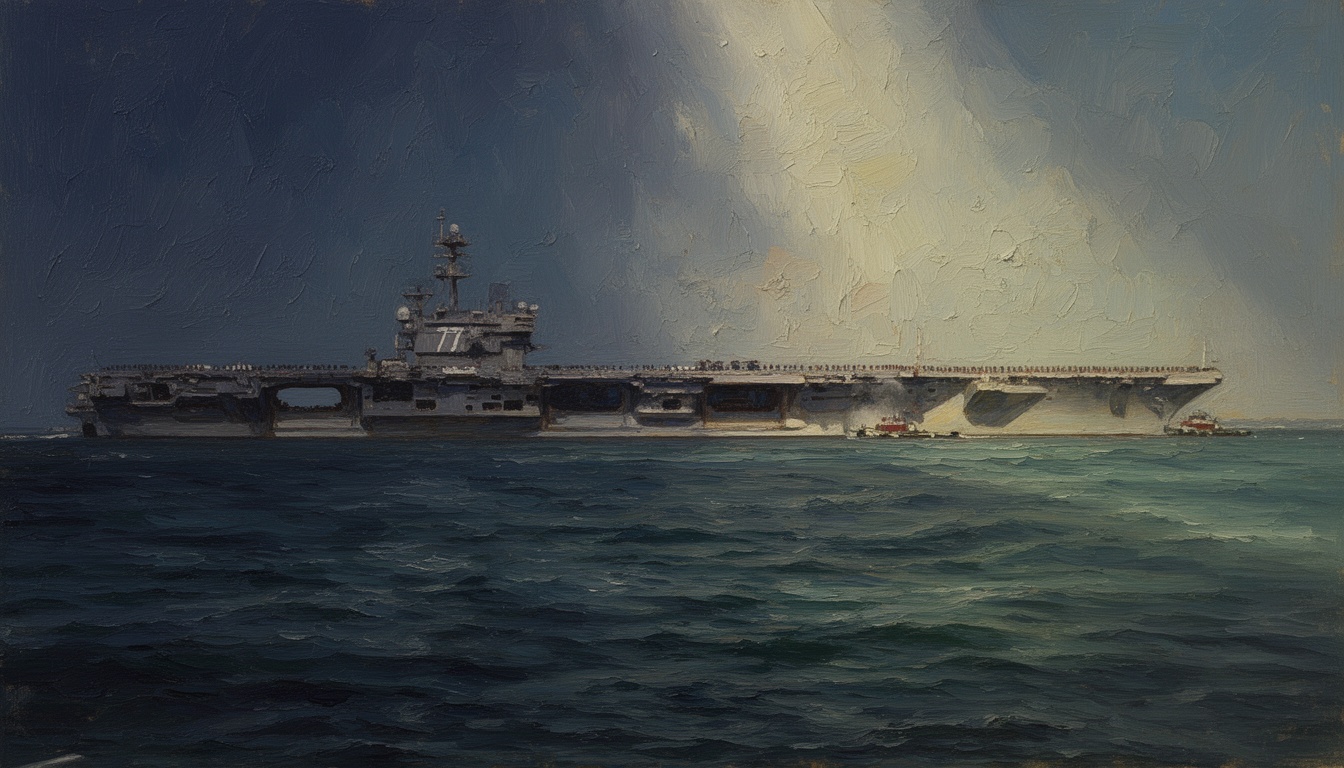
USS George H.W. Bush Deploys As Iran Tensions Escalate
USS George H.W. Bush aircraft carrier deploys to the Middle East amid rising Iran tensions, filling a critical naval gap left by the sidelined USS Gerald R. Ford.
The USS George H.W. Bush (CVN-77) aircraft carrier strike group is deploying to the Middle East in response to escalating tensions with Iran. The U.S. Navy has not confirmed the carrier’s exact destination, but analysts note its deployment fills a void caused by the USS Gerald R. Ford’s ongoing maintenance and technical issues. This move signals Washington's intent to maintain naval dominance and pressure Tehran amid deteriorating regional security.
The USS Gerald R. Ford (CVN-78), the U.S. Navy’s newest and most advanced supercarrier, has been sidelined since late 2023 due to persistent technical setbacks, including problems with its electromagnetic aircraft launch system. Its absence leaves a significant gap in America’s carrier presence in the volatile Persian Gulf theater. The George H.W. Bush’s deployment is the US Navy’s response to uphold carrier strike capabilities in this strategically critical region.
Strategically, the deployment serves as a deterrent against Iranian provocations and safeguards vital maritime routes through the Strait of Hormuz. With increased Iranian missile tests, drone strikes, and naval incidents aimed at U.S. and allied vessels, the presence of a full carrier strike group projects power and reassures regional partners like Israel, Saudi Arabia, and the UAE.
The USS George H.W. Bush is a Nimitz-class nuclear-powered aircraft carrier capable of launching over 90 aircraft and conducting sustained air operations. Backed by guided-missile cruisers, destroyers, and a carrier air wing that includes F/A-18E/F Super Hornets and EA-18G Growlers, the strike group represents a versatile combat force. Its deployment underscores the high operational tempo and resource allocation America dedicates to maintaining control and readiness in the Middle East.
Looking ahead, the deployment highlights fragile regional stability and the potential for rapid escalation. The absence of the Gerald R. Ford underscores challenges faced by the U.S. Navy in modernizing its carrier fleet while continuing global commitments. Observers expect continued naval posturing and readiness as Iran tests the limits of U.S. resolve in the Persian Gulf corridor.