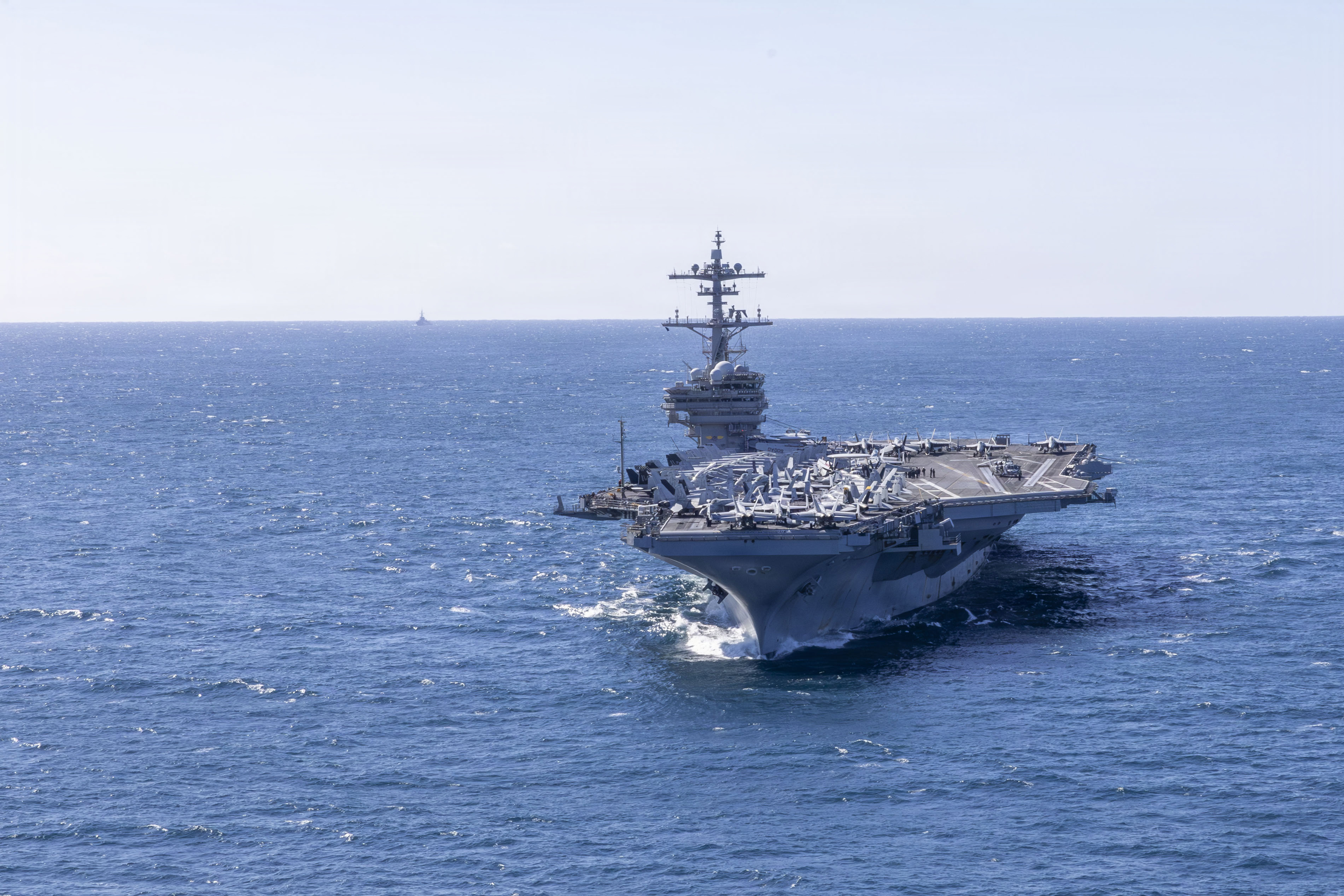
USS George H.W. Bush Conducts Pre-Deployment Exercise, Signals Potential Naval Escalation
The USS George H.W. Bush's completion of the Composite Training Unit Exercise (COMPTUEX) indicates readiness for sustained combat operations, heightening tensions in ongoing global maritime conflicts. This exercise prepares U.S. naval task forces for potential deployment to contested regions.
The USS George H.W. Bush recently completed the Composite Training Unit Exercise (COMPTUEX), a crucial pre-deployment drill aimed at enhancing the operational readiness of U.S. naval task forces. This exercise simulates complex combat scenarios, testing the carrier strike group's ability to operate effectively in hostile environments. The results of this training will lead to recommendations for deployment at a time when increased maritime tensions are evident worldwide.
This development follows a series of provocative military engagements in the Indo-Pacific, where U.S. naval forces regularly challenge China's assertive claims in the South China Sea. The Bush's exercise illustrates the necessity for heightened readiness amidst growing competition with major military powers. Additionally, Russia's expanding naval activities in the Arctic and Mediterranean further complicate the global security landscape, necessitating robust U.S. naval presence.
The significance of this exercise extends beyond mere practice; it represents a strategic positioning of U.S. forces as the balance of military power shifts regionally. With China increasing its naval capabilities and Russia expanding its fleet, the U.S. must maintain a formidable maritime presence to deter aggression and reassure allies in crucial areas. This exercise signals determination to uphold security commitments amid evolving global threats.
Key actors in this scenario include the U.S. Navy, China's People’s Liberation Army Navy (PLAN), and the Russian Navy. The U.S. seeks to maintain its naval supremacy and provide security assurances to allies such as Japan, South Korea, and NATO partners. Meanwhile, Beijing and Moscow are motivated by a desire to expand their influence and challenge American dominance on the high seas, indicating a readiness to escalate military activities.
The USS George H.W. Bush, an Nimitz-class aircraft carrier, is equipped with a formidable arsenal, including F/A-18 Super Hornets, strike fighters, and advanced missile systems. Operating alongside a strike group comprised of cruisers and destroyers, the carrier forms a multi-layered defense capable of projecting power and conducting prolonged operations. Such exercises demand significant financial resources; the cost of a single carrier deployment can reach hundreds of millions of dollars, underscoring the commitment to maintain combat readiness.
The likely consequences of this exercise include increased naval deployments to contested regions, potentially exacerbating tensions among major powers. Observers should anticipate more frequent U.S. naval operations in areas of strategic interest, especially as naval clashes could lead to unpredictable escalations. With multiple naval forces operating in close proximity, the risk of miscalculation increases.
Historically, similar pre-deployment exercises have marked a buildup to military interventions or heightened readiness in response to regional threats. For instance, increased U.S. naval activity before the Gulf War in 1990 signaled impending military action. This recent exercise could indicate a shift to a more aggressive posture in response to global challenges.
Looking ahead, defense analysts should monitor U.S. carrier strike group movements and upcoming joint exercises with allied forces. Intelligence indicators, such as increased naval construction in rival states and patterns of deployment, will provide insights into the evolving military landscape. The potential for escalated maritime confrontations remains significant as nations reassess their strategic calculus in the face of demonstrated naval capabilities.