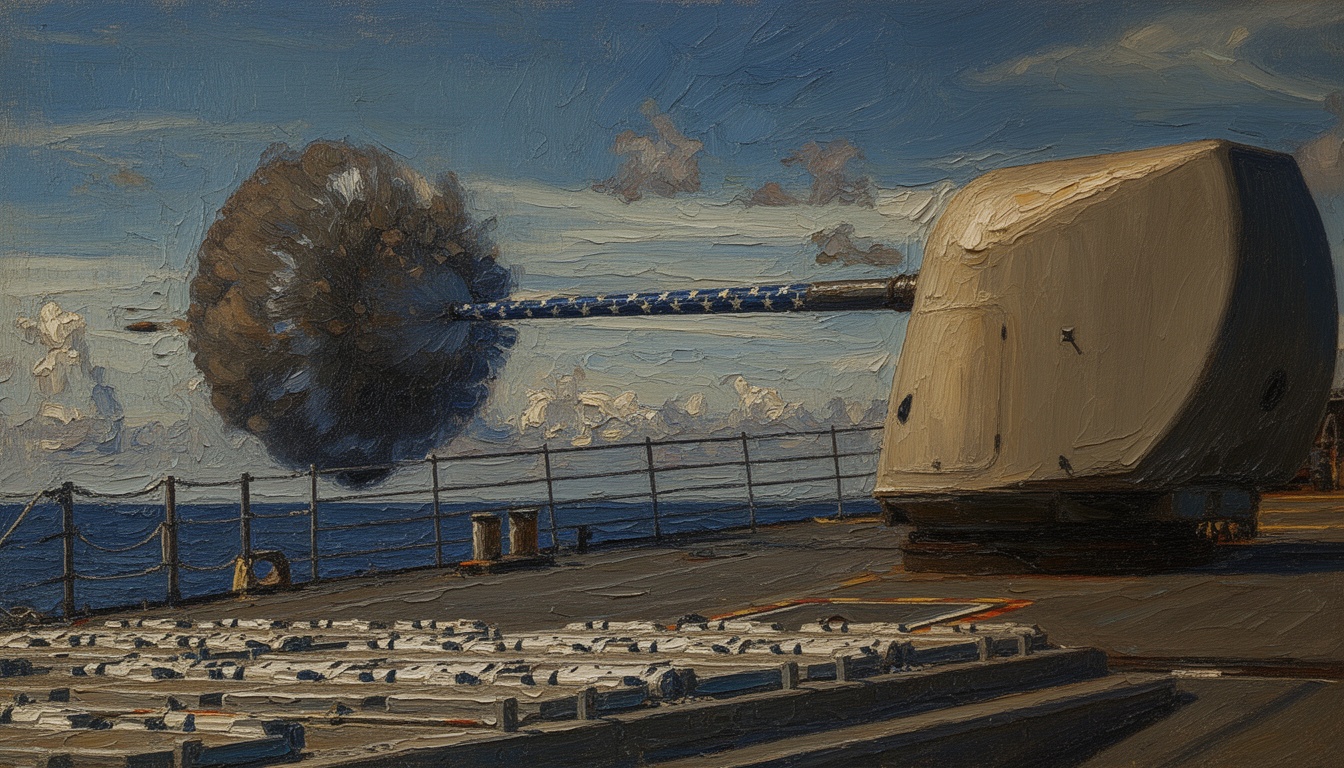
USN Spruance Fires Deck Gun at Target, First in Four Decades
The destroyer Spruance engaged a hostile vessel with its deck gun, the first use since 1988. The move signals a renewed emphasis on surface-fire capability and deterrence. Analysts will watch for strategic implications and rules-of-engagement considerations.
The US Navy confirms that the destroyer USS Spruance fired upon a hostile vessel using its deck gun, a momentous action not seen in nearly four decades. The engagement occurred in a high-tension maritime environment, underscoring a renewed focus on surface-fire support and deterrence. Commanders cited the need to demonstrate credible counter-ship fire when higher-precision missiles are constrained or unavailable.
Historically, deck-gun usage has been rare since the late Cold War, with modern doctrine favoring missiles and close-in weapons. Yet this incident signals tactical flexibility in returning to gunfire under pressure. The event could shape future surface-w warfare planning among peer navies operating in congested seas and chokepoints.
Strategically, the incident raises questions about rules of engagement, seamanship risk, and the signaling effect to rival navies about willingness to employ traditional gunfire. It tests the balance between advanced missile capabilities and legacy calibers in high-stress environments. Observers will scrutinize doctrine shifts and potential implications for target acquisition and fire control.
Operational details remain limited, but the firing sequence suggests coordination with support assets and spotter cues. The volley appeared measured, prioritizing accuracy over sheer volume. Analysts will examine munition type, range, and post-strike effects to gauge combat effectiveness and survivability in follow-on engagements.
Looking forward, the episode could recalibrate doctrinal debates on the role of deck guns in modern fleets. Replications could drive navies to revisit maintenance, training, and target-tracking procedures for gun-based surface engagements. Analysts warn that such capabilities must be managed to avoid escalation while preserving maritime deterrence.