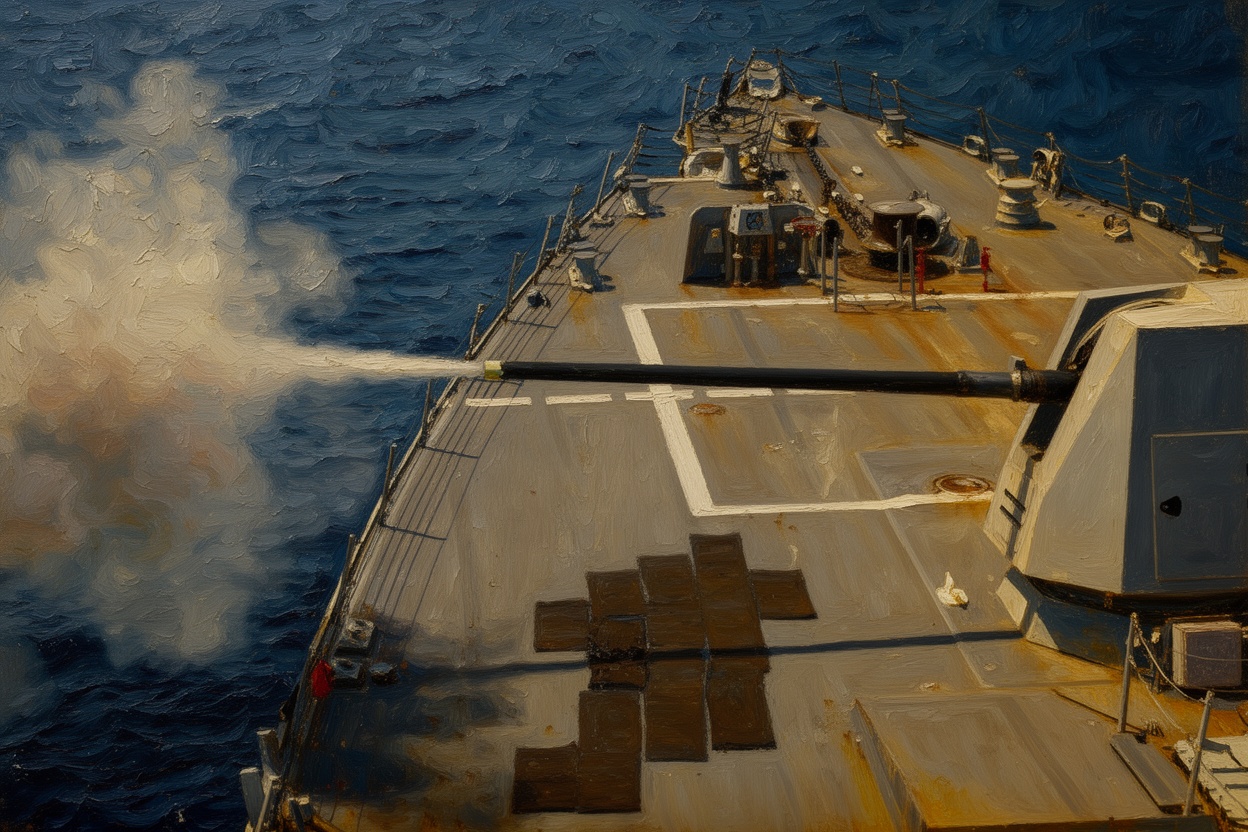
USN Destroyer Intercepts Iranian-Flagged Vessel
A U.S. destroyer in the Arabian Sea enforces blockade measures against an Iranian-flagged cargo ship bound for Bandar Abbas. The incident underscores escalating naval pressure near Iran’s ports and the broader Iran maritime threat landscape. The event highlights U.S. freedom-of-navigation and deterrence operations in a tense regional environment.
A U.S. guided-missile destroyer intercepted the Iranian-flagged cargo vessel M/V Touska as it transited the north Arabian Sea toward Bandar Abbas, Iran. The intercept occurred on April 19, during a period of heightened naval activity in the region. CENTCOM reported that the vessel was attempting to sail toward an Iranian port, triggering naval blockade measures enforced by U.S. forces. The destroyer, assigned to protect maritime lines of communication, blocked the vessel's course and prepared for follow-on actions as required by maritime security protocols.
Background: The Arabian Sea remains a critical corridor for energy, trade, and strategic signaling between Iran and regional and global actors. Iran has frequently used commercial shipping lanes to project pressure and to test international responses. U.S. and allied naval forces have maintained a persistent presence in international waters to deter illicit shipments and to uphold freedom of navigation. Previous similar interdictions have occurred across the Gulf and western Indian Ocean, signaling a persistent push-pull dynamic between Iran and maritime coalition forces.
Strategic significance: The incident fits within a broader pattern of increased maritime competition in the Indo-Pacific and the Middle East. The U.S. Navy’s ability to disrupt shipments linked to Iranian targets serves as a tangible element of deterrence, potentially complicating Tehran’s logistics and trade. This action also signals to other state and non-state actors that maritime corridors remain contested and that the U.S. prioritizes control over critical sea lines of communication in the face of Iranian maritime activity.
Technical and operational details: The M/V Touska was observed moving at approximately 17 knots in the north Arabian Sea, en route to Bandar Abbas. The destroyer involved in the interception demonstrates typical fleet operations: surveillance, contact, and the option to impose additional measures such as boarding or further interdiction if required. The event occurred within the framework of standard rules of engagement and international maritime law governing blockades and safety zones around vessels suspected of transporting restricted goods.
Consequences and forward assessment: This interdiction will likely feed into ongoing assessments of Iran’s maritime access and its willingness to challenge maritime orders. For U.S. and allied navies, the event reinforces the credibility of blockading and interdiction options in high-tension waters. Analysts will watch for follow-on movements by the Touska or related vessels, as well as any Iranian diplomatic or economic responses to the blockage.