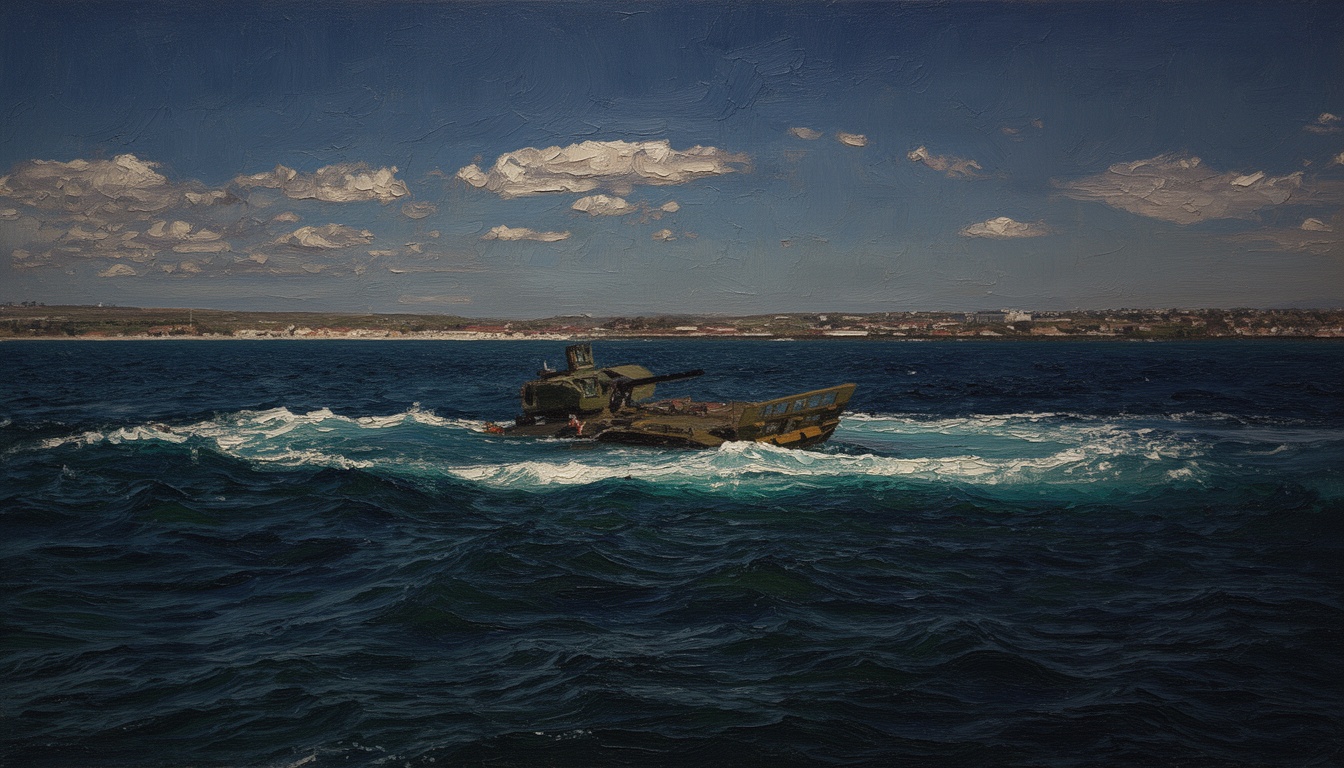
USMC Awards Second Rapid ARV Prototype Contract to Textron, GD
The US Marine Corps advances rapid reconnaissance vehicle development with a second prototype contract to Textron and General Dynamics. This effort aims to deliver a family of mobile reconnaissance vehicles tailored with unique mission capabilities. The program highlights the importance of agile, versatile platforms in future expeditionary warfare.
The United States Marine Corps (USMC) has awarded a second prototype contract for its Rapid Advanced Reconnaissance Vehicle (ARV) program to defense giants Textron and General Dynamics. This contract is part of the service’s push to field a family of ARV variants, each designed with distinct capabilities to support agile and mobile reconnaissance missions on the modern battlefield.
The ARV program seeks to replace legacy reconnaissance vehicles with a modern vehicle family that can perform a range of intelligence, surveillance, and reconnaissance (ISR) roles. The initiative reflects evolving Marine Corps operational concepts emphasizing expeditionary and networked warfare domains.
Strategically, the ARV family offers the USMC tactical flexibility and enhanced situational awareness, critical in contested environments dominated by peer or near-peer adversaries. These vehicles are intended to operate in high threat environments, providing commanders with real-time reconnaissance data through integrated sensors and communication systems.
Textron and General Dynamics’ proposals for the ARV prototypes emphasize lightweight designs, advanced electronics, and modular mission configurations. The vehicles will be outfitted with cutting-edge ISR payloads, possibly including unmanned systems integration, electronic warfare capabilities, and remote weapon stations, ensuring multi-domain operational readiness.
Moving forward, the USMC’s commitment to the rapid ARV development signals a significant upgrade in reconnaissance capabilities. Successful prototyping and subsequent fielding will bolster Marine Corps lethality and survivability in future conflicts, complicating adversary targeting and expanding options for maneuver warfare.