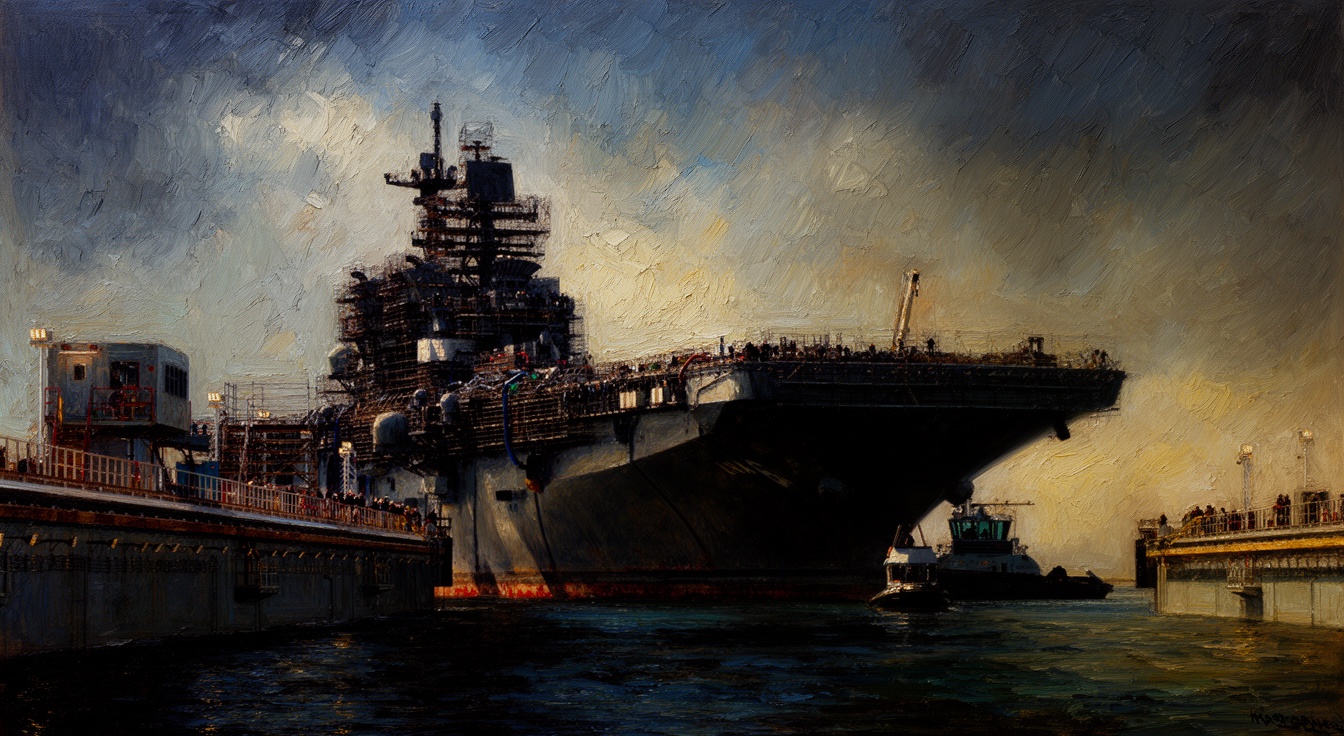
USMC and Navy Unite to Expand Amphibious Fleet and Readiness
The Marine Corps and Navy will collaborate to boost amphibious fleet size and availability after 2025 readiness declines. The joint effort signals a strategic shift toward greater expeditionary lift and crisis response capacity. The plan aims to shore up deterrence in the Indo-Pacific and beyond through improved force structure and industrial pacing.
The United States Marine Corps and the Navy are launching a joint initiative to expand and improve the readiness of the amphibious fleet. The program responds directly to a 2025 readiness shortfall that reduced amphibious ship availability and limited access to crisis response options. Leaders describe the effort as a comprehensive push across personnel, maintenance, and investment to restore and grow surge capabilities for perturbations across global hotspots.
Historical context shows amphibious lift has become a strategic chokepoint as potential competitors seek to offset traditional U.S. naval advantages with anti-access strategies. The new collaboration leverages the distinct strengths of both services: the Marines’ expeditionary warfare concepts and the Navy’s carrier and surface fleet infrastructure. The alliance aims to rebalance power projection considerations in the Indo-Pacific and other high-demand theaters where rapid sealift and amphibious assault capabilities are decisive.
Strategically, the joint program is a response to growing demand for crisis response, disaster relief, and forward presence in regions facing rising tensions. It signals a shift from merely maintaining a fixed fleet to enabling scalable amphibious options that can be deployed quickly and repeatedly. In a balancing act with adversaries pursuing deterrence through anti-access measures, greater amphibious capacity enhances deterrence by denial and maneuver space for allied operations.
Technical and operational specifics center on increasing the number of mission-ready amphibious ships, improving maintenance cycles, and accelerating modernizations to launch platforms. This includes optimizing the readiness of amphibious assault ships, dock landing ships, and related support vessels, alongside improvements to aviation and land-based lift assets. Budgetary increments and industrial base planning are designed to sustain higher sortie rates and faster reconstitution after deployments, with a focus on predictable maintenance windows and contractor support arrangements.
Looking ahead, the consequences of a larger, more available amphibious fleet are clear. For potential adversaries, the capability signals a heightened risk calculus and a stronger dissuasion posture in hotspot theaters. For allies and partners, it promises greater interoperability and faster joint response times in combined operations and disaster response. The administration will likely emphasize industrial policy and supply chain resilience to ensure long-term fleet growth and reliability.