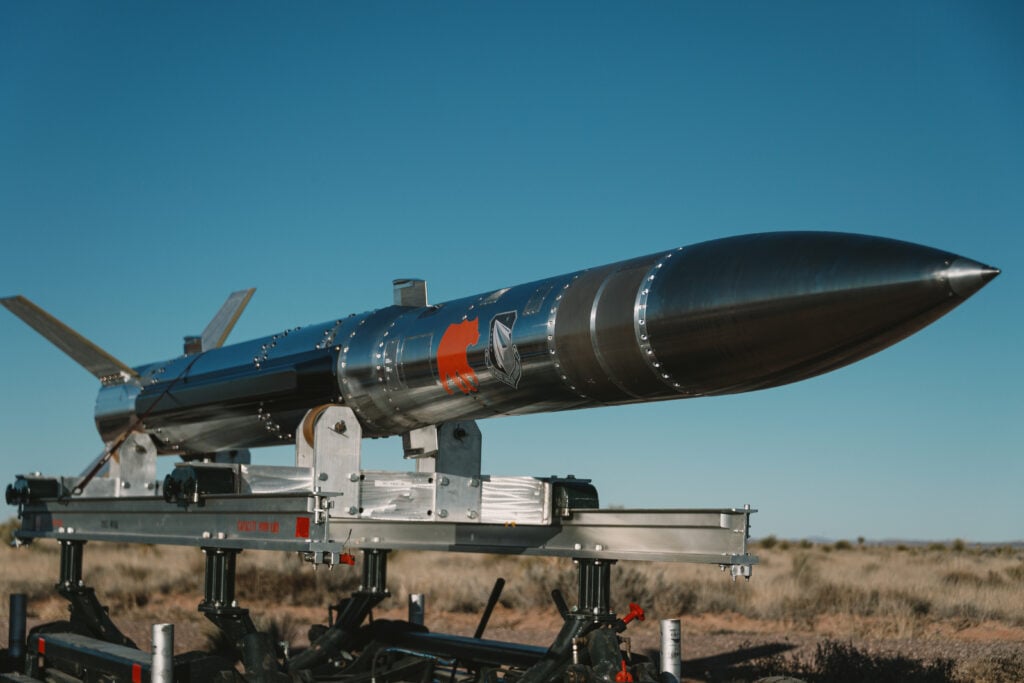
USAF Tests First Storable-Liquid Engine Hypersonic Missile
The US Air Force unveils a flight-proven hypersonic missile powered by a novel storable liquid engine, testing adaptability and cost-efficiency. This marks a major step in hypersonic weapon technology aimed at faster deployment and scalable production.
The US Air Force has successfully tested a hypersonic missile equipped with a revolutionary storable liquid engine, a first in flight-proven weapon technology. This new demonstrator aims to validate the potential for faster operational turnaround, enhanced adaptability, and reduced costs in hypersonic systems. The test signifies a critical shift from traditional solid or cryogenic fuels towards more operationally flexible propulsion.
Hypersonic weapons have increasingly become a strategic priority for major military powers due to their speed, maneuverability, and ability to penetrate advanced missile defenses. Historically, hypersonic missiles relied primarily on solid fuels or cryogenic engines, which limit readiness and storage duration. The introduction of storable liquid engines could overcome these limitations by offering enhanced readiness with long-term fuel storage and rapid launch capabilities.
Strategically, this development could alter the balance in air and missile warfare by enabling hypersonic systems that are cheaper to produce and maintain, and faster to deploy globally. The US Air Force’s move signals a race to operationalize hypersonic weaponry that can be fielded efficiently in contested environments, where response time is crucial to counter emerging threats.
The missile tested integrates a storable liquid propellant engine, designed to maintain fuel stability over extended periods without complex handling requirements. The engine provides high thrust-to-weight ratio propulsion suitable for sustained hypersonic flight exceeding Mach 5. The system is developed with scalability in mind, potentially allowing for mass production with reduced unit costs compared to existing hypersonic platforms.
This advancement is likely to push global competitors to accelerate their hypersonic programs and rethink strategic deterrence models, as weapons with more rapid deployment and cost-effective production become operational. The US Air Force is poised to expand testing and refine this technology towards integration into future strike capabilities, highlighting an emerging arms race in advanced missile propulsion.