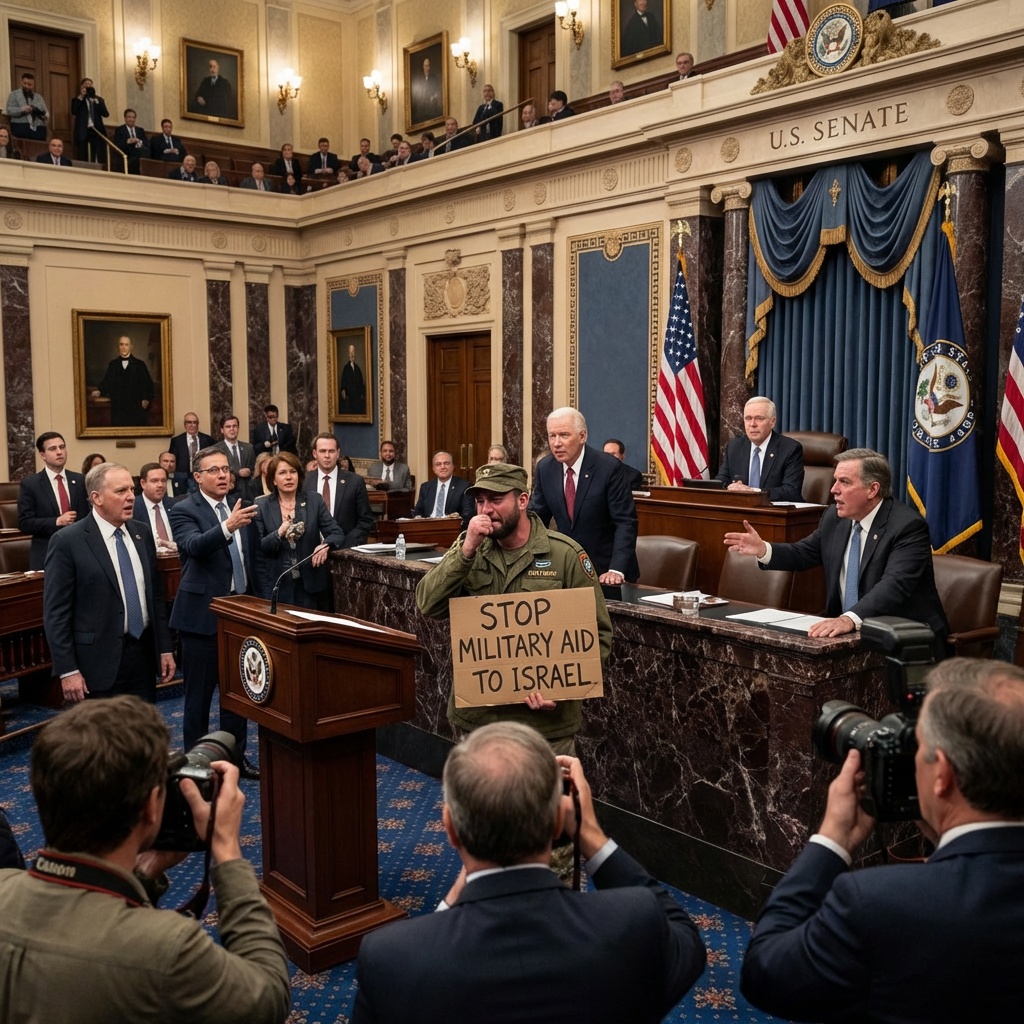
US Veteran Ejected From Senate Amid Protests Against Military Support for Israel
Violence erupted as a US veteran protested at the Senate, challenging military support for Israel and troop deployments. This confrontation highlights escalating domestic discontent towards US foreign military commitments.
During a tense Senate Armed Services subcommittee hearing, US Marine veteran Brian McGinnis was forcibly removed after confronting lawmakers over US military support for Israel and recent troop deployments in the Middle East. Footage released by Code Pink, a notable anti-war advocacy group, captures McGinnis shouting, “no one wants to fight for Israel,” underscoring deep-seated frustration with ongoing military engagements. This incident marks another flashpoint in the growing domestic dissent regarding US foreign policy, particularly in the context of heightened tensions in the Middle East.
The backdrop to this protest stems from a series of escalatory actions in the Middle East by multiple actors, including ongoing hostilities in Israel-Palestine and increasing military activities in Iran. Over the past months, the US has ramped up its military posture, deploying additional troops and equipment to the region ostensibly to deter perceived Iranian threats and reinforce Israel. Historical grievances regarding US entanglement in foreign wars have increasingly permeated anti-war sentiments, particularly as public scrutiny intensifies.
This incident has global significance as it exposes the fractures within American society over foreign military interventions. The vehement opposition expressed reflects a broader trend in which domestic audiences are becoming more vocal against the longstanding paradigm of US military support for allies, especially in controversial conflicts like those involving Israel. This protest could provoke further backlash and may influence upcoming policy decisions regarding troop deployments and military spending.
Key actors in this scenario include grassroots movements like Code Pink, which mobilize public opinion against war, and veterans like McGinnis, who provide firsthand experience and credibility to anti-war narratives. Their growing influence suggests that opposition to military interventions will likely continue to gain traction, potentially reshaping official discourse on foreign policy. This also reflects a generational moment where disillusionment with prolonged military commitments is becoming more pronounced.
Operationally, the Senate hearing where McGinnis interrupted focused on reviewing the readiness of US forces and discussing the implications of recent military actions in the region. With more than $3 billion allocated annually in military aid to Israel, the financial and political stakes involved in this narrative are substantial. Such funding and resourcing decisions will face increased scrutiny as anti-war sentiments intensify.
The confrontation signals potential consequences, including a possible escalation of protests and heightened scrutiny of US military policy. As dissent grows, policymakers may be prompted to reassess troop levels, funding allocations, and public statements regarding foreign military support. In a polarized political landscape, it remains uncertain how these dynamics will reshape discussions in Congress and public perceptions of foreign military commitments.
Historical parallels can be drawn to previous grassroots movements that challenged US involvement in Vietnam and Iraq, where domestic dissent often played a crucial role in shaping military policies. The echoes of these movements are revived as citizens increasingly question not only the morality but also the strategic wisdom of ongoing military involvements abroad.
Moving forward, observers should monitor the trajectory of public protests and any subsequent legislative actions related to military aid and troop deployments. Key indicators will include further vocal opposition from military veterans and shifting public opinion polls reflecting attitudes on US foreign military interventions. The potential for greater polarization and dissent on this issue could lead to significant changes in policy directions over the coming months.