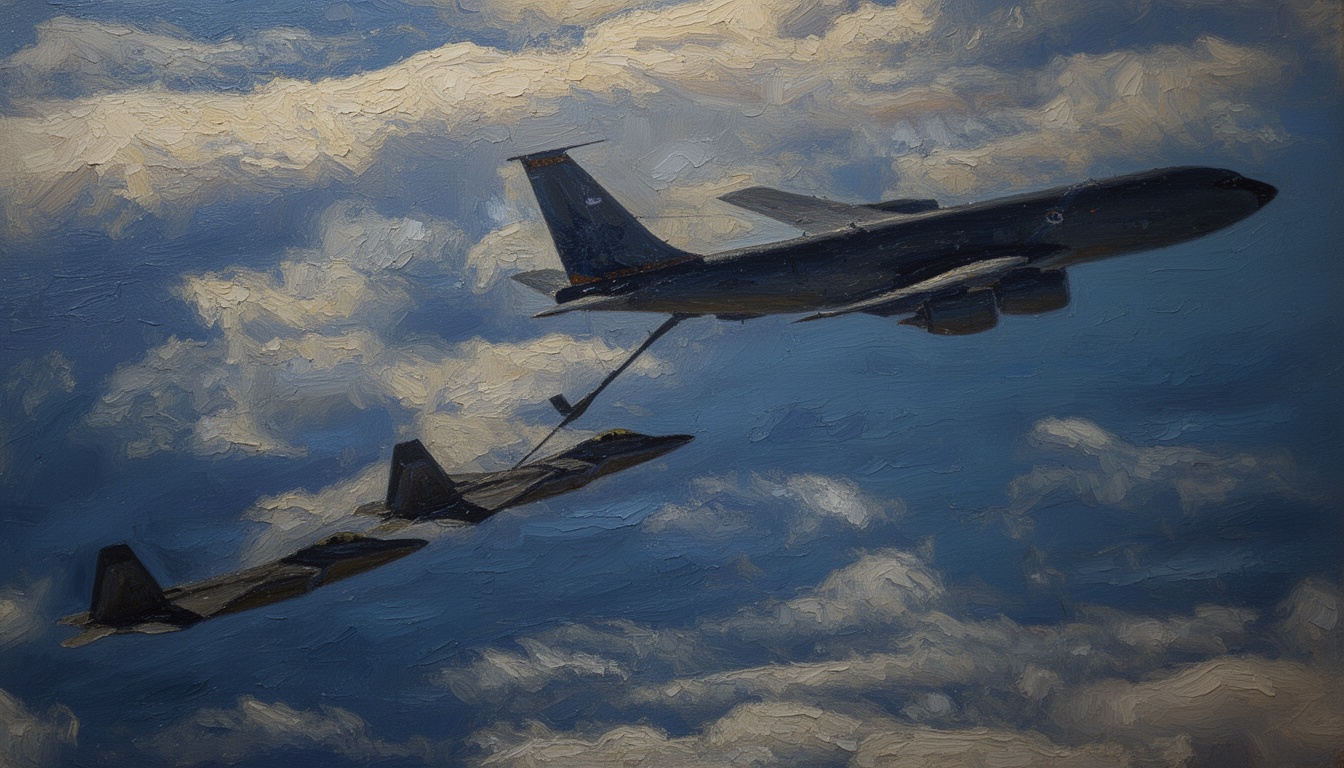
US Tanker Fleet Faces Severe Strain in War Against China
Retired Colonel Troy Pananon warns that the US KC-135 tanker fleet could collapse under the logistical pressure of a conflict with China. Fueling air combat operations over the Pacific will push current capabilities beyond limits, threatening allied airpower sustainment.
Retired US Air Force Colonel Troy Pananon, former commander of a KC-135 tanker wing, has issued a stark warning about the immense logistical challenges the US would face in fueling combat operations against China. He emphasizes that the existing tanker fleet, largely composed of aging KC-135s, would be severely stretched if a prolonged conflict erupts.
The KC-135 Stratotanker has been the backbone of US air refueling since the 1950s, enabling global power projection. However, the platform is nearing obsolescence and is already strained by current operational demands, especially in the Indo-Pacific region where China’s military expansion is intensifying.
Strategically, sustained air operations against China require massive, continuous air refueling to maintain fighter and bomber sorties over vast distances. Any interruption in fuel supply would degrade air superiority and limit the US and allied countries’ ability to respond quickly to Chinese military moves, handing Beijing a significant advantage.
Technically, the US KC-135 fleet consists of around 400 aircraft, mostly upgraded but aging. Newer tankers like the KC-46 face delays and operational issues, narrowing deployment options. The tanker fleet’s sortie rates would have to increase dramatically, while also surviving potential Chinese strikes on airbases and refueling points.
Looking ahead, without accelerated modernization and expansion of tanker capacity, the US risks critical logistic failures in a high-intensity conflict with China. This vulnerability underscores an urgent need to bolster aerial refueling networks and develop robust contingency plans across allied forces to maintain regional deterrence.