US Shifts to Direct Attack Munitions Against Iran, Signaling Tactical Change
The United States' transition to Joint Direct Attack Munitions represents a significant tactical shift against Iran, likely escalating military readiness in a volatile region. This decision marks a move away from longer-range capabilities to more immediate strike options, potentially increasing risks of direct confrontations.
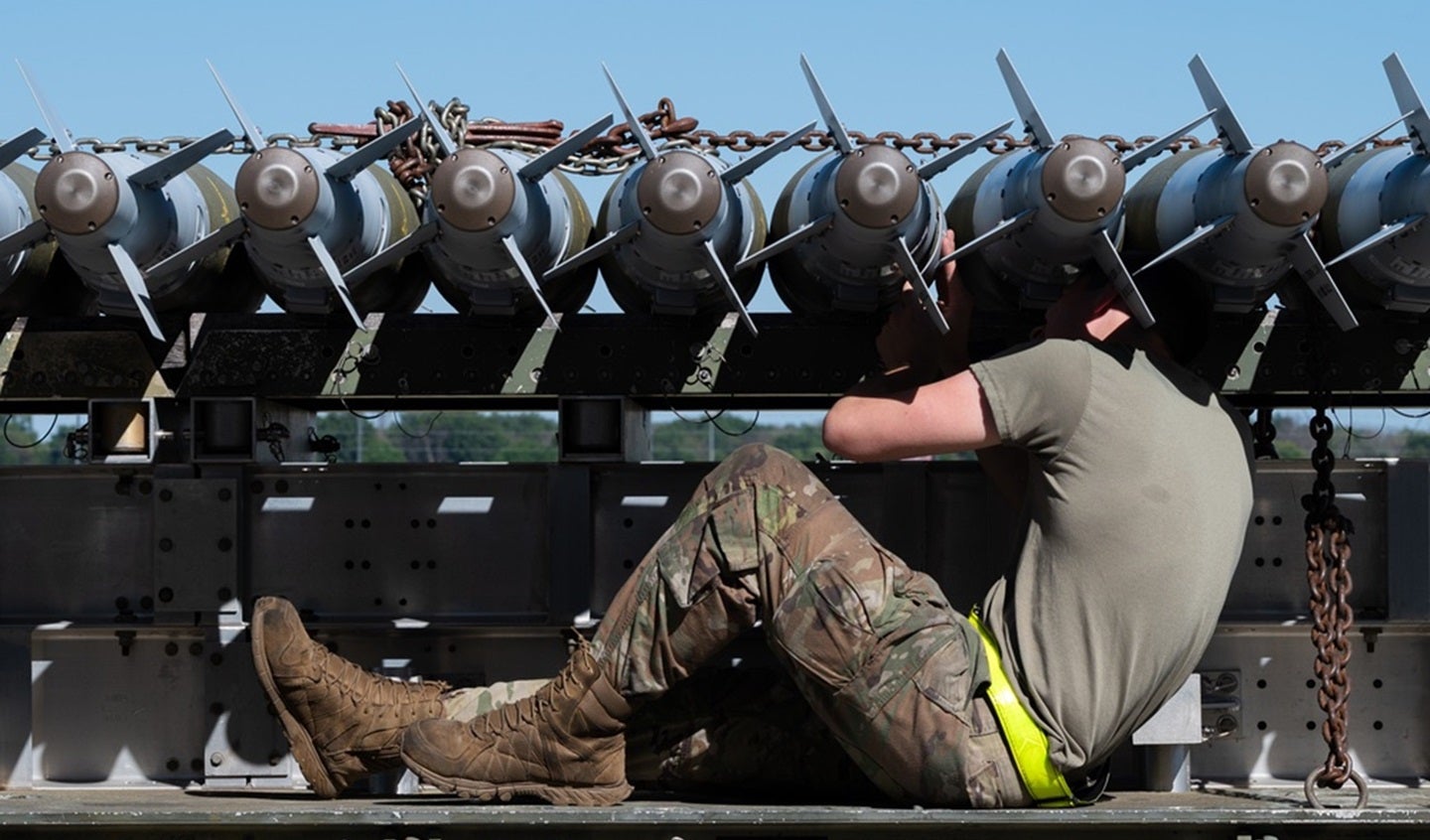
The United States is abandoning its reliance on sophisticated stand-off missiles in favor of Joint Direct Attack Munitions (JDAM) for operations against Iran, a change that signals an urgent pivot in military strategy. This shift allows US forces to engage in more immediate and less concealed military operations, initiating a new level of tactical confrontation in an already tense geopolitical landscape.
Background on US-Iran relations reveals a history of escalating tensions marked by military incursions, sanctions, and proxies. Following the assassination of Iranian General Qassem Soleimani in January 2020, and Iran's response with ballistic missile strikes on US bases in Iraq, the stakes have significantly risen. The US decision to switch munitions reflects both ongoing adversarial dynamics and the recognition of military needs in real time.
This shift is significant as it underscores a potential escalation in hostilities. The change suggests that US military planners are bracing for a confrontational stance and perceiving Iran's capabilities as an immediate threat. Utilizing JDAMs instead of long-range stand-off missiles indicates an adaptation to the changing battlefield dynamics where aerial engagements may become more direct, increasing USS vulnerability to retaliatory actions from Iran.
Key actors involved in this transition are the US Department of Defense and the Iranian forces, primarily the Islamic Revolutionary Guard Corps (IRGC). The US is motivated by the need to counter Iran's aggressive posturing in the region, while Tehran views such moves as direct provocations. As both sides gear up militarily, the potential for miscalculation grows, increasing the possibility of unintentional escalation.
Operationally, JDAMs provide increased accuracy with GPS guidance, allowing US forces to hit targets at precise locations. The shift implies a change in engagement rules, projecting a willingness to confront threats head-on rather than at a distance. By utilizing these munitions, the US is demonstrating readiness for close-quarters combat scenarios that could lead to higher casualty counts on both sides.
These developments may lead to heightened conflict between the US and Iranian forces, marking a shift towards more kinetic engagements. As US forces adopt immediate attack capabilities, Iran may escalate its own military posture, potentially leading to increased provocations against US assets in the region. The risk of naval confrontations or proxy wars become more pronounced as both nations bolster their military readiness.
Historically, shifts like these have preceded significant conflicts. The shift away from stand-off capabilities recalls similar tactical evolutions prior to the Iraq War in 2003, as the US moved towards more direct aerial operations. Each instance has been met with fierce resistance, suggesting that this current transition may foreshadow increased hostilities.
Looking ahead, defense analysts should monitor the response from Iranian forces following the US shift to JDAMs. Potential indicators of escalation include Iranian rapid development of missile capabilities, increased military drills, or outright military actions against US forces or allies. Ultimately, the global community must remain vigilant as these developments unfold, underscoring the fragile balance of power in the Persian Gulf region.