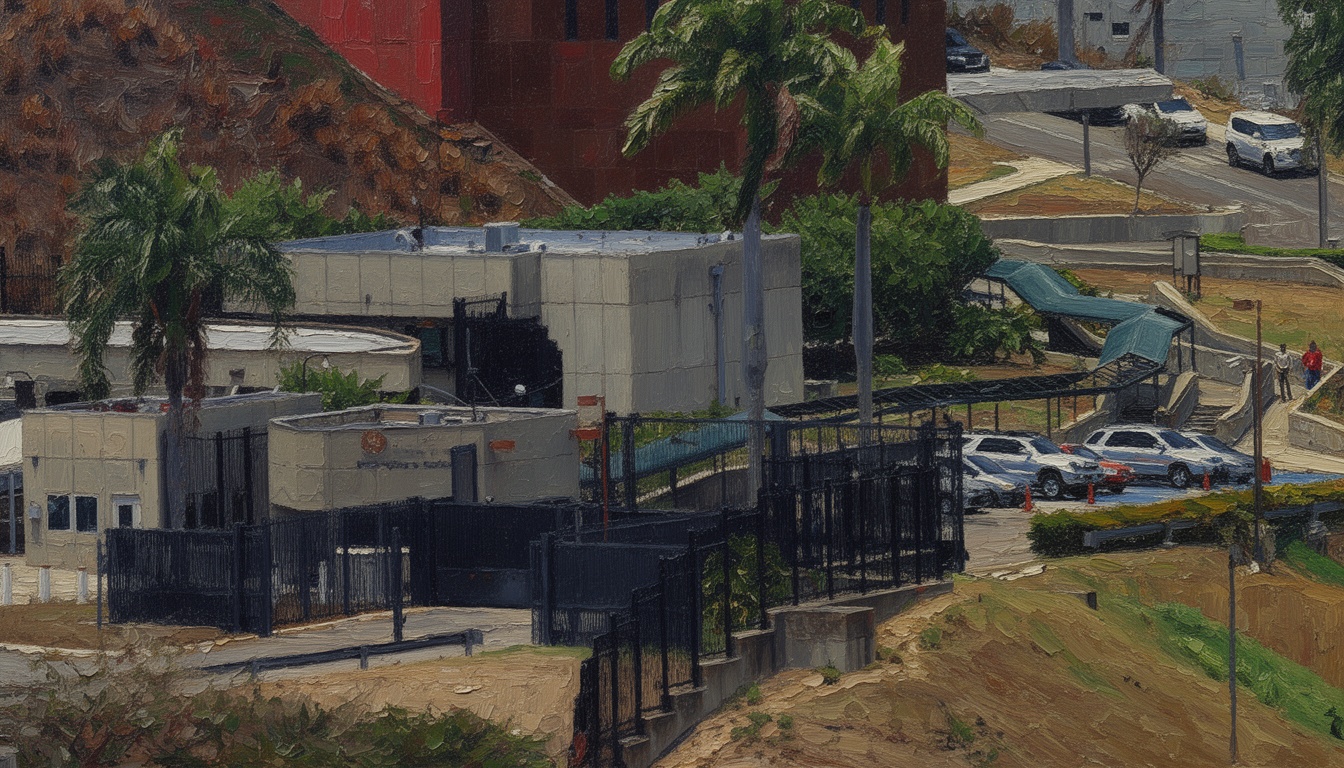
US Reopens Caracas Embassy Months After Ousting Maduro
The United States reinstates diplomatic presence in Venezuela months after a failed military attempt to remove President Maduro. This move marks a strategic recalibration amid ongoing regional tensions and power struggles in Latin America.
The United States officially reopened its embassy in Caracas, Venezuela, months after an unsuccessful military operation to oust President Nicolas Maduro. The embassy had been closed for seven years, severely damaged and requiring extensive refurbishments, including mold remediation. The State Department announced the resumption of full embassy operations on Monday, signaling a renewed effort to engage diplomatically with Venezuela.
The embassy closure began in 2010 amid deteriorating US-Venezuelan relations and worsened under Maduro’s regime. The reopening follows the Trump administration’s failed attempt earlier this year to remove Maduro through a paramilitary incursion. Despite the operation’s failure, the Biden administration has shifted policy to restore formal diplomatic ties, aiming to influence Venezuela’s political trajectory through dialogue.
Strategically, reopening the embassy represents a significant pivot by a major military and diplomatic power to reassert influence in a region increasingly contested by Russia and China. Venezuela’s vast oil reserves and geographical position make it a focal point in the struggle for regional dominance. Resuming formal diplomatic engagement allows the US to better monitor developments and counteract adversarial influence.
Technically, the embassy in Caracas had suffered from years of neglect, with damaged infrastructure and mold infestations compromising operational capability. Repairs have included structural reinforcement and modernizing security measures suitable for a high-risk environment. The staff presence aims to rebuild intelligence networks and coordinate regional policy among US interests facing growing obstacles from Venezuela’s alliances with Russia and Iran.
Looking ahead, the embassy’s reopening could escalate tensions in Latin America, especially as Venezuela remains a hotspot for proxy conflicts. It increases the likelihood of diplomatic confrontations with Moscow and Beijing, who back Maduro’s government. The US move is both a demonstration of enduring geopolitical contestation and a potential spark for renewed regional instability.