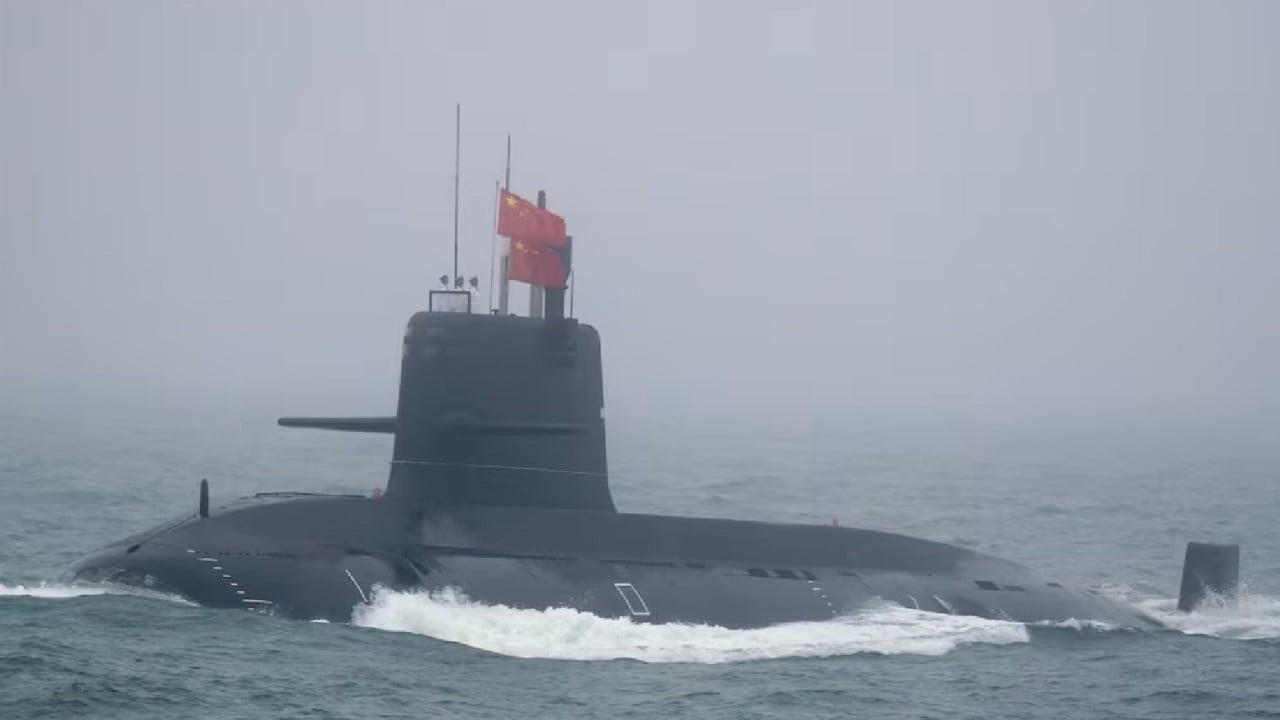
US Panel Warns China Escalates Undersea Warfare Threats
China’s advancements in undersea warfare jeopardize US maritime dominance, escalating tensions. The urgent warning underscores a potential shift in naval power dynamics.
A critical warning from a US congressional advisory panel has exposed the alarming advancements China is making in undersea warfare capabilities, directly challenging American dominance. At a hearing of the US-China Economic and Security Review Commission, witnesses highlighted China's significant investments in submarines, undersea cables, and sea-floor mining technologies. This development arrives just weeks before a pivotal summit between the US and China, heightening the stakes in an already tense bilateral relationship.
The US has long enjoyed a technological edge in naval operations, particularly in undersea warfare, largely due to its fleet of nuclear-powered submarines and advanced submarine detection systems. However, China's exponential investment, including an estimated budget of $220 billion earmarked for naval expansion over the next five years, is threatening to close this gap. The shift in power dynamics is alarming for US defense strategists, who fear that the balance of naval influence in the Indo-Pacific region could tilt toward Beijing.
Strategically, this advancement enables China to potentially disrupt critical undersea infrastructure and assert control over vital shipping routes. As US priorities pivot toward maintaining an edge in undersea warfare, vulnerabilities in its existing fleet and operational strategy become more pronounced. The results of these operational lapses could have widespread implications for US allies and partners in the Asia-Pacific region.
Key players involved include the Chinese government, which seeks to extend its maritime influence, and the Pentagon, which is compelled to bolster its undersea capabilities in response. China's motivations include securing energy resources and countering US influence, while the US emphasizes the necessity of retaining freedom of navigation and deterrence capabilities in its military policy. The contest for undersea dominance reflects broader geopolitical rivalries between the two powers.
Operational specifics reveal that China has rapidly expanded its submarine fleet, now boasting over 50 modern submarines, including advanced Type 095 and Type 096 models. These vessels are designed to deploy anti-ship ballistic missiles and are equipped with stealth technologies that significantly challenge traditional countermeasures. Additionally, China's aggression in undersea mining operations raises concerns over potential military applications of these technologies.
The likely consequences include an intensified arms race in undersea warfare technologies and strategies. Moreover, increased military posturing by both nations could escalate into confrontations in contested waters, complicating already fragile diplomatic relations. The warning from the advisory panel serves as a clear signal that the US may enter a new phase of strategic competition in undersea domains.
Historical parallels can be drawn to the Cold War, where advancements in naval technology fueled an intense arms race and psychological warfare. Just as the Soviet Union and the US navigated a complicated landscape of submarine capabilities, the present situation mirrors these conflicts, where miscalculations could lead to catastrophic outcomes at sea.
Looking ahead, defense analysts should monitor developments in China's submarine deployment and operational improvements closely. Intelligence indicators to watch include increased military exercises in the South China Sea, production capabilities of advanced submarines, and evolving maritime policies that could directly impact regional stability and US naval operations.