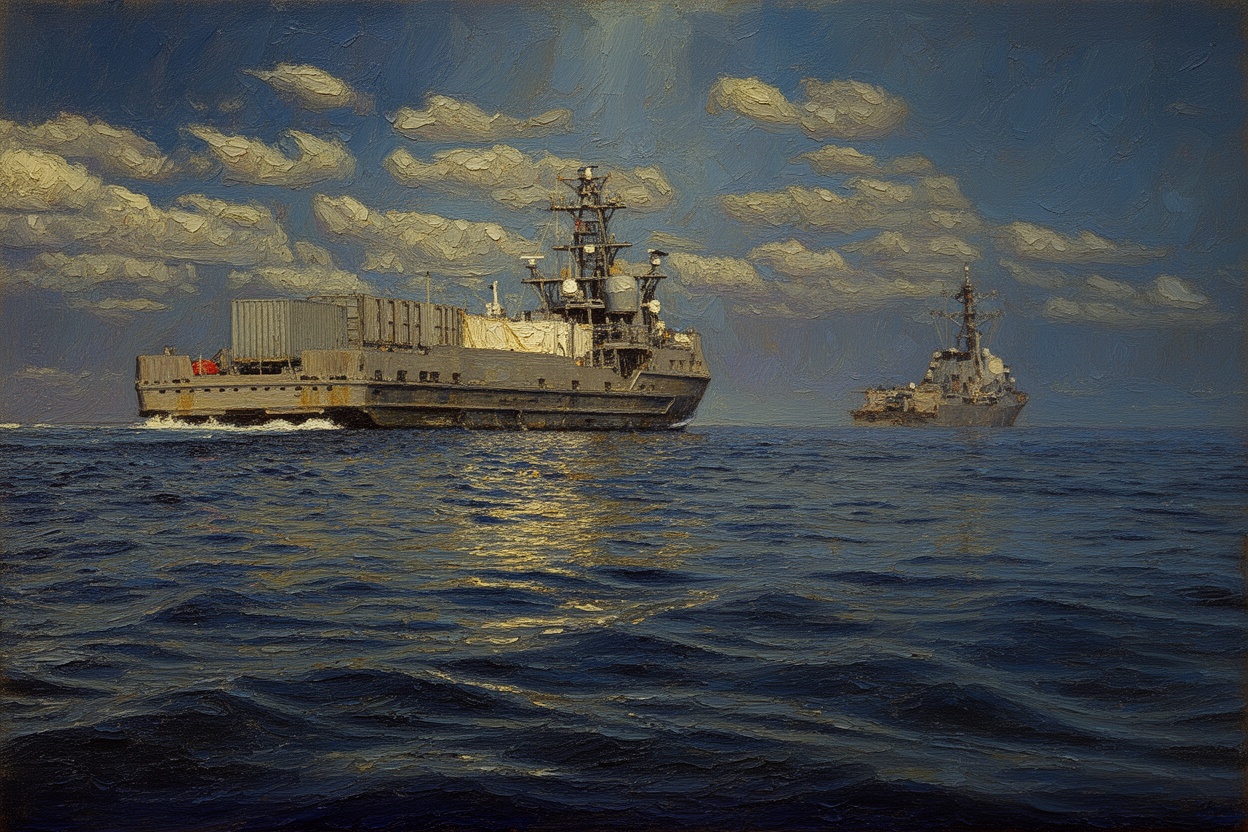
US Navy unmanned surface vessel fleet to grow sevenfold in Indo-Pacific
Strategic shift expands unmanned maritime reach in a pivotal theater. Doubling or tripling capabilites signals greater persistent presence, integration with aerial and underwater systems, and a recalibration of regional power projection. The development increases both deterrence and risk of rivalry with near-peer competitors.
The US Navy plans a sevenfold expansion of its medium unmanned surface vessel (M-USV) fleet in the Indo-Pacific, raising the count to at least 30 ships alongside expanded use of smaller USVs and unmanned aerial systems. This growth signals a decisive push to sustain distributed maritime operations, maintain sea control in contested lanes, and enhance reconnaissance, surveillance, and strike options at extended ranges. The move aligns with broader wargaming and force-structure studies that emphasize automation as a key force multiplier in high-tension theaters. Commanders stress a need for persistent presence in key chokepoints, including straits and offshore approaches, where manned ships face increased risk from long-range missiles and anti-ship systems.
Background: Unmanned surface systems have progressed from experimental platforms to a core component of the Navy’s fleet architecture. In recent years, U.S. programs have emphasized scalable swarms, modular payloads, and improved autonomy for risk-reduced forward deployments. Indo-Pacific theater challenges—vast ocean areas, congested choke points, and advanced adversaries with integrated sensor networks—drive a reliance on distributed, expendable, and cost-effective platforms. The expansion complements existing air and sub-surface unmanned assets, creating a layered mosaic designed to complicate an adversary’s targeting calculus and sustain continuous maritime awareness.
Strategic significance: The growth bolsters deterrence by denial, complicating enemy planning with larger, more dispersed sensor-to-shooter networks. It enables rapid sealift and prepositioning of effects, reducing response times in flash crises and enabling rapid escalation management without proportionally expanding manned hulls. The Indo-Pacific push also signals a doctrinal shift toward autonomous fleets capable of persistent operations in contested environments, potentially reshaping ally and partner logistics as they coordinate joint watch, risk management, and data-sharing protocols across multi-domain theaters.
Technical and operational details: The M-USV expansion will incorporate a mix of medium-hull platforms with modular payload bays, capable of host-macros for ISR, mine countermeasures, and littoral strike tasks. The program is expected to integrate with smaller USVs and a suite of unmanned aerial systems to create a layered sensor grid and target designation chain. Budget lines and procurement schedules remain fluid, but the objective is to achieve the 30-ship baseline within a multi-year ramp, followed by iterative enhancements in autonomy, endurance, and survivability. Crew concepts will emphasize reduced manning, reusable launchers, and resilient communications architecture to maintain control across contested domains.
Forward assessment: Expect enhanced endurance and coverage in sea lanes critical to trade and alliance deterrence. As the U.S. Navy widens its unmanned force, adversaries will likely accelerate counter-UAS and anti-swarming measures, while allied fleets may adopt similar architectures to preserve interoperability. The net effect could be a rebalanced regional power dynamic, where automation compounds the value of long-range precision systems and complicates a potential adversary’s ability to seize initiative in crisis signaling.