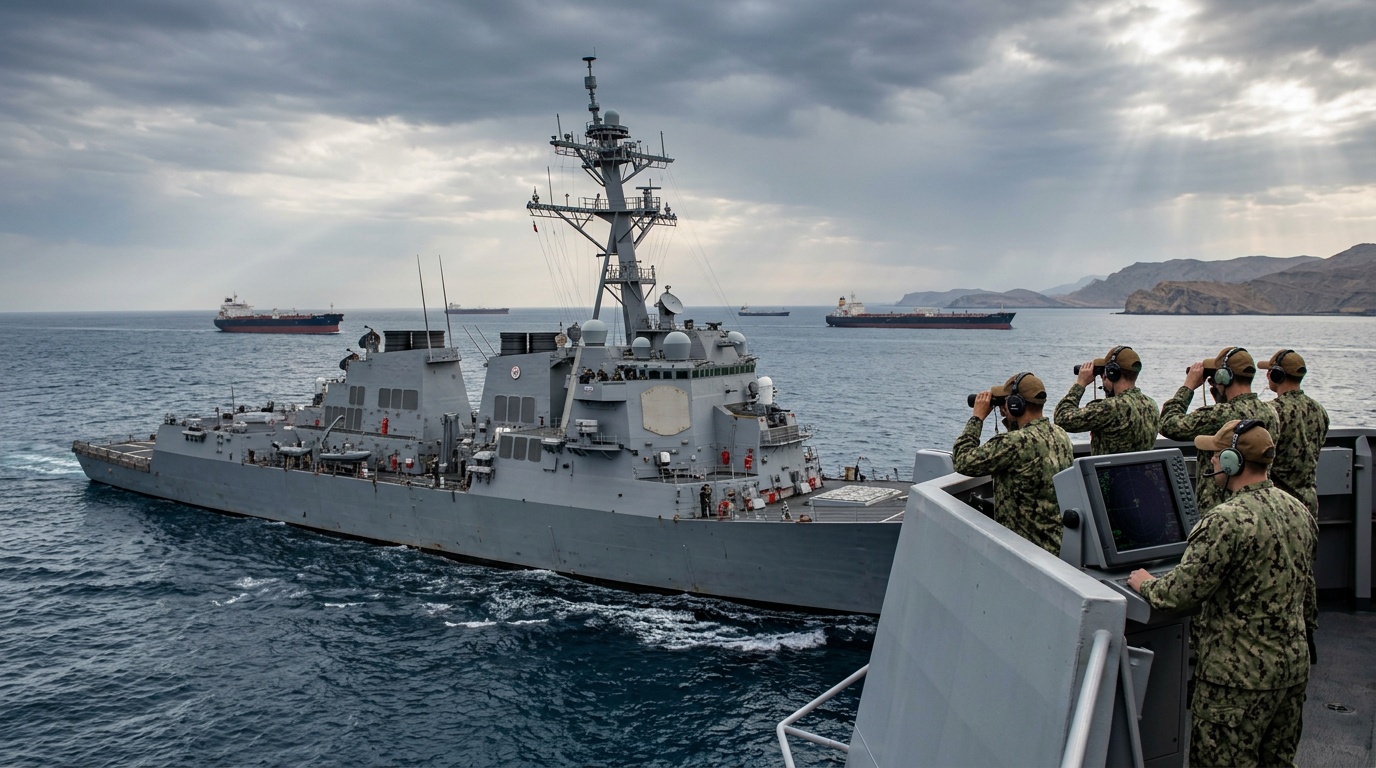
US Navy to Escort Tankers in Strait of Hormuz
The US Navy will soon provide escort services for tankers through the Strait of Hormuz, a crucial maritime passage for global oil supply. This initiative aims to enhance security amid rising geopolitical tensions in the region.
The recent announcement by the US Energy Secretary regarding the deployment of US Navy escorts for commercial vessels in the Strait of Hormuz marks a significant strategic maneuver aimed at securing maritime routes critical for oil transportation. The decision to bolster naval presence in this strategically vital waterway comes in response to escalating tensions and threats that have raised concerns over the safety of shipping operations in this region, which is pivotal for global energy supplies.
The US Navy’s escort operations will utilize a combination of surface vessels, aerial surveillance, and potentially unmanned systems to conduct protective missions for civilian tankers. The added naval presence is expected to deter aggressive actions from regional actors and ensure the uninterrupted flow of oil, which is essential for energy markets globally. Moreover, this initiative highlights the Navy's capability to project power and safeguard international shipping lanes against asymmetric threats, which have grown in the context of regional maritime contestedness.
Geopolitically, the US Navy’s intervention could lead to a recalibration of the risk perceptions for shipping companies navigating the Strait of Hormuz. Historically, this waterway has been the focal point for a significant portion of the oil transported globally. By enhancing naval escort operations, the US intends to assure oil markets of stable supply pathways, potentially stabilizing oil prices which have shown volatility amid geopolitical uncertainty. Furthermore, this move could serve as a signal of US commitment to its allies in the region and a warning to adversaries that the US will actively protect its interests in the Gulf.
The implications of this decision extend beyond mere naval operations; they underline the broader strategic competition between the US and Iran, which has historically viewed the Strait of Hormuz as a critical leverage point. Enhanced US military presence may draw ire from Iranian leadership, potentially escalating tensions further. Conversely, it may also facilitate diplomatic engagements as stakeholders reassess their positions in light of increased military readiness in the region.
The US Navy, already operating a robust fleet in the Arabian Gulf, may leverage advanced capabilities such as Aegis combat systems and advanced maritime patrol aircraft for these escort missions, thereby integrating state-of-the-art technology into traditional naval roles. As global energy dynamics continue to evolve, the successful implementation of this policy could redefine naval engagement norms, enhance collective security approaches, and influence strategic partnerships in addressing maritime security challenges in the Gulf region.